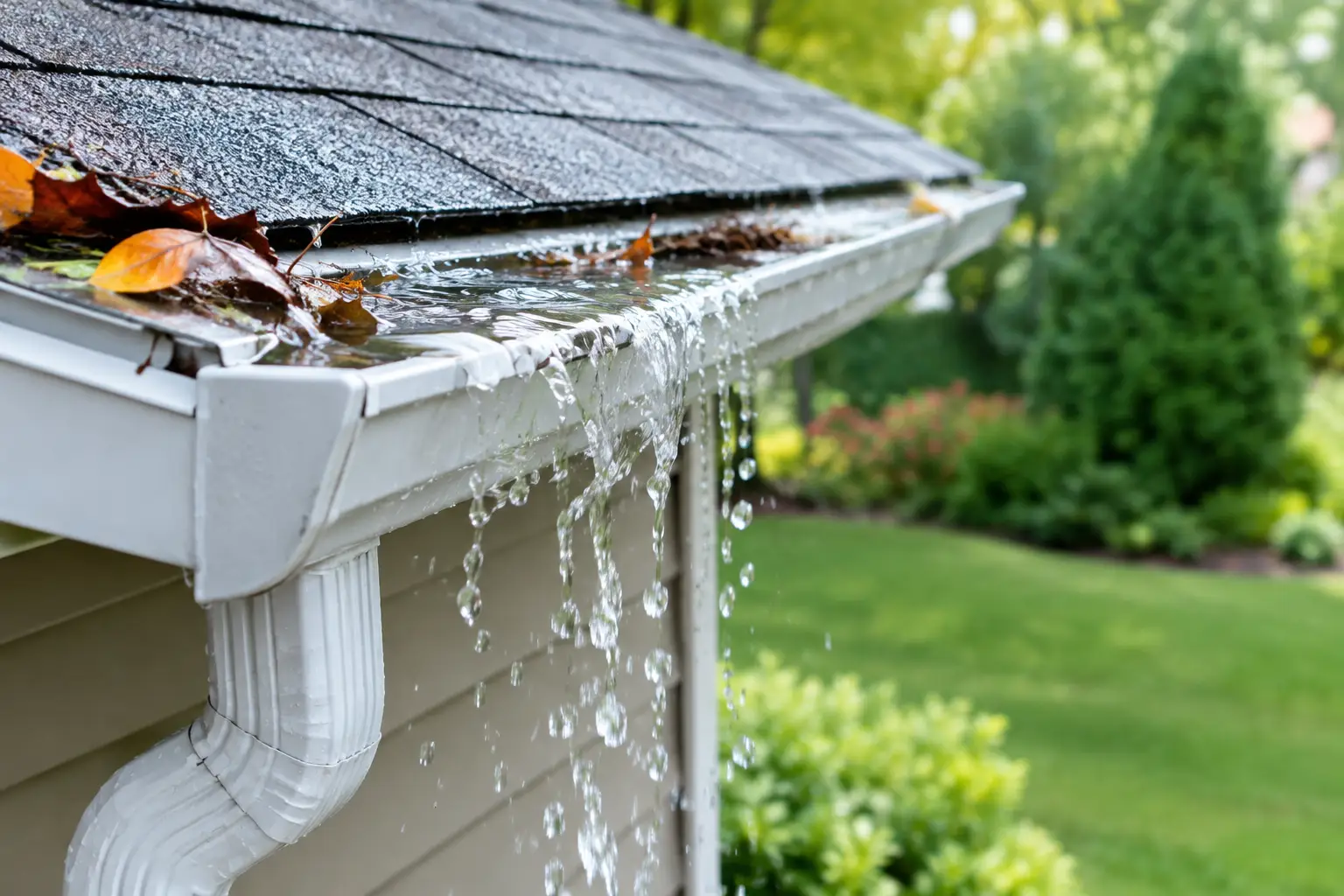

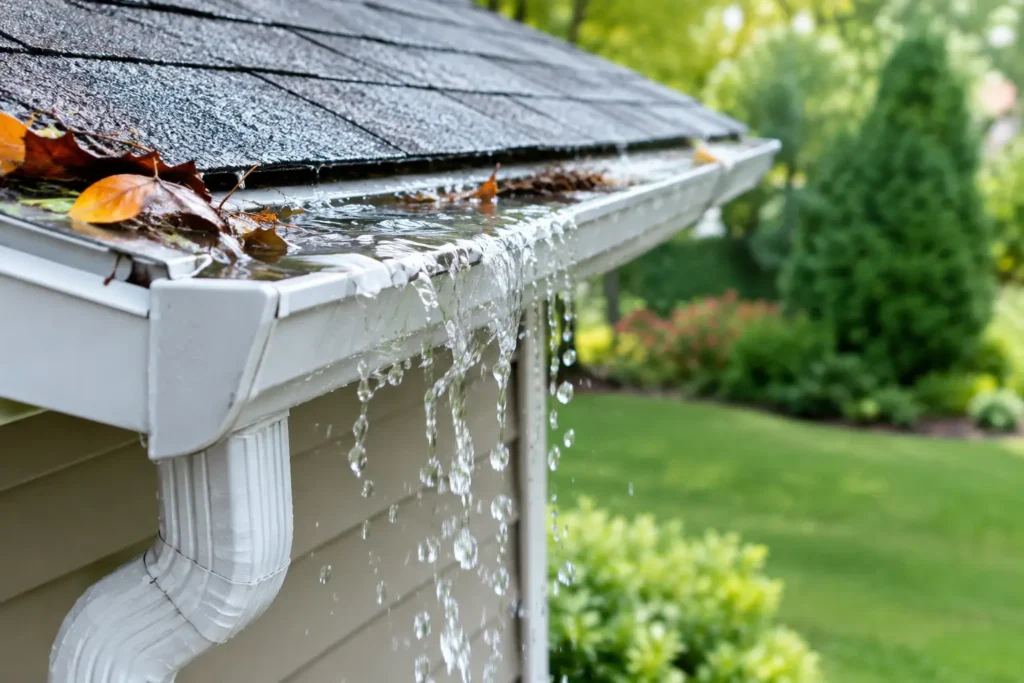
A hard North Carolina rain can reveal a gutter problem in minutes. If you are asking, “do gutters overflow?” the answer is yes – but they should not overflow regularly. Water spilling over the front edge, running behind the gutter, or pouring from one section during ordinary rainfall is a sign that your drainage system needs attention.
Occasional overflow during an unusually intense downpour can happen, particularly when a storm drops rain faster than a standard gutter system can move it. But repeated overflow is different. It can soak fascia boards, stain siding, erode landscaping, flood a crawl space or basement, and place unnecessary moisture around your foundation.
Do Gutters Overflow When They Are Clogged?
Clogs are one of the most common reasons gutters overflow. Leaves, pine needles, roof grit, twigs, and nesting material collect inside the gutter channel. Water may enter the system normally, but it cannot reach the downspout quickly enough. Instead, it rises and spills over the edge.
A downspout can be clogged even when the gutter itself looks clear from the ground. Debris often packs tightly at the downspout opening or in an elbow, where it slows or completely stops drainage. Water may then back up across the entire gutter run.
Cleaning can solve the issue when the gutter is otherwise in sound condition. For homes surrounded by mature trees, however, cleaning once a year may not be enough. Spring pollen, summer storms, and fall leaves can each add debris. A no-leaf gutter system can reduce the amount of maintenance needed while allowing water to enter and move through the system.
Other Common Causes of Gutter Overflow
A clean gutter can still overflow. The source may be the gutter’s size, slope, installation, or the amount of water coming off the roof.
Gutters that are too small for the roof
Gutters are not one-size-fits-all. A large or steep roof sheds a significant volume of water into a relatively small area during a heavy rain. If the gutter channel or downspouts are undersized, water can outrun the system and spill over even when there is no debris inside.
This is especially noticeable at roof valleys. A valley concentrates water from two roof sections into one fast-moving stream. If that stream lands near a gutter seam or a downspout that cannot keep up, overflow can occur in the same spot during every major storm.
Incorrect gutter pitch
Gutters need a gradual slope toward the downspout. The change is subtle enough that the system should appear level from the ground, but it is enough to keep water moving. If a section is flat, sagging, or pitched away from the downspout, standing water and debris collect there.
Poor pitch is often a repairable installation issue. In other cases, loose hangers, damaged fascia, or the weight of standing water has caused the gutter to pull out of position. Simply cleaning that section will not provide a lasting fix if the slope remains wrong.
Too few or poorly placed downspouts
Downspouts carry water away after it reaches the gutter. A long gutter run with only one downspout may drain slowly, especially during a strong storm. Adding a properly located downspout can improve flow without replacing every component of the system.
The discharge point matters, too. Downspouts should direct water away from the foundation, not leave it pooling beside the house. Extensions, underground drainage, or carefully planned grading may be needed where the yard slopes toward the home.
Water running behind the gutter
Overflow is not always water coming over the front edge. Sometimes water runs behind the gutter because the roof’s drip edge is missing, damaged, or improperly installed. The drip edge is a metal flashing that guides roof runoff into the gutter.
When water gets behind the gutter, it can wet the fascia board and soffit. This often leads to peeling paint, wood rot, and loose gutter hardware. It is a problem worth addressing promptly because hidden damage can grow long before it is visible from the yard.
Damaged, loose, or aging gutter sections
Cracks, separated seams, holes, and loose fasteners can all interfere with drainage. Traditional sectional gutters have joints that may eventually leak or pull apart. A gutter that has separated at a seam may allow water to escape before it reaches the downspout.
Age alone does not mean every gutter needs replacement. A professional assessment can help determine whether a targeted repair is appropriate or whether widespread sagging, corrosion, recurring leaks, or improper sizing makes replacement the better investment.
What Overflowing Gutters Can Damage
It is easy to view gutter overflow as a minor inconvenience until the water begins affecting other parts of the home. Gutters are a water-management system, and their job is to protect areas that are expensive to repair.
Repeated overflow can damage fascia and soffit, stain or loosen siding, and wash mulch and soil away from planting beds. It can also create muddy pathways, slippery entry areas, and water intrusion near doors and windows. When runoff collects close to the foundation, the moisture can contribute to settlement concerns, crawl space dampness, and basement leaks.
For homes with roof problems, gutter overflow can sometimes be confused with a roof leak. Water marks near an exterior wall or ceiling may come from failed roofing, flashing, or a backed-up gutter system. The right solution depends on finding the true path of the water rather than repairing only the visible stain.
How to Tell if Your Gutters Need Service
You do not have to climb a ladder to notice warning signs. Watch the home during a moderate rain from a safe location. Look for water spilling over the gutter edge, pouring from seams, cascading behind the gutter, or collecting near the foundation.
Between storms, check for sagging sections, visible plant growth, rust, peeling paint near the roofline, or dark staining on the fascia. Downspouts that drip slowly long after rain has stopped may also point to a blockage or drainage issue.
If the gutters overflow only during the most extreme storms, the system may be functional but undersized for the roof and local rainfall patterns. If they overflow during ordinary rain, cleaning, repair, re-pitching, or downspout changes are more likely needed. A contractor should also inspect the roof edge and fascia before fastening new gutters to potentially damaged wood.
Choosing Between Gutter Cleaning, Repair, and Replacement
The best fix depends on the condition of the existing system. Cleaning is often enough for gutters that are securely attached, properly sloped, and free of leaks once debris is removed. Repairs can make sense for isolated loose hangers, minor seam problems, or a single damaged downspout.
Replacement is often the practical choice when gutters are repeatedly sagging, leaking in multiple places, too small for the roof, or attached to deteriorated fascia. Seamless gutters can reduce the number of joints along a run, which means fewer common leak points. Pairing a new system with gutter protection may be especially worthwhile for homeowners who deal with frequent leaf and pine-needle buildup.
Material and system design should be matched to the home, roofline, drainage needs, and budget. The lowest initial price is not always the best value if it leaves the home vulnerable to the same overflow problem after the next heavy storm.
A professional evaluation provides a clearer path forward. Carolina Improvements can assess the gutters, roof edge, fascia, and drainage layout, then recommend a solution designed to move water where it belongs – safely away from your home.