
Pine trees add shade and character to a North Carolina property, but the needles they drop can create a persistent gutter problem. The best gutters for pine needles are not simply the biggest gutters or the most aggressively marketed gutter guards. They are a properly sized, securely installed gutter system paired with a guard design that keeps fine debris out while allowing rainwater to move where it belongs.
Pine needles are different from broad leaves. They are narrow, lightweight, and prone to collecting in clumps. They can slip through large openings, settle into corners, catch on guard surfaces, and pile up in roof valleys before the next heavy rain sends them toward the gutters. A system that works well for oak leaves may not perform nearly as well beneath mature pines.
Why Pine Needles Are Hard on Gutters
A single pine needle is small, but thousands of them can create a dense mat. Once wet, that mat can hold water and trap shingle grit, twigs, and seed pods. Over time, debris buildup can block the gutter channel or downspout, allowing water to spill over the edge.
Overflow is more than an inconvenience. Water that repeatedly falls near the foundation can contribute to erosion, muddy flower beds, basement or crawlspace moisture, and premature wear on fascia boards. It can also stain siding and create slick walkways below the roofline.
Pine needles often collect in the same places: behind chimneys, below roof valleys, around inside gutter corners, and near downspout outlets. That is why choosing a gutter system should involve looking at the roof layout and tree coverage, not just selecting a guard from a sample display.
The Best Gutters for Pine Needles Start With the Right Size
For many homes surrounded by pine trees, 6-inch seamless aluminum gutters are a strong choice. Compared with standard 5-inch gutters, a 6-inch profile carries more water and has more room for brief debris accumulation without overflowing as quickly. This added capacity is especially useful on larger roof planes, steep roofs, and homes that experience heavy summer storms.
Seamless aluminum is a practical material for most North Carolina homes. It resists rust, is available in colors that complement siding and trim, and can be formed on-site to reduce the number of leak-prone joints. Aluminum also offers a good balance of durability and value for a replacement gutter project.
The gutter size alone does not solve a pine needle issue. Proper slope is essential. Gutters need a controlled pitch toward the downspouts so water does not sit in the channel and allow needles to settle. Strong hidden hangers, securely fastened to sound fascia, help the system keep its shape during storms and seasonal debris loads.
Downspouts Matter as Much as the Gutter Channel
A wide gutter cannot perform well if the downspouts are undersized or poorly placed. Pine needles often gather at the downspout opening, which makes a generous outlet and appropriate downspout size worthwhile. Homes with long gutter runs, roof valleys, or large drainage areas may need additional downspouts to move water away efficiently.
Downspout extensions should direct water away from the foundation without creating a tripping hazard or dumping water onto a driveway. The right drainage plan depends on the grading around the home, landscaping, patios, and nearby walkways.
Which Gutter Guards Work Best for Pine Needles?
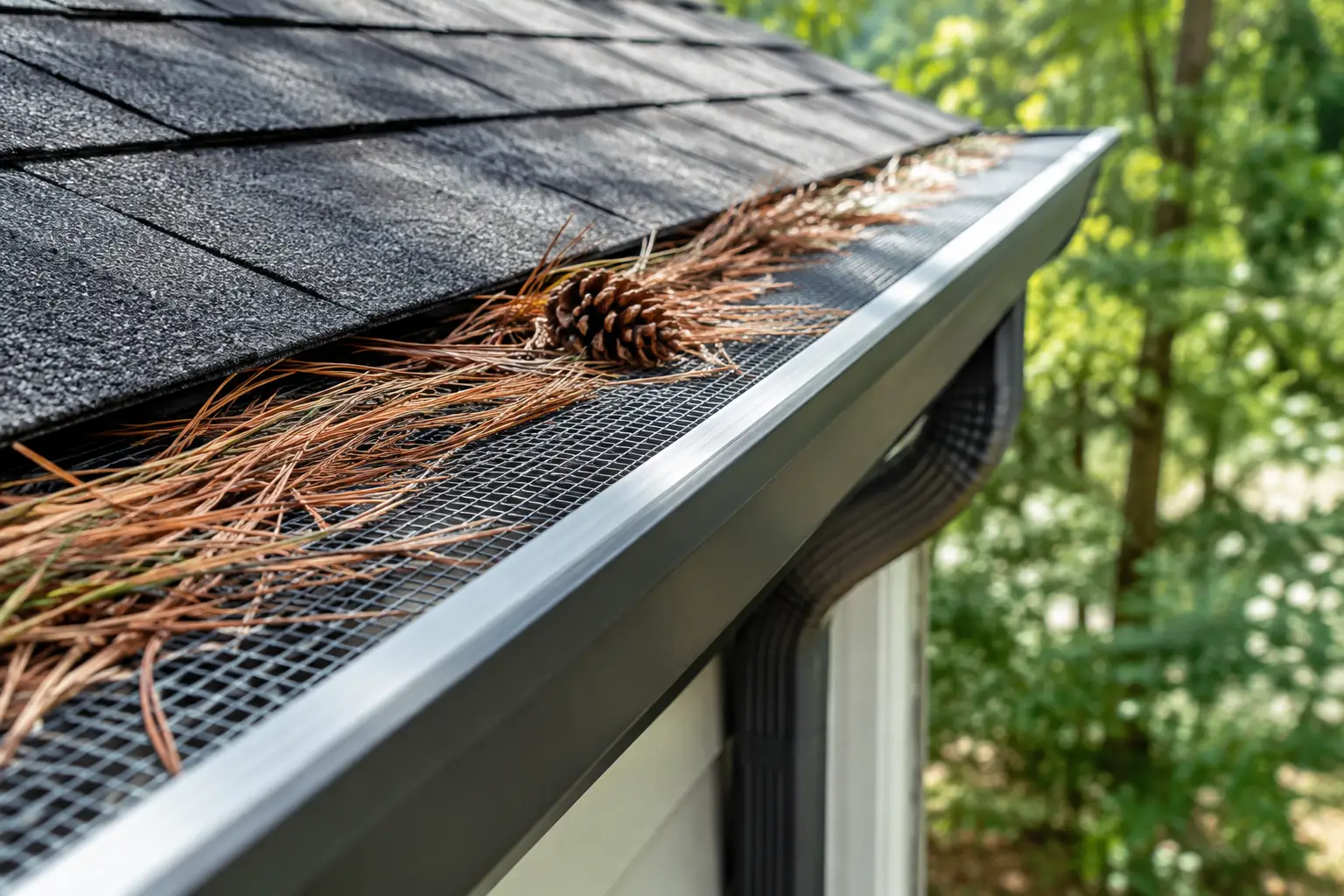
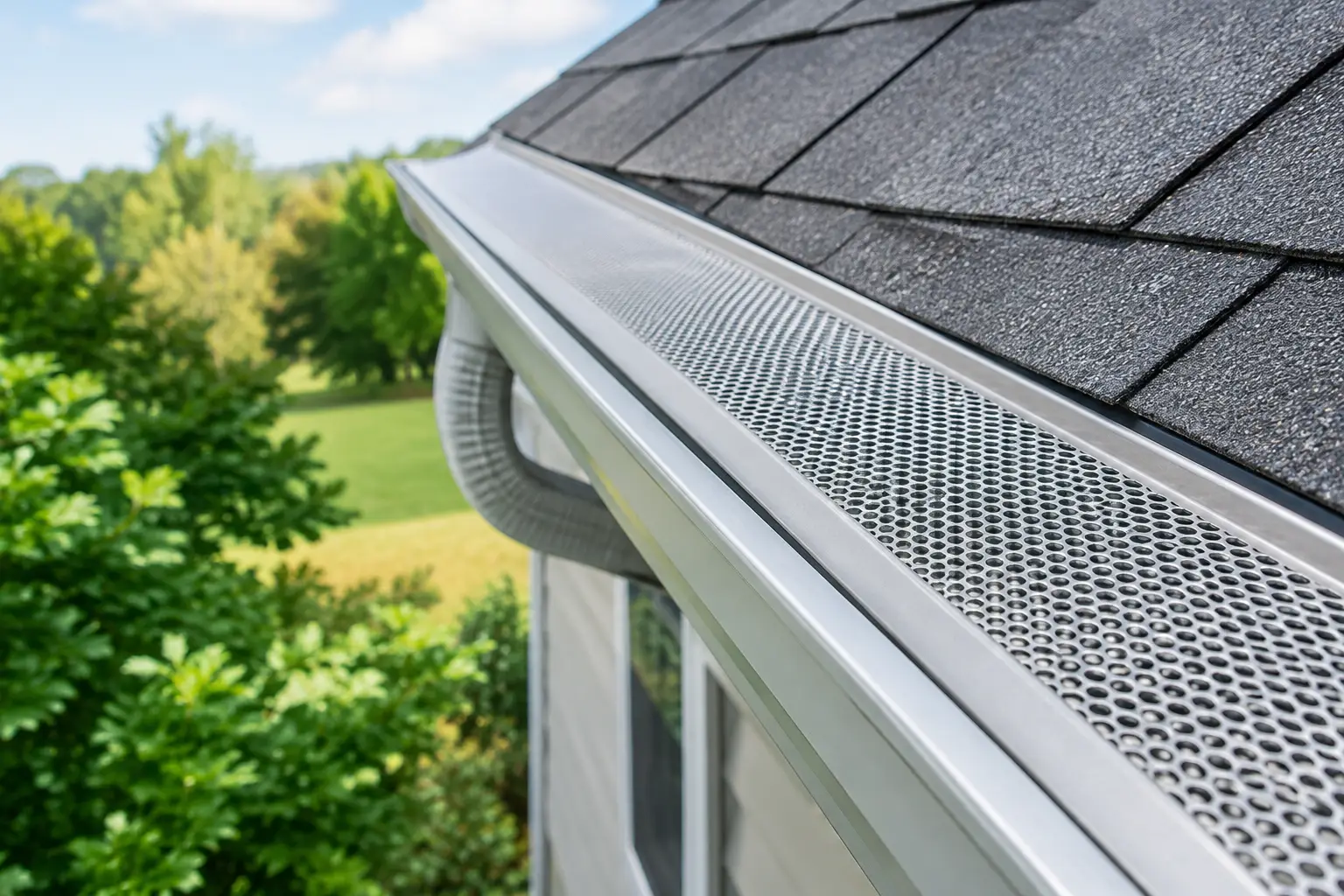
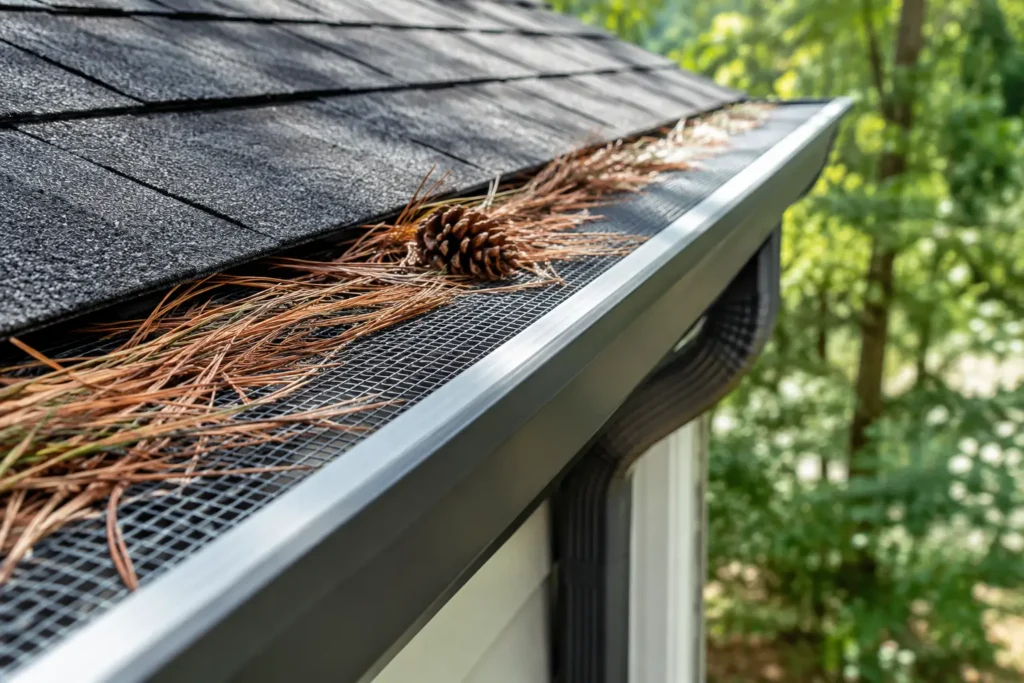
Fine stainless-steel micro-mesh guards are often the most effective option for pine needles. Their small openings are designed to let rainwater enter while preventing needles, shingle grit, and other small debris from filling the gutter channel. For homeowners dealing with steady pine needle fall, micro-mesh is generally a better fit than guards with wide holes or large perforations.
That said, no gutter guard is completely maintenance-free. Pine needles may rest on top of a micro-mesh surface, particularly during dry weather or in low-slope roof areas. Wind and rain will remove much of the debris, but some homes will still need occasional brushing or rinsing. A quality guard should reduce the frequency and difficulty of gutter cleaning, not promise that maintenance will never be needed again.
Reverse-curve or surface-tension guards can work in certain situations, but they deserve careful consideration around pines. Their front openings may catch needles, and performance can vary depending on roof pitch, shingle edge condition, rainfall intensity, and how much debris comes from surrounding trees. They are not automatically the best answer for every roof.
Brush-style and foam inserts are usually less suitable beneath pine trees. Needles can become embedded in these products, turning the insert itself into a collection point for debris. Similarly, screens with larger openings may stop leaves but allow pine needles to enter the gutter and build up below.
Look for a Guard That Fits the Roof and Gutter
A guard must be installed correctly to work correctly. It should fit the gutter securely, avoid interfering with shingle edges, and maintain a path for water to enter during heavy rain. Improper installation can cause water to overshoot the gutter or create places where debris catches more easily.
This is one reason an on-site assessment is valuable. A contractor can identify valleys that send concentrated water into a short gutter section, check for existing fascia damage, and recommend guard placement that makes sense for the roof rather than applying one approach everywhere.
Features That Improve Pine Needle Performance
The most reliable systems use several details together. A larger seamless gutter, properly matched downspouts, fine micro-mesh protection, and sound fastening all contribute to better performance. Ignoring one piece can limit the benefits of the others.
Pay close attention to these common trouble spots:
- Roof valleys that release water and debris in a concentrated stream
- Inside corners where needles tend to settle and form clumps
- Long gutter runs with too few downspouts
- Loose or rotted fascia that prevents secure gutter attachment
- Low branches that drop needles directly onto the roof and guard surface
Trimming limbs back from the roof can help, provided it is done safely and with the health of the tree in mind. It will not eliminate pine needles, but it can reduce the volume of debris reaching valleys and gutters. Keeping roof valleys clear is also important because a guard cannot prevent debris from piling up above the gutter line.
Maintenance Still Protects Your Investment
Even the best gutter and guard combination benefits from periodic inspection. Check the system after major storms and during the heaviest needle-drop seasons. Look for water overflowing at one location, streaking on the fascia, standing water in the gutter, loose hangers, or mulch and soil washing out below a downspout.
A professional inspection is particularly helpful if you notice staining on siding, peeling paint near the roofline, sagging gutters, or water entering a crawlspace or basement. These signs may point to a drainage issue, but they can also reveal fascia damage or roof problems that need attention before new gutters are installed.
For homes in Greensboro, Winston-Salem, High Point, and surrounding North Carolina communities, the right recommendation often depends on the number and type of trees around the home, the roof design, and the way water moves across the property. A detailed estimate should explain the proposed gutter size, guard type, downspout locations, and any repairs needed to support a durable installation.
When a Full Gutter Replacement Makes Sense
Adding guards to existing gutters can be a cost-effective choice when the gutters are solid, correctly pitched, and securely fastened. However, replacement is usually the better long-term decision when gutters are undersized, repeatedly clogging, pulling away from the fascia, leaking at seams, or showing widespread dents and corrosion.
Installing guards over a failing gutter system can hide a problem without fixing it. Starting with properly sized seamless gutters gives the guard a stable foundation and gives water a clear route off the roof and away from the home.
Carolina Improvements can evaluate your roofline, drainage needs, and pine needle exposure during a free in-home estimate, then recommend a solution built around your home rather than a one-size-fits-all product. The goal is simple: a clean, durable gutter system that helps protect the parts of your property water can quietly damage over time.
A good gutter system will not stop pine trees from shedding, but it can keep their needles from becoming a constant weekend chore and a growing risk to your home.