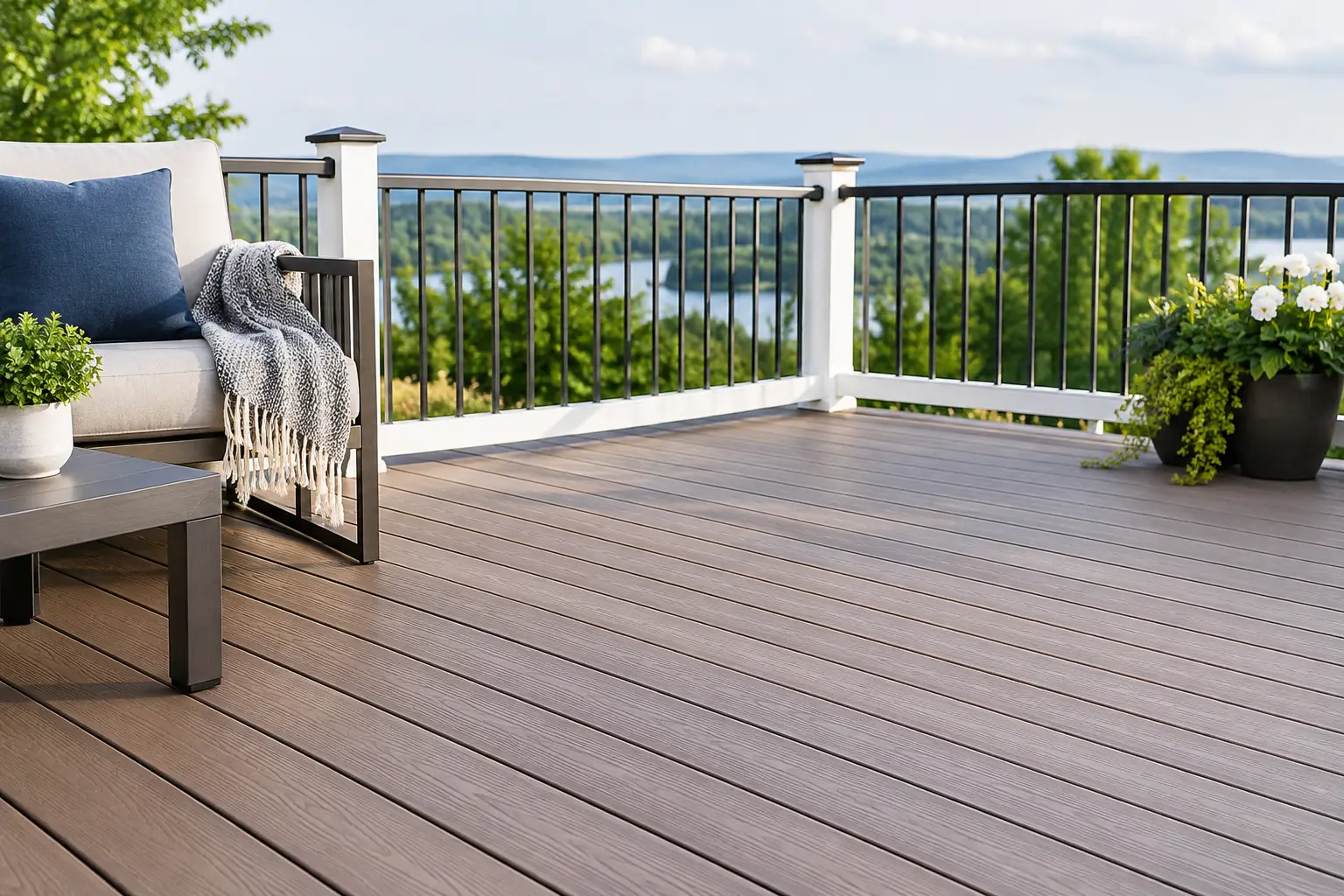

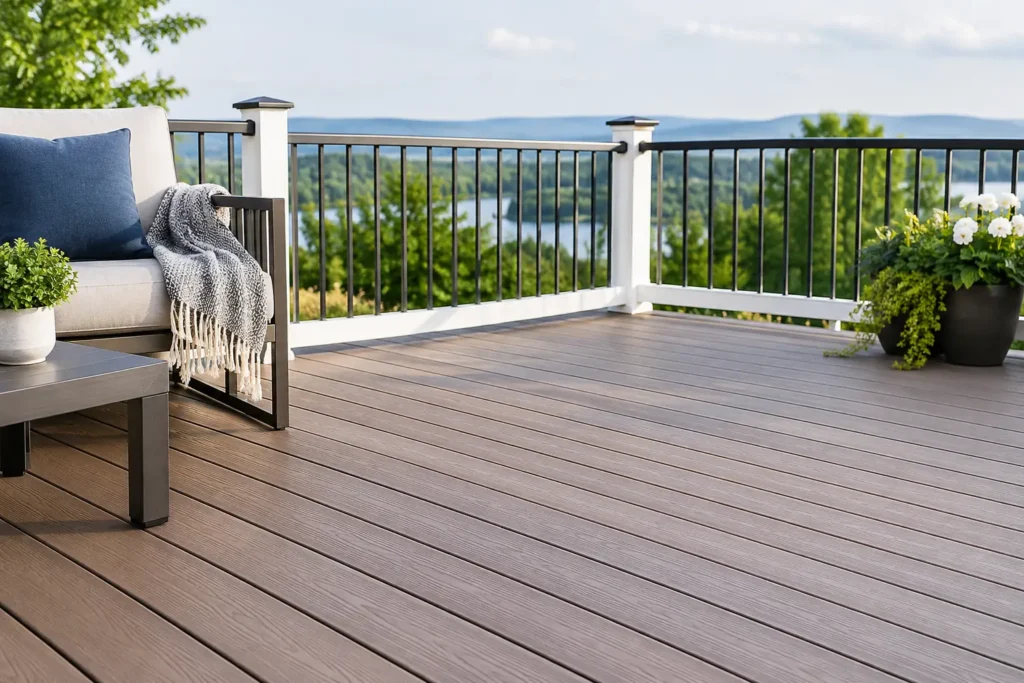
A North Carolina deck can collect yellow spring pollen, summer grease spots, wet leaves, and mildew-producing moisture in a single year. So, are composite decks low maintenance? Yes, compared with traditional wood, but they are not maintenance-free. Composite decking removes many of the most time-consuming chores associated with wood, including regular staining, sealing, and splinter repair. It still needs periodic cleaning and a sound installation to keep looking its best.
For homeowners planning an outdoor living space, the better question is not whether composite decking needs zero attention. It is whether its upkeep fits the time, budget, and appearance you want from your deck over the years. For many households, the answer is yes.
What Makes Composite Decks Low Maintenance?
Composite decking is generally made from a blend of wood fibers and plastic materials. Many premium boards also have a protective outer cap designed to resist moisture, fading, stains, and surface wear. That construction gives composite boards an advantage over untreated or painted wood, which can absorb water, crack, splinter, and lose its finish over time.
The biggest maintenance benefit is what you usually do not have to do. A composite deck does not need to be sanded and restained every few years to maintain its basic protection. It does not require routine sealing to keep water from soaking into the deck boards. And while any walking surface can become dirty, capped composite boards are less likely to develop the rough, weathered surface that makes older wood decks difficult to clean.
That can mean more weekends using the deck and fewer spent preparing it for a new coat of stain. It can also make budgeting more predictable. Composite decking often has a higher initial cost than pressure-treated lumber, but it can reduce the recurring material and labor costs of maintaining a wood finish.
Are Composite Decks Low Maintenance in North Carolina?
Composite decking is especially appealing in the Piedmont Triad and other parts of North Carolina because decks here face long humid seasons, frequent rain, intense sun, and plenty of falling debris. Moisture is the main reason homeowners should not confuse low maintenance with no maintenance.
Pollen, dirt, leaves, and mulch can hold moisture against any deck surface. In shaded areas, that damp buildup can encourage mold or mildew on top of the boards. This does not necessarily mean the composite material itself is failing. Often, it simply means the surface needs to be cleaned and the deck needs better airflow around and beneath it.
A basic rinse and gentle scrub once or twice a year is enough for many composite decks. Areas near grills, planters, trees, or pool entrances may need attention more often. Cleaning spills soon after they happen is also wise, particularly grease, sunscreen, food, and drink stains.
Always follow the decking manufacturer’s cleaning recommendations. Some products allow a mild soap-and-water wash, while others offer specific guidance for tougher stains, mildew, or pressure washing. Using a harsh chemical or an overly aggressive pressure washer can damage the board surface or affect the product warranty.
Cleaning Is Still Part of Ownership
Most composite deck care is simple, but consistency matters. Sweep away leaves and debris so water can drain freely. Wash the boards when pollen, mud, or mildew begins to build up. Clear the spaces between boards, where packed debris can trap water and reduce ventilation.
Pay attention to the less visible areas as well. A deck that stays damp underneath because of poor grading, clogged gutters, or crowded landscaping can develop problems in its framing even when the composite boards look fine. Composite boards are designed to resist moisture, but the structure below them may still be wood.
What Composite Decking Will Not Eliminate
Composite decking reduces surface maintenance, not every responsibility that comes with owning a deck. The frame, footings, railings, stairs, fasteners, and connections still need occasional inspection. These components carry the load and help keep the deck safe.
At least once a year, look for loose railings, movement in stair treads, popped fasteners, soft or damaged framing, and signs that the deck is pulling away from the house. Check that water is moving away from the foundation and that the ledger connection, where the deck meets the home, remains properly protected.
Color change is another realistic consideration. Quality capped composite decking is made to resist fading, but no exterior material remains completely unchanged after years of ultraviolet exposure. Slight weathering can occur, and replacement boards may not match older boards perfectly if repairs are needed later.
Composite boards can also scratch, particularly when moving heavy furniture, grills, or planters. Scratches are often less noticeable on textured boards, but they may not disappear. Furniture pads, grill mats approved for the decking material, and careful handling of heavy items can help protect the surface.
Installation Has a Major Effect on Maintenance
A low-maintenance deck starts with proper design and installation. Even premium composite boards can look and perform poorly if they are installed over inadequate framing, without proper spacing, or in an area where water cannot drain.
Composite boards expand and contract differently than wood as temperatures change. Installers must use the correct spacing between boards and at board ends, along with fasteners and framing layouts that meet the manufacturer’s requirements. Proper spacing helps with drainage, ventilation, and the natural movement of the material.
Joist spacing matters, too. Composite boards need appropriate support to prevent excessive flexing. The deck frame should be level, secure, and built to local code requirements. Railings and stairs should be planned as part of the system rather than treated as an afterthought.
Good drainage around the home is equally valuable. If runoff from a roof, patio, or sloped yard continually flows toward the deck, it can create muddy conditions below the structure and keep surrounding materials damp. In some homes, addressing gutters, grading, or a nearby retaining wall is part of protecting the investment in a new deck.
Composite vs. Wood: The Practical Trade-Off
Pressure-treated wood remains a practical option for homeowners who want a lower upfront cost and do not mind regular upkeep. It can be painted or stained in a wide range of colors, and individual boards are typically less expensive to replace. However, wood requires ongoing attention to protect it from moisture, sun exposure, cracking, and surface wear.
Composite decking costs more at installation, but it offers a more consistent finished appearance with less recurring finish work. It is a strong choice for homeowners who expect to stay in the home, use their deck often, or simply prefer spending less time maintaining an exterior surface.
Neither option is automatically right for every property. A smaller deck used occasionally may make wood the sensible budget choice. A large entertaining deck, a poolside platform, or a deck exposed to heavy sun and frequent moisture may justify the long-term convenience of composite materials.
How to Keep a Composite Deck Looking Its Best
The ongoing routine is straightforward: sweep debris regularly, clean the boards seasonally, remove spills promptly, and keep drainage paths clear. Avoid placing planters directly on the deck without proper risers, since trapped moisture and dirt can leave marks beneath them. If you use outdoor rugs, choose breathable options that are approved for use on composite decking and lift them periodically to clean underneath.
When inspecting the deck, look beyond the surface. Check railings, stairs, hardware, and the condition of the framing from below when accessible. If you notice persistent pooling water, loose connections, sagging, or movement, it is better to address the issue early than wait for a minor repair to become a larger project.
A well-built composite deck gives homeowners a durable place to gather without adding staining and sealing to every year’s to-do list. Carolina Improvements can help you compare deck materials, evaluate your home’s site conditions, and plan a finished outdoor space that is built for the way your family uses it.