
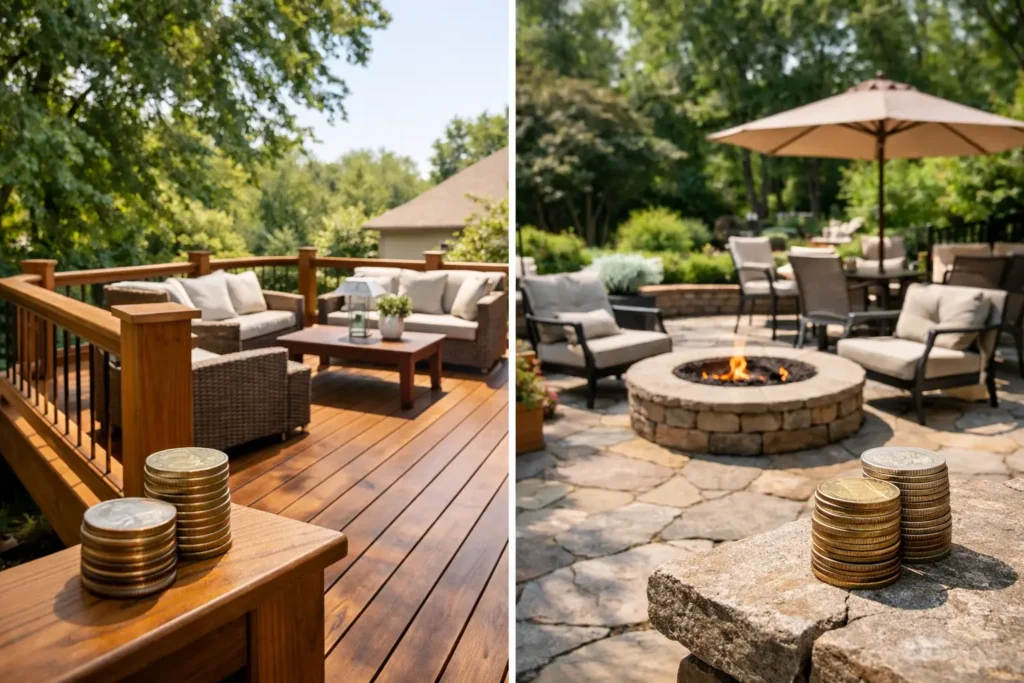
A backyard upgrade should do more than look good in listing photos. It should fit the way your household spends time outside, hold up through North Carolina weather, and make financial sense when it is time to sell. When homeowners compare deck versus patio value, the right answer is rarely one-size-fits-all. A deck and a patio can both add useful outdoor living space, but their costs, maintenance needs, and appeal are different.
The better investment is usually the one that solves a real need at your home. A raised deck may create a comfortable transition from a second-story kitchen or den. A ground-level patio may turn an unused yard into an easy place for dinners, fire pits, and family gatherings. Understanding those differences before construction begins can help you invest with confidence.
What Adds Value: Usable Space, Not Just Materials
Buyers and appraisers generally respond well to outdoor areas that feel purposeful, well-built, and easy to maintain. Neither a deck nor a patio automatically produces the same return for every property. Value is influenced by the home’s price range, neighborhood expectations, quality of construction, condition, and how naturally the space connects to the house and yard.
A small platform deck with limited access, worn boards, or unstable railings will not carry the same appeal as a thoughtfully designed deck with safe stairs, proper drainage, and room to gather. The same is true for concrete. A basic slab may be useful, but a well-finished patio with a defined seating area, attractive edges, and a layout that works for the property can feel like a genuine extension of the home.
For many buyers, the strongest value is convenience. They can picture grilling after work, watching children play, or hosting friends without needing to plan another renovation. That immediate usability is often more persuasive than a high-end material selected without regard for the home or lot.
Deck Versus Patio Value at a Glance
Decks often have a higher initial cost than a simple concrete patio because they require framing, footings, stairs, railings, and elevated structural work. They can also offer more flexibility on sloped lots, uneven terrain, or homes where the main entrance sits above grade. In those situations, a deck may be the practical option that makes outdoor access possible.
Patios are commonly less expensive when the yard is relatively level and accessible. Concrete is durable, versatile, and well suited to North Carolina’s long outdoor season. It can create substantial usable space without the structural components an elevated deck requires. Decorative finishes, pavers, retaining walls, or built-in features can raise the project cost, but they can also create a more customized result.
From a resale perspective, decks can be especially appealing when they expand living space directly outside the home’s main level. Patios often perform well when they create a low-maintenance entertaining area at ground level. A buyer may not assign a separate dollar amount to every feature, but a finished outdoor space can improve the overall impression of the property and help it compete more effectively.
When a Deck Is Worth the Investment
A deck is often the better choice when the home sits above the yard. If stepping outside currently means navigating a steep set of temporary stairs or walking around the house, a properly designed deck can make daily outdoor use much easier. It creates a direct connection between indoor living areas and the backyard.
Decks also work well for properties with grade changes that would make a large patio expensive or awkward to install. Rather than moving significant soil or building extensive retaining structures, a deck can be supported at the appropriate height and finished with stairs down to the yard.
Material selection has a major effect on long-term value. Pressure-treated wood can provide an attractive, budget-conscious option, but it needs regular cleaning, sealing or staining, and occasional board replacement. Composite decking usually costs more upfront, yet it reduces routine maintenance and resists many of the moisture-related issues that affect natural wood. For homeowners who prefer more time enjoying the space and less time maintaining it, that trade-off can be worthwhile.
Railings deserve the same consideration. They are a safety requirement on elevated decks, but they also shape the finished appearance. A railing style that complements the home, provides clear views of the yard, and is installed correctly can make a deck feel finished rather than purely functional.
When a Patio Delivers Better Long-Term Value
For a ground-level home with a fairly level backyard, a patio may provide the most usable square footage for the budget. It can accommodate a table, chairs, grill, outdoor kitchen area, or fire feature without the additional cost of an elevated structure. Concrete is also easy to clean and generally requires less ongoing attention than a wood deck.
A patio can be particularly valuable for homeowners planning to age in place. There are no deck stairs to navigate, and the space can be designed with wide, accessible paths and smooth transitions from the home. When paired with appropriate drainage and grading, a patio can offer a comfortable, practical surface for many years.
The key is proper site preparation. A patio that is installed without adequate base work, slope, or water management can settle, crack, or direct water toward the foundation. Those problems can reduce the value of the improvement and create much larger concerns. An experienced contractor evaluates the grade, drainage patterns, soil conditions, and connection to the home before recommending a patio layout.
Decorative concrete, pavers, and borders can improve curb appeal and make the patio feel more customized. Still, homeowners should balance design upgrades against neighborhood norms. The goal is a finished area that supports the property, not an outdoor project so elaborate that it is unlikely to be recognized in the home’s market value.
Maintenance and Weather Matter in North Carolina
Moisture, heat, pollen, leaf debris, and changing temperatures affect every exterior surface. That is why deck versus patio value should include the cost and effort of ownership after installation, not only the quote for construction.
Wood decks need consistent care to protect against moisture, sun exposure, mildew, and insect damage. Neglected boards can splinter, warp, or deteriorate, while fasteners and railings should be checked periodically for safety. Composite materials reduce many of these demands, though they still benefit from seasonal cleaning.
Concrete patios are not maintenance-free, but their needs are usually simpler. Keeping the surface clean, addressing drainage issues early, and sealing it when appropriate can help preserve its appearance. Small cracks may occur over time, particularly when soils move or water is not managed correctly. A good installation plan reduces that risk, but no outdoor surface is completely unaffected by weather.
If the yard has poor drainage, repair that issue before treating a deck or patio as the solution. Standing water near the house can affect foundations, encourage pests, and shorten the service life of outdoor materials. Sometimes the best project is a coordinated plan that includes grading, gutters, drainage improvements, and the new outdoor space.
Design Choices That Help at Resale
The most valuable outdoor projects tend to look like they belong with the home. Match the scale of the deck or patio to the yard. A very small area may not function well for a family, while an oversized structure can overwhelm a modest lot and reduce green space buyers want.
Access matters, too. A patio that requires walking through a side gate with food and furniture may get less use than one connected to the kitchen or family room. A deck should have stairs that lead naturally to the yard rather than ending in a narrow or inconvenient location.
Think about privacy, shade, and lighting during the design stage. A simple privacy screen, covered section, or carefully placed lighting can make a space usable more often. These features should support the main project rather than distract from it. Clean construction, quality materials, and a layout that serves everyday life are what buyers notice first.
Permits and code compliance also protect your investment. Elevated decks, railings, footings, stairs, and certain site conditions may have local requirements. Professional installation helps ensure the finished project is safe, durable, and properly documented, which can prevent surprises when the home is inspected for sale.
Choose the Project That Fits Your Property
If your home needs elevated access to the yard, has a slope to work around, or would benefit from a direct outdoor extension off the main living level, a deck may offer the stronger return. If you have a level yard and want a low-maintenance space for entertaining, a patio may stretch your budget further while delivering years of use.
Before making the choice, consider how you will use the area on an ordinary Saturday, not just for a holiday gathering. Measure the furniture you expect to use, observe where water moves after rain, and think about the path from your kitchen to the backyard. A free in-home estimate from a qualified contractor can turn those observations into a practical design and clear project scope.
Carolina Improvements helps homeowners evaluate decks, patios, concrete work, drainage considerations, and related exterior improvements as part of one organized project. The best outdoor investment is the one built for your home, your yard, and the moments you want to spend there.