
A roof replacement is not a purchase most homeowners make on a whim. When shingles are curling, granules are collecting in gutters, or a leak has made its way inside, the immediate question is often whether to replace the roof with familiar asphalt shingles or invest in metal. Shingle versus metal roofing is a practical decision about budget, long-term plans, appearance, and how well the roof will protect your home through North Carolina heat, heavy rain, wind, and occasional winter weather.
Both roofing systems can be excellent choices when they are properly specified and professionally installed. The better option depends less on a single product claim and more on your home, your priorities, and the condition of the existing roof structure.
Shingle Versus Metal Roofing: The Main Difference
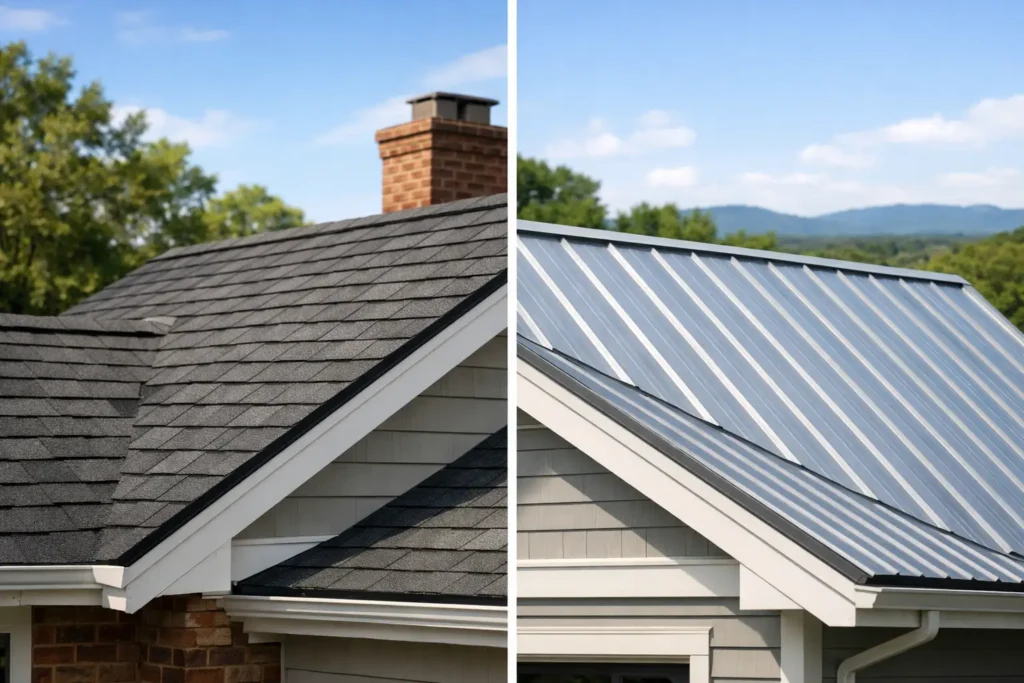
Asphalt shingle roofing remains the most common residential roofing choice because it is dependable, widely available, and offers strong value upfront. Modern architectural shingles provide more depth and durability than older three-tab styles, with color and profile options that suit everything from traditional ranch homes to newer neighborhoods.
Metal roofing is typically installed as standing-seam panels or as metal shingles designed to resemble more traditional roofing materials. It has a higher initial cost, but it is known for longevity, low maintenance needs, and a clean architectural appearance. Many homeowners also choose metal for its ability to shed rain and resist damage from sun exposure over time.
The decision is not simply about which material is “best.” A well-installed shingle roof can be the right investment for one homeowner, while a metal roof may make more sense for another who expects to stay in the home for decades.
Upfront Cost and Long-Term Value
For most homeowners, cost is where the comparison begins. Asphalt shingles generally cost less to install than metal roofing. Materials are less expensive, installation is more familiar across the industry, and replacement is often straightforward when the roof deck and underlying structure are in good condition.
Metal roofing requires a larger initial investment. The material itself costs more, and proper installation requires experienced crews, accurate measurements, specialized trim work, and careful attention to fastening and flashing details. A lower metal quote is not automatically a better value if it leaves out necessary components or uses a system that is not suited to the home.
Over the long term, metal can offer value through its extended service life. Many metal roofing systems can last 40 to 70 years or longer with proper installation and maintenance, while architectural shingle roofs commonly last around 20 to 30 years depending on product quality, ventilation, weather exposure, and upkeep. If you plan to remain in your home for many years, avoiding another full roof replacement may help justify metal’s higher initial price.
If you expect to sell within a shorter timeframe, a quality shingle roof may be the more practical choice. A new roof adds confidence for buyers, improves curb appeal, and resolves inspection concerns without requiring you to pay for a lifespan you may not personally use.
Weather Performance in North Carolina
North Carolina roofs face a wide range of conditions: hot summer sun, humid air, hard-driving rain, thunderstorms, wind, falling limbs, and, in some areas, occasional ice and snow. No roofing material is completely maintenance-free or immune to storm damage. The quality of the installation matters just as much as the roofing surface.
Rain and Wind
Metal panels shed water quickly and are an especially good fit for roofs with the proper slope and drainage design. Standing-seam systems have concealed fasteners, which can reduce exposed points where water could eventually work its way in. Proper flashing around chimneys, valleys, skylights, walls, and pipe penetrations remains essential.
Architectural shingles also perform very well in rain and wind when installed with the correct underlayment, starter course, ventilation, and manufacturer-approved fastening pattern. Higher wind-rated shingles are available for homeowners who want additional protection in storm-prone areas.
Heat and Energy Efficiency
Metal roofing can reflect a meaningful portion of the sun’s heat, particularly when it is finished in a lighter or reflective color. That may help reduce heat gain in the attic and support more comfortable indoor conditions during a Piedmont summer.
A shingle roof can also support good energy performance, especially when paired with proper attic insulation and ventilation. Roof color, attic airflow, insulation levels, and air sealing all affect comfort and utility costs. Changing roofing material alone will not correct an under-insulated or poorly ventilated attic.
Impact and Storm Debris
Metal is often selected for its strength, but it can dent when struck by large hail or falling branches. A dent may be cosmetic, or it may require repair depending on the extent and location of the damage. Shingles can lose granules, crack, lift, or tear during severe weather, but individual damaged areas may sometimes be easier to repair or blend into the roof.
If tree limbs regularly overhang your home, addressing those limbs is part of protecting any new roof. Good gutters and drainage also help move water away from the roofline, fascia, and foundation.
Appearance, Noise, and Curb Appeal
Shingles offer the widest range of familiar residential looks. They work naturally with many North Carolina home styles and can create a traditional, layered appearance in colors ranging from warm browns to charcoal and weathered gray. For homeowners replacing an existing shingle roof, staying with shingles can preserve the character of the home while delivering a fresh, updated finish.
Metal has become more popular well beyond barns and rural buildings. Standing-seam metal roofing gives a home crisp lines and a distinctive finish, while metal shingle profiles can provide a more classic look. It can be used for an entire roof or as an accent over porches, additions, bay windows, and other architectural features.
Homeowners sometimes worry that a metal roof will be loud in the rain. With proper roof decking, underlayment, attic insulation, and interior ceilings, a residential metal roof is not usually dramatically noisier indoors than a shingle roof. The sound difference is often less noticeable than expected.
Before selecting a color or profile, consider the home’s siding, brick, trim, shutters, and surrounding landscape. A roof is a major visual surface, so a sample that looks appealing on its own should also work with the entire exterior.
Installation Details That Matter More Than Material
The best roofing material can still fail early if installation shortcuts are taken. A complete roof replacement should begin with an assessment of the roof deck, not just the visible shingles or panels. Soft decking, hidden leaks, damaged fascia, inadequate ventilation, and failing flashing need to be addressed before the new roof goes on.
For shingle systems, correct nailing, underlayment, ice and water protection where needed, starter shingles, ridge ventilation, and flashing are all important. For metal systems, panel layout, trim details, fastener placement, expansion allowance, and transitions around penetrations deserve the same level of care.
Installing metal over existing shingles may be possible in limited situations, but it is not always the best approach. A tear-off allows the installer to inspect the deck and correct hidden issues. It also avoids layering old problems beneath a new roofing system. Your contractor should explain the condition of your existing roof and why a particular installation method is recommended.
Which Roof Is Right for Your Home?
Choose asphalt shingles if you want a cost-effective replacement, prefer a traditional appearance, or are balancing several home improvement priorities at once. A quality architectural shingle roof is a durable, attractive solution for many homes.
Consider metal roofing if you plan to stay long term, value extended lifespan, prefer its appearance, or want a system designed to perform well through years of sun and rain. It can be particularly worthwhile when the home’s style and budget support the investment.
It is also reasonable to choose based on the rest of your project. If you are replacing siding, adding gutters, building an addition, or updating windows, coordinating exterior materials and timing can help create a finished look while keeping the work organized.
A free in-home assessment gives you the opportunity to compare real options for your roof rather than relying on broad averages. Carolina Improvements can evaluate the roof’s condition, discuss shingle and metal choices made in the USA, and provide a clear quote based on the protection and appearance your home needs. The right roof should feel like a well-planned improvement: built to last, suited to your budget, and installed with care.