
A gutter can look clean from the ground and still be holding enough wet leaves, pine needles, and roof grit to block water at the next heavy rain. Leaf guard gutter systems are designed to reduce that recurring problem by keeping most debris out while allowing rainwater to enter and move safely away from the house.
For North Carolina homeowners, that protection can matter well beyond avoiding a Saturday afternoon on a ladder. Overflowing gutters can soak fascia boards, stain siding, wash out landscaping, contribute to foundation moisture, and create icy walkways during cold snaps. The right system can reduce maintenance and help protect the areas of your home that depend on reliable drainage.
What Leaf Guard Gutter Systems Actually Do
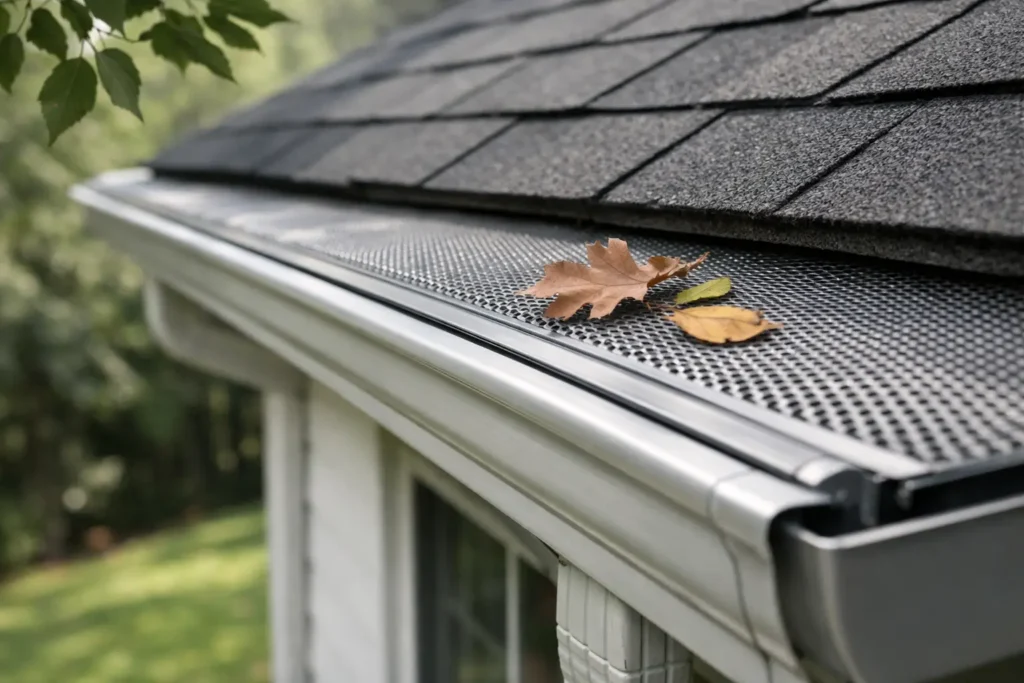
A leaf guard is a cover, screen, or insert installed over or inside a gutter channel. Its job is not to make a gutter disappear from your maintenance list forever. Its job is to limit the amount of debris that reaches the inside of the gutter, where it can compact, hold water, and form a blockage.
Most systems use one of several approaches. Screen-style guards allow water through openings while stopping larger leaves. Fine-mesh guards are designed to catch smaller debris, including many pine needles and roof granules. Reverse-curve covers use the surface tension of water to guide rain into the gutter while leaves pass over the edge. Foam and brush inserts sit inside the gutter and filter debris, although they can themselves collect material over time.
The best choice depends on the trees around your property, the slope and condition of your roof, your existing gutter size, and the volume of water your home needs to manage. A system that performs well under broad maple leaves may not be the best fit below pine trees or near a roof that sheds heavy amounts of granules.
Why Gutter Protection Matters for Your Home
Gutters are a simple part of the exterior, but their work is critical. When water cannot move through the trough and downspouts, it spills where it should not. That runoff often lands close to the foundation, where repeated saturation can create drainage concerns and add stress to landscaping, masonry, and lower exterior finishes.
Clogged gutters can also hold moisture against the roof edge. Over time, that can contribute to deteriorating fascia, peeling trim paint, wood rot, and pest activity. During a strong Piedmont rainstorm, a clogged section may overflow quickly enough to leave visible streaks on siding and send water over entry areas.
Leaf protection is especially helpful for homeowners who have mature trees, second-story rooflines, limited mobility, or a history of gutter overflow. It can also be a practical improvement for households that simply want fewer ladder climbs and a more predictable maintenance schedule.
The Benefits and Limits of Gutter Guards
The main benefit is reduced cleaning. A properly selected and installed guard keeps much of the leaf buildup out of the gutter channel, so water has a clearer path to the downspouts. That can make seasonal maintenance easier and help the system perform during the storms when it matters most.
Quality guards may also help discourage nesting pests and reduce the wet, decomposing debris that attracts insects. Because gutters stay cleaner, homeowners can more easily spot issues such as loose hangers, damaged sections, or downspout problems before they become larger repairs.
Still, no product should be presented as maintenance-free. Small debris can collect on top of nearly any guard, particularly in areas with pine needles, seed pods, shingle grit, or heavy pollen. Guards may need occasional brushing or rinsing, and the gutters and downspouts should still be inspected periodically.
There is also a performance trade-off. Very fine mesh can do an excellent job blocking small debris, but it must be installed at the proper angle and secured correctly so water does not skim past the gutter in a hard rain. Less expensive insert-style options can be easier to install, but they may break down or become more difficult to clean. The value of a guard depends as much on the complete drainage system as it does on the cover itself.
Start With the Gutters You Have
Installing guards over worn-out, undersized, or poorly pitched gutters does not solve the underlying problem. Before adding protection, a professional should assess the condition of the full system, including gutter sections, seams, hangers, corners, downspouts, and discharge areas.
Look for signs that replacement or repair should come first. Sagging sections, frequent leaks at seams, peeling fascia, standing water in the gutter, and downspouts that back up are all reasons to address the system before adding a cover. If water regularly overshoots the gutter during storms, the home may need a larger gutter profile, improved pitch, additional downspouts, or changes to the roof-to-gutter connection.
This is where an in-home assessment is useful. Rather than choosing a guard based on a package claim, you can evaluate the specific challenges around your home. A one-story ranch with several oak trees has different needs than a two-story home with steep rooflines and long valleys that release concentrated water.
Questions to Ask Before Choosing a System
A good contractor should be able to explain how the product handles the debris common to your property and how it performs in heavy rain. Ask whether the system can be installed on your existing gutters, whether any repairs are needed first, and how the guard attaches to the roof edge and gutter.
You should also ask how downspouts will be checked and cleaned, what maintenance is still recommended, and whether the installation affects any existing roof warranty. Clear answers are more valuable than a broad promise that you will never need to think about your gutters again.
Professional Installation Protects the Details
Gutter guards are often sold as a simple add-on, but installation quality has a direct effect on performance. The guard needs to fit the gutter profile, allow proper water flow, stay secure through wind and storms, and avoid creating problems at the roof edge.
Professional installation also gives the crew an opportunity to correct issues that are easy to miss from the ground. They can clear existing debris, verify that gutters drain toward the downspouts, secure loose hangers, and identify areas where water may be reaching fascia or siding. Clean work practices matter here too, since old gutter debris, fasteners, and roofing material should not be left around the home.
For homeowners planning other exterior work, gutter protection can be a smart time to review related needs. Roof repairs, siding replacement, fascia repairs, and drainage improvements often overlap. Coordinating those details with one qualified contractor can help prevent a new gutter system from being removed or altered shortly afterward for another project.
Cost: What Are You Paying For?
The cost of leaf guards varies widely based on the guard material, linear footage, roof height, gutter condition, access, and debris conditions around the home. Systems designed for fine debris and professionally installed products generally cost more than basic do-it-yourself screens. However, the lowest initial price is not always the lowest long-term cost if the product shifts, clogs easily, or requires frequent replacement.
Consider the value in terms of maintenance, safety, and property protection. If you currently pay for repeated gutter cleaning, avoid the task because of ladder safety concerns, or have experienced water damage from overflow, a quality guard system may make practical financial sense. If your property has few trees and easy access to one-story gutters, routine cleaning may remain the more economical option.
A detailed quote should explain what is included, whether gutter repairs or replacement are needed, and how the final system will be tailored to the home. Financing options can also make it easier to address a larger drainage or exterior improvement project without delaying necessary work.
A Better Way to Plan Your Gutter Upgrade
The goal is not simply to cover your gutters. It is to move rainwater away from your home reliably, season after season. That starts with gutters sized and installed correctly, secure downspouts, appropriate drainage at the ground, and a guard system suited to the debris around your property.
Carolina Improvements can help homeowners evaluate the full picture during a free in-home estimate, from the condition of the current gutters to the practical benefits of a no-leaf gutter solution. A thoughtful recommendation now can mean less time on a ladder and more confidence when the next Carolina storm rolls through.