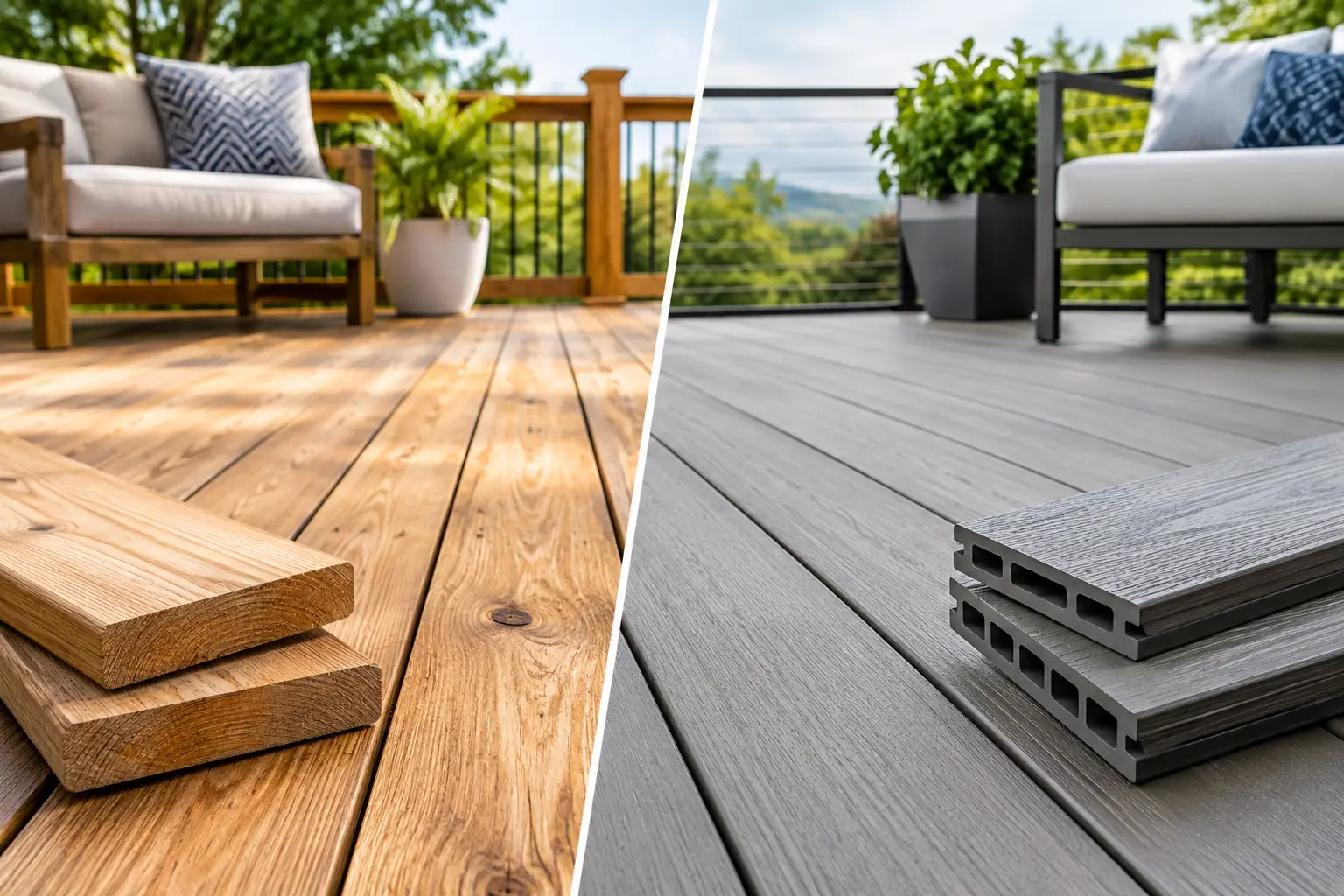

A North Carolina deck has to handle more than a few weekend cookouts. It faces humid summers, heavy rain, pollen, strong sun, falling leaves, and the occasional icy morning. When homeowners weigh wood decks versus composite decking, the best choice is rarely just about the initial price. It is about how much maintenance you want to take on, how you plan to use the space, and what lasting value means for your home.
Both materials can create an attractive, dependable outdoor living area when the deck is designed and installed correctly. The right answer depends on your priorities, not a one-size-fits-all recommendation.
Wood Decks Versus Composite Decking: The Core Difference
A traditional wood deck uses natural lumber for the surface boards, usually pressure-treated pine, cedar, or another durable species. Pressure-treated lumber is a common choice because it is more budget-friendly and designed to resist rot and insect damage. Wood has a familiar, natural look that many homeowners prefer, especially when it complements an older home, wooded lot, or classic backyard setting.
Composite decking is manufactured from a blend of recycled wood fibers and plastic materials. Many modern composite boards have a protective outer cap that helps resist moisture, stains, fading, and surface wear. The boards are available in a broad range of colors and grain patterns, giving homeowners a more consistent finished appearance without the routine staining associated with natural wood.
Neither material is automatically better. Wood offers warmth, flexibility, and a lower entry cost. Composite offers reduced upkeep and color consistency over time. The choice becomes clearer when you compare the factors that affect daily ownership.
Initial Cost and Long-Term Budget
Wood is generally the more affordable option at the beginning of a project. Pressure-treated lumber is widely available, and it can be a practical solution for homeowners who want a quality deck while keeping their initial investment under control. If your current deck needs replacement and you are also planning other projects such as a roof, windows, siding, or concrete work, a wood deck may leave more room in the immediate budget.
Composite decking typically costs more upfront. The material itself is more expensive, and some composite systems use hidden fasteners, picture-frame borders, specialized trim, and matching accessories that add to the total project cost. That higher price can make sense for homeowners who expect to remain in the home for years and would rather spend less time and money on refinishing.
The longer-term comparison should include maintenance. A wood deck may need periodic cleaning, staining, sealing, and board replacement as it ages. Composite does not need staining or sealing, although it still benefits from regular washing. Over a decade or more, the gap between the two options may narrow depending on how consistently a wood deck is maintained.
Maintenance in North Carolina Weather
Moisture is one of the biggest concerns for any exterior deck in the Piedmont Triad and surrounding areas. Rain, humidity, shade, and leaves can create conditions where mildew and algae develop. Wood is especially susceptible if water sits on the surface or if the deck has poor airflow beneath it.
A wood deck needs a regular maintenance plan. Cleaning removes dirt, pollen, mildew, and organic buildup. Stain or sealer helps limit moisture absorption and sun damage, but those protective finishes wear over time. The exact schedule depends on sun exposure, tree cover, traffic, and the product used, but homeowners should expect to inspect and refresh the finish periodically.
Composite is easier to maintain, not maintenance-free. Dirt, pollen, grease, and mildew can still collect on the surface, particularly in shaded areas. Most composite decks can be cleaned with soap, water, and a soft brush, following the manufacturer’s care instructions. Homeowners who want to avoid the cycle of sanding, staining, and sealing often find that advantage worthwhile.
Good construction matters just as much as board material. Proper drainage, secure flashing where the deck connects to the home, correct joist spacing, and adequate ventilation help protect the framing below. In fact, most composite decks still use wood framing, so the supporting structure must be built to stand up to weather for the long term.
Appearance, Feel, and Everyday Use
Wood changes over time, and that is either a benefit or a drawback depending on your taste. Freshly stained lumber has depth, variation, and a natural character that manufactured boards cannot perfectly duplicate. Homeowners can also change the color of a wood deck in the future by selecting a different stain.
That flexibility comes with work. Without consistent care, wood can fade, crack, splinter, cup, or develop uneven coloring. High-traffic areas near steps, grills, and doors may show wear first. Bare feet, young children, and pets can make splinters and rough boards more than a cosmetic concern.
Composite provides a more uniform appearance and is available in colors ranging from light driftwood tones to deeper browns and grays. It resists splintering, which is appealing for families who use the deck often. Quality composite products can also offer realistic grain patterns, but they still have a more manufactured look than natural lumber.
Heat is worth considering before selecting a color. Dark decking of any kind can become hot in direct summer sun, and some composite boards can retain more surface heat than wood. For a sunny backyard, a lighter color, shade structure, or a layout that includes a covered area can make the deck far more comfortable in July and August.
Durability, Repairs, and Structural Details
Wood is easy to cut, modify, and repair. If one board becomes damaged, it can often be replaced and stained to blend with the rest of the deck. This can be helpful for homes where the deck may later be expanded, tied into a patio, or adjusted to accommodate an enclosure or accessibility ramp.
Composite boards are designed for durability, but repairs can be less simple. A damaged board can be replaced, yet matching the exact color after years of weather exposure may be difficult. Product lines can also change. Choosing a reputable manufacturer and retaining a few extra boards from the original project can be a smart precaution.
Composite is highly resistant to rot and insects, but it is not structural framing. It must be installed over properly sized and spaced joists according to the manufacturer’s requirements. Some products require closer joist spacing than wood decking. Railing systems, stairs, fasteners, ledger connections, and footings all need the same careful attention regardless of the deck surface you choose.
A professional assessment should also consider the deck’s height, access points, drainage around the home, and local code requirements. A beautiful deck is only a lasting investment when the structure underneath is sound.
How Each Option Can Affect Home Value
A well-planned deck adds usable outdoor space, which is attractive to many buyers. It creates room for family meals, entertaining, quiet mornings, and better connection between the home and backyard. Material alone does not determine resale value, but visible condition matters.
A clean, recently maintained wood deck can make a strong impression. A faded deck with peeling stain, loose boards, or signs of water damage can create questions about upkeep. Composite can appeal to buyers who value low-maintenance features, especially when paired with quality railings and a design that fits the home’s architecture.
For homeowners planning to stay in place, the better value is often personal. Consider whether you enjoy maintaining natural wood, whether free weekends are limited, and how heavily the deck will be used. A lower-cost wood deck may be the right fit for one family, while a composite deck may better serve another family that wants years of simpler care.
Choosing the Right Deck for Your Home
Choose wood if you want the natural appearance of real lumber, a lower upfront cost, and the option to change the deck’s color over time. It is a strong choice when you are comfortable committing to seasonal cleaning and periodic refinishing.
Choose composite if you prefer reduced maintenance, consistent color, and a surface that resists splinters, rot, and insect damage. It can be especially worthwhile for busy households, high-use outdoor spaces, and homeowners who expect to enjoy the deck for many years.
Before making a final decision, look at full-size material samples outside your home. View them in direct sunlight and shade, and consider how the color works with your siding, trim, roof, and landscaping. A detailed estimate should separate the cost of framing, decking, railing, stairs, footings, demolition, and any needed drainage or repair work so you can compare options clearly.
Carolina Improvements helps homeowners evaluate those details in person, with recommendations built around the home, the budget, and the way the family plans to use the space. The goal is not simply to install boards. It is to build an outdoor area that feels dependable from the first gathering to the years that follow.
A deck should make it easier to enjoy your home, not add another ongoing concern. Select the material that fits your expectations for care, comfort, and cost, then give equal attention to the craftsmanship behind it.