
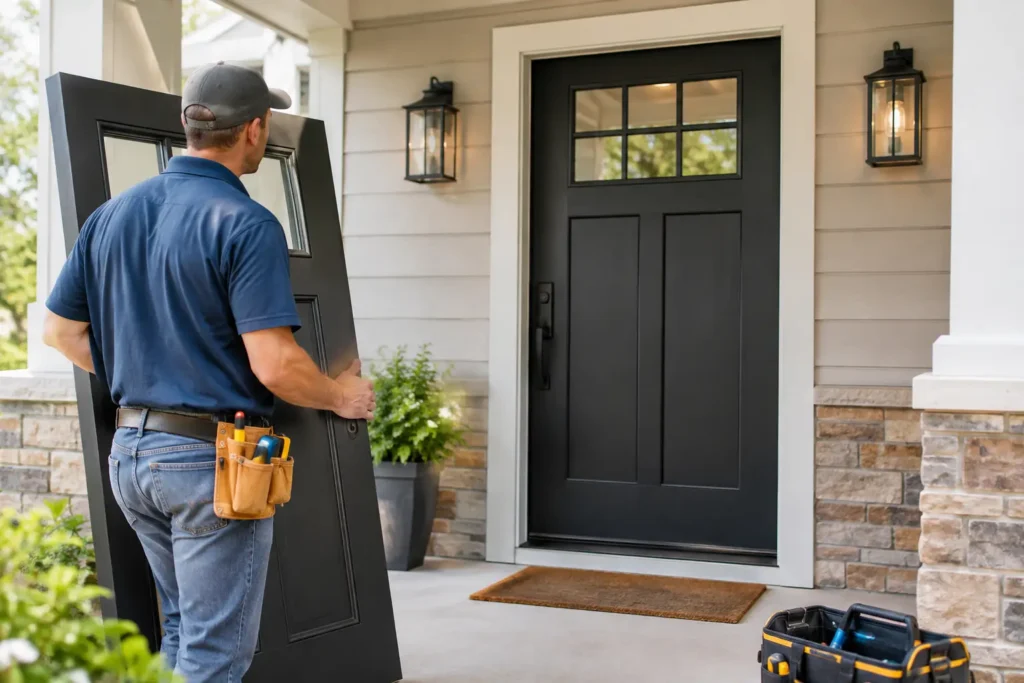
A front door that sticks, lets in drafts, or no longer latches securely is more than an everyday frustration. It can affect your home’s comfort, energy use, security, and curb appeal. This exterior door replacement guide helps North Carolina homeowners recognize when replacement makes sense, compare the right materials, and plan for an installation that protects the home for years to come.
When Is It Time to Replace an Exterior Door?
Some door problems can be corrected with a new sweep, weatherstripping, hinges, or lockset. Replacement becomes the better long-term decision when the door itself, its frame, or the surrounding opening has begun to fail.
Look closely at the door on a rainy or windy day. Daylight around the edges, water near the threshold, rattling panels, or a noticeable draft can point to gaps that are costing comfort and energy. A door that is difficult to open may be swollen from moisture, but it may also signal a damaged frame or movement in the opening.
Replacement is often warranted when you see several of these conditions:
- Rot, soft wood, cracked panels, rust, or warping
- Water stains, peeling paint, or deterioration around the frame
- A deadbolt or latch that will not align reliably
- Persistent drafts despite new weatherstripping
- Broken glass, failed sidelights, or fogging between insulated glass panes
Security is another reason to act. An older door with a weak frame, loose hinges, or a worn lock area can leave a vulnerable entry point. Replacing the entire system gives you the opportunity to improve the door, frame, threshold, hinges, locking hardware, and weather protection together.
Exterior Door Replacement Guide: Start With the Opening
The most attractive door will not perform well if it is installed in an opening with hidden water damage or improper flashing. Before selecting a style, have the existing door and surrounding trim evaluated. A professional assessment should look at the jamb, sill, threshold, exterior trim, siding connection, and framing where needed.
This step matters especially in the Piedmont Triad, where humid summers, heavy rain, changing temperatures, and seasonal pollen can expose weak seals over time. If water has been entering around the door, simply placing a new slab in the old frame may not solve the underlying problem.
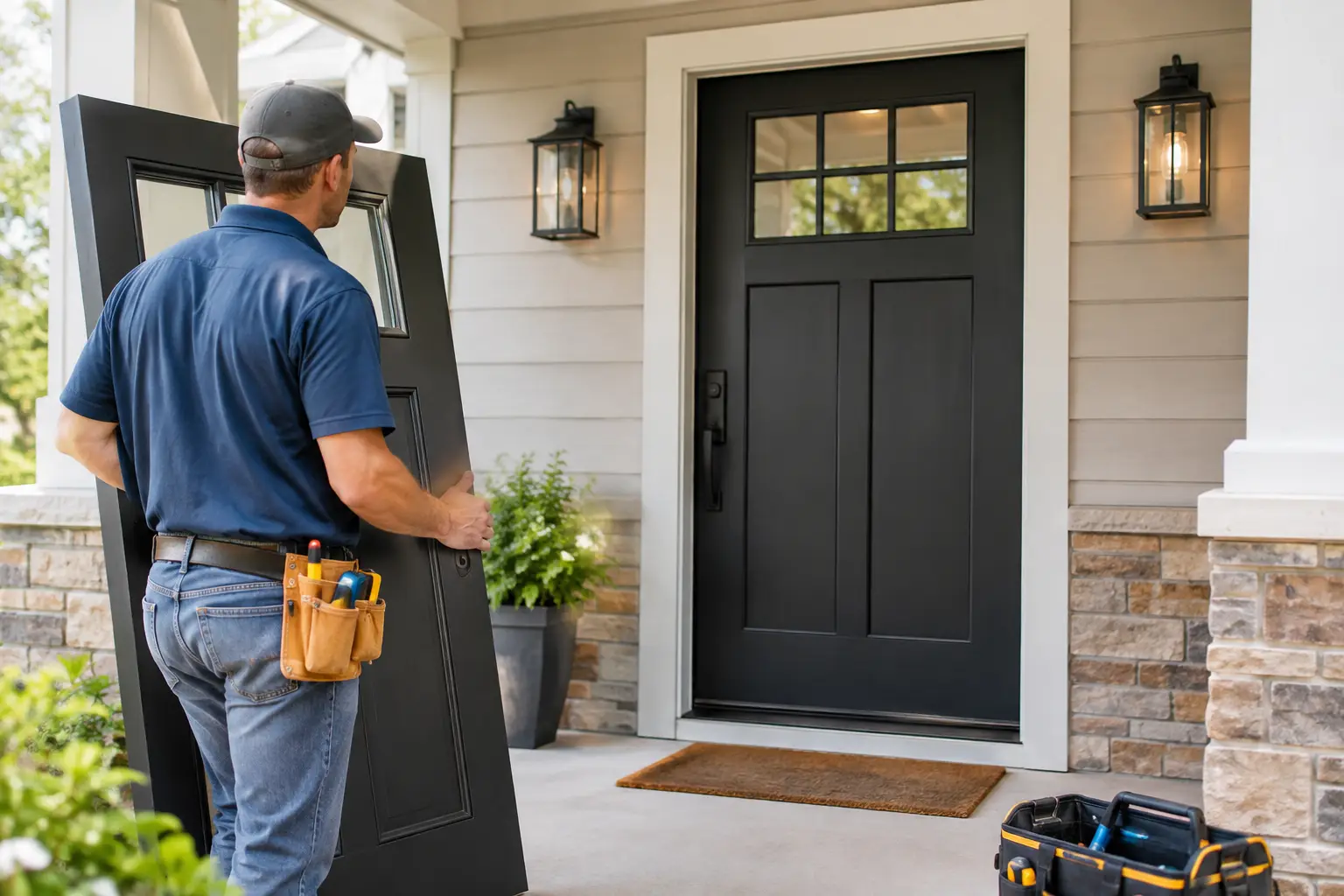
A full-frame replacement removes the old door and frame so the installer can inspect the opening, correct damaged materials, install proper flashing and sealants, and fit a complete new door system. It is typically the best choice when there is rot, poor alignment, water intrusion, or a desire to change the door size or add sidelights.
A slab-only replacement uses the existing frame. It can be a practical option when the frame is sound, square, and compatible with the new door. It is usually less extensive, but it offers less opportunity to address concealed issues. The right approach depends on the condition of your current opening, not only the price of the new door.
Choose a Door Material for How You Live
Exterior doors are available in several materials, each with advantages. The best choice depends on the entrance location, amount of sun and weather exposure, maintenance preferences, budget, and the look of your home.
Fiberglass doors
Fiberglass is a popular choice for front entries because it balances durability, insulation, and design flexibility. It resists dents, moisture, and warping better than many wood doors, and it can be finished to resemble wood grain or painted in a wide range of colors. For homeowners who want the warmth of a traditional entry without frequent maintenance, fiberglass is often a strong fit.
Not every fiberglass door is the same. The quality of its construction, insulation, frame, finish, and hardware all affect performance. A well-built system installed correctly is more valuable than choosing a material based on the label alone.
Steel doors
Steel doors are known for strength, security, and value. They are often a sensible choice for side doors, garage entries, and budget-conscious front-door projects. Many insulated steel doors provide solid thermal performance and can be painted to complement the home’s exterior.
The trade-off is that steel can dent, and scratches should be touched up promptly to prevent rust. In a heavily exposed location, a covered entry or storm door may help extend the finish’s appearance.
Wood doors
Wood provides a distinctive, traditional appearance that can be especially appealing on historic, custom, or craftsman-style homes. It can also be refinished, repaired, and customized more easily than some manufactured materials.
However, wood needs regular attention. Sun, rain, and humidity can cause expansion, contraction, fading, and finish wear. A wood door performs best when protected by a substantial overhang and maintained on schedule. It can be a beautiful investment, but it is not usually the lowest-maintenance choice.
Glass and decorative options
Glass panels, sidelights, and transoms can make an entry feel brighter and more welcoming. Privacy glass, textured glass, internal blinds, and decorative grids offer ways to bring in natural light without giving up the level of privacy you want.
More glass can affect privacy, cost, and energy performance, so consider the direction the entry faces. For a sunny west-facing door, insulated glass with appropriate coatings can help manage heat gain. For a front entrance close to the sidewalk or street, obscure glass may be more comfortable than clear glass.
Do Not Overlook Energy Efficiency and Weather Protection
A replacement exterior door should create a tight, reliable barrier between your home and the weather. The door panel matters, but so do the components around it: compression weatherstripping, an adjustable threshold, a durable sweep, insulation around the frame, and proper sealing at the exterior.
Ask about the door’s energy performance, particularly if you are replacing an older, poorly insulated unit. Energy-efficient glass and insulated cores may improve comfort near the doorway and reduce strain on your heating and cooling system. The actual savings depend on the existing door, the home’s overall insulation, and how much air leakage is present, so it is wise to treat energy efficiency as one part of the decision rather than the only reason to replace.
For homes exposed to driving rain, installation details deserve extra attention. Proper sill pan flashing and water management help direct water away from the framing instead of allowing it to collect beneath the threshold. These details are largely invisible after installation, but they are central to a durable result.
Select Hardware That Improves Daily Security
Your door hardware should be comfortable to use and built for frequent operation. A quality deadbolt, reinforced strike plate, and long screws secured into the framing can provide a meaningful upgrade over basic hardware installed in aging trim.
Consider who uses the door each day. Lever handles may be easier for children, older adults, and anyone carrying groceries. Smart locks offer keyless entry and remote features, but they require batteries and should still be paired with dependable mechanical hardware. A traditional keyed lock is simple and familiar, while a keypad can be convenient for families, guests, or service access.
Finish matters, too. Choose a finish that works with your exterior style and will be easy to maintain in the entry’s level of sun and exposure. Matching the handle, deadbolt, house numbers, and lighting can create a more finished look without making the project feel overdesigned.
Plan the Installation, Not Just the Purchase
Door replacement is a precision project. Even a small measurement error can lead to gaps, binding, or a door that does not seal correctly. A professional installer measures the opening, confirms the handing and swing direction, reviews trim and siding conditions, and checks whether the threshold will transition safely to the interior and exterior surfaces.
Before installation day, clear furniture and décor from the entry area and create a path for workers to move materials. If the door is your primary entrance, discuss how long the opening will be unsecured and whether weather could affect the schedule. Most straightforward replacements can be completed efficiently, while projects involving structural repairs, custom sizes, sidelights, or exterior trim may require more time.
A dependable contractor should explain what is included in the quote, how existing damage will be handled if it is uncovered, and what cleanup will look like when the work is complete. Clear communication is especially valuable when door replacement connects to other improvements, such as new windows, siding, porch repairs, accessibility ramps, or exterior trim work.
For homeowners who want one experienced team to assess the opening, recommend quality American-made products, and manage installation with care, Carolina Improvements provides free in-home estimates and practical recommendations based on the home itself. Financing options can also make it easier to move forward when a failing entry door needs attention sooner rather than later.
A new exterior door should feel solid when it closes, keep the weather outside, and make coming home a little better every day. Choosing the right system and giving installation the attention it deserves can turn a necessary repair into a lasting improvement.