
A leak on a low-slope roof rarely stays small for long. Water can travel beneath the membrane, wet insulation or decking, and show up indoors far from the original opening. When it is time to replace a flat or low-slope roof section, the choice often comes down to EPDM versus TPO roofing. Both systems can provide dependable protection, but they handle sunlight, seams, repairs, and temperature differently.
For North Carolina homeowners, the right choice depends on the roof’s design, sun exposure, drainage, existing materials, and how the space below the roof is used. A garage, porch enclosure, room addition, carport, or low-slope section tied into a shingle roof may have different needs than a fully conditioned living area.
What Are EPDM and TPO Roofing?
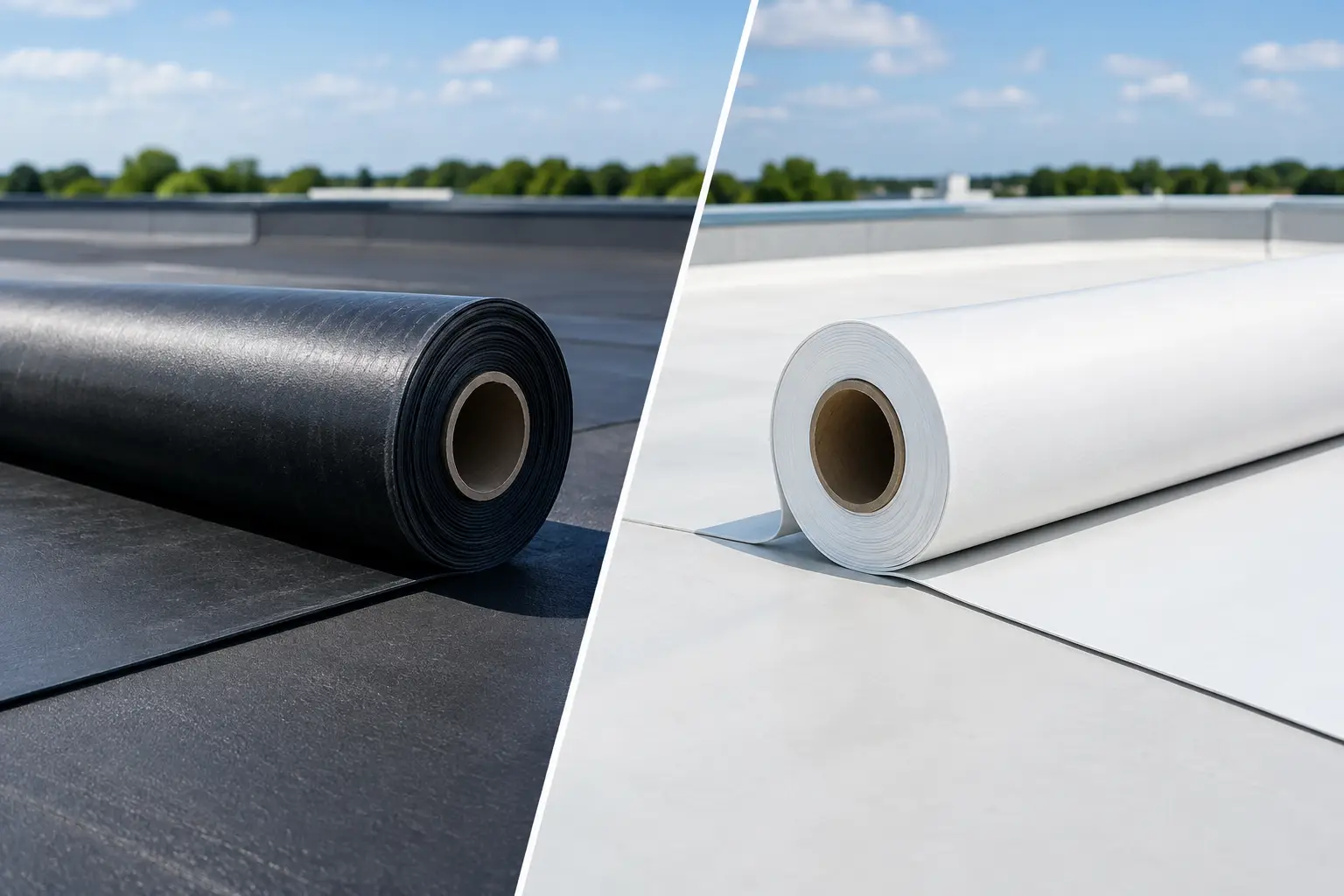
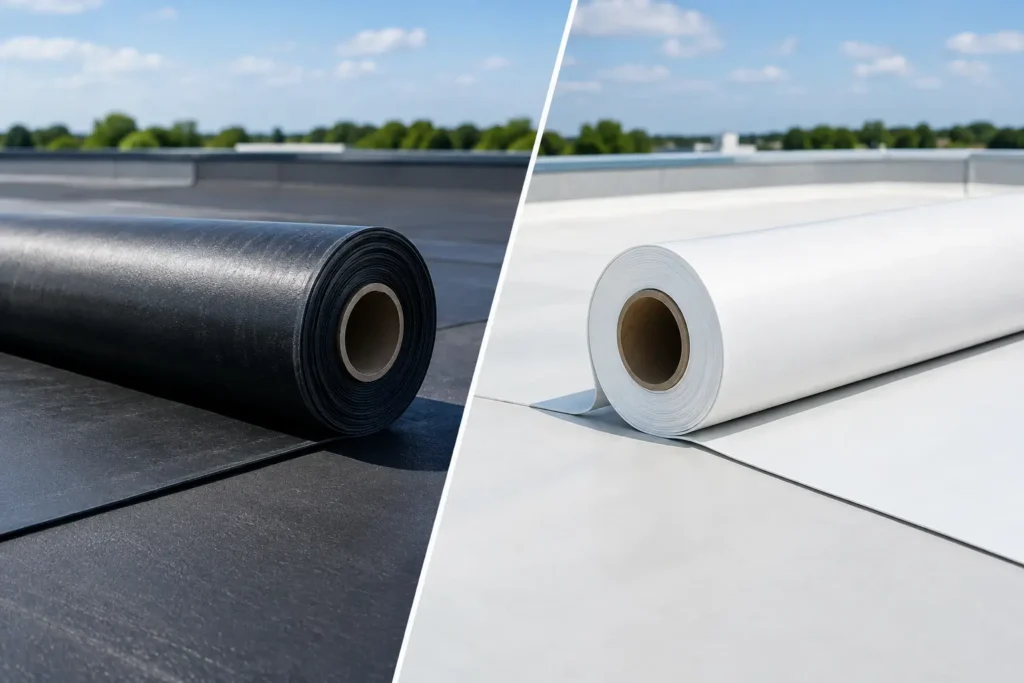
EPDM is a synthetic rubber roofing membrane. It is commonly black, though lighter options are available. Many homeowners and contractors simply call it rubber roofing. EPDM has been used on low-slope roofs for decades and is known for its flexibility, especially as temperatures change.
TPO stands for thermoplastic polyolefin. It is a single-ply membrane that is usually white, although other colors may be available. Its bright surface reflects more sunlight than a typical black EPDM roof, which can be useful on roof areas that receive strong afternoon sun.
Neither material is intended for a steeply pitched roof where architectural shingles, metal panels, or another slope-specific system would be the better fit. EPDM and TPO are designed for roofs that shed water slowly rather than quickly. Proper installation, drainage, flashing, and edge details matter as much as the membrane itself.
EPDM Versus TPO Roofing: The Main Differences
The most visible difference is color. Standard EPDM is black and absorbs heat, while standard TPO is white and reflects it. That difference can affect roof-surface temperature and, in some cases, the comfort and cooling demands of the area below.
TPO is often a strong option for a low-slope roof over a sun-exposed room addition, enclosed porch, or conditioned space. Its reflective surface can reduce heat buildup at the roof level. Energy savings, however, are never guaranteed by membrane color alone. Insulation levels, air sealing, attic or roof assembly design, shade, and HVAC performance all play a role.
EPDM’s advantage is its long-established record and flexibility. Rubber membrane can perform well through seasonal temperature swings and is often a practical choice for simpler low-slope applications. It is also available in wider sheets, which may reduce the number of field seams on certain roof layouts.
TPO seams are heat-welded. When installed correctly, the welded seams form a continuous bond that can be exceptionally durable. EPDM seams are typically joined with specialized tape or adhesive systems. Modern seam tapes are reliable when the roof is properly prepared and installed, but workmanship remains critical with either system.
Durability Depends on More Than the Material
Homeowners sometimes ask which membrane lasts longer, but there is no honest one-word answer. A well-installed EPDM or TPO roof with sound drainage can provide many years of service. A poorly installed roof with standing water, weak flashing, or penetrations that were not detailed correctly can develop problems much sooner.
The roof’s layout deserves close attention. Skylights, vent pipes, HVAC equipment, walls, drains, and transitions to shingle or metal roofing all create detail work. These areas are where leaks are most likely to begin. A quality installation includes careful flashing around every penetration and secure termination at roof edges and walls.
Drainage is equally important. Low-slope does not mean no-slope. Water should move toward drains, scuppers, or gutters rather than ponding for long periods. If the existing roof framing has sagged or the deck has deteriorated, installing a new membrane without addressing the underlying issue can leave the homeowner with the same water-management problem under a new surface.
Cost: Look Beyond the Initial Quote
EPDM is frequently viewed as a cost-effective option, particularly for straightforward roof sections. TPO pricing can be comparable or higher depending on membrane thickness, roof size, access, insulation requirements, flashing complexity, and local labor conditions.
The lowest estimate is not always the lowest long-term cost. When comparing proposals, make sure they identify the membrane type and thickness, the condition of the decking, insulation work, flashing details, removal of old materials, drainage corrections, and cleanup. A quote should also clarify how roof penetrations, wall transitions, and edge metal will be handled.
A repair may be appropriate when damage is limited and the surrounding membrane is still in good condition. But widespread cracking, open seams, repeated leaks, wet insulation, or a roof near the end of its service life may make replacement the more sensible investment. An in-person assessment helps separate a repairable issue from a system-wide failure.
When EPDM May Be the Better Choice
EPDM can be an excellent fit when a homeowner wants a proven rubber membrane for a low-slope roof section and cooling performance is not the primary concern. Its flexibility is useful on roofs that experience movement or changing temperatures, and it can be a practical choice for garages, carports, workshops, and certain additions.
Because black EPDM absorbs heat, it may be less appealing for an unshaded roof directly over a heavily used conditioned space. Still, a darker roof is not automatically wrong. The full roof assembly, including insulation and ventilation where applicable, should guide the decision.
When TPO May Be the Better Choice
TPO often makes sense for homeowners who want a reflective surface on a roof with significant sun exposure. It is a popular choice for low-slope sections over living spaces, enclosed patios, and additions where reducing roof-surface heat is a priority.
It can also be a strong choice when a project calls for heat-welded seams and detailed flashing around multiple penetrations. The key is using quality materials and experienced installers who understand the manufacturer’s installation requirements. Heat welding requires the right equipment, preparation, and technique. It is not a place to cut corners.
Four Questions to Ask Before Choosing a Membrane
Before selecting a system, ask your contractor these practical questions:
- Is the roof deck solid and dry, or does it need repair before the new membrane is installed?
- Does the roof have enough slope and drainage, or are ponding-water corrections needed?
- What insulation is present, and will the material choice affect comfort below the roof?
- How will seams, roof edges, walls, drains, vents, and transitions be flashed?
These questions keep the conversation focused on the complete roofing system instead of the membrane alone. They also make it easier to compare estimates fairly.
Professional Installation Protects the Investment
Whether you choose EPDM or TPO, the installation should begin with a thorough inspection. The contractor should identify damaged decking, trapped moisture, drainage concerns, and connections between the low-slope area and the rest of the home. A clean, organized worksite and clear communication are especially valuable when roofing work is happening around an occupied home.
Carolina Improvements helps homeowners evaluate rubber and TPO roofing with the full project in view, including the condition of the existing roof, flashing needs, and the best material for the structure. Quality materials made in the USA, skilled installation, and a detailed quote give homeowners a clearer path forward.
The best low-slope roof is not simply the whitest, thickest, or least expensive option. It is the system that fits your roof’s design, manages water correctly, and is installed with the care needed to protect your home for years to come.