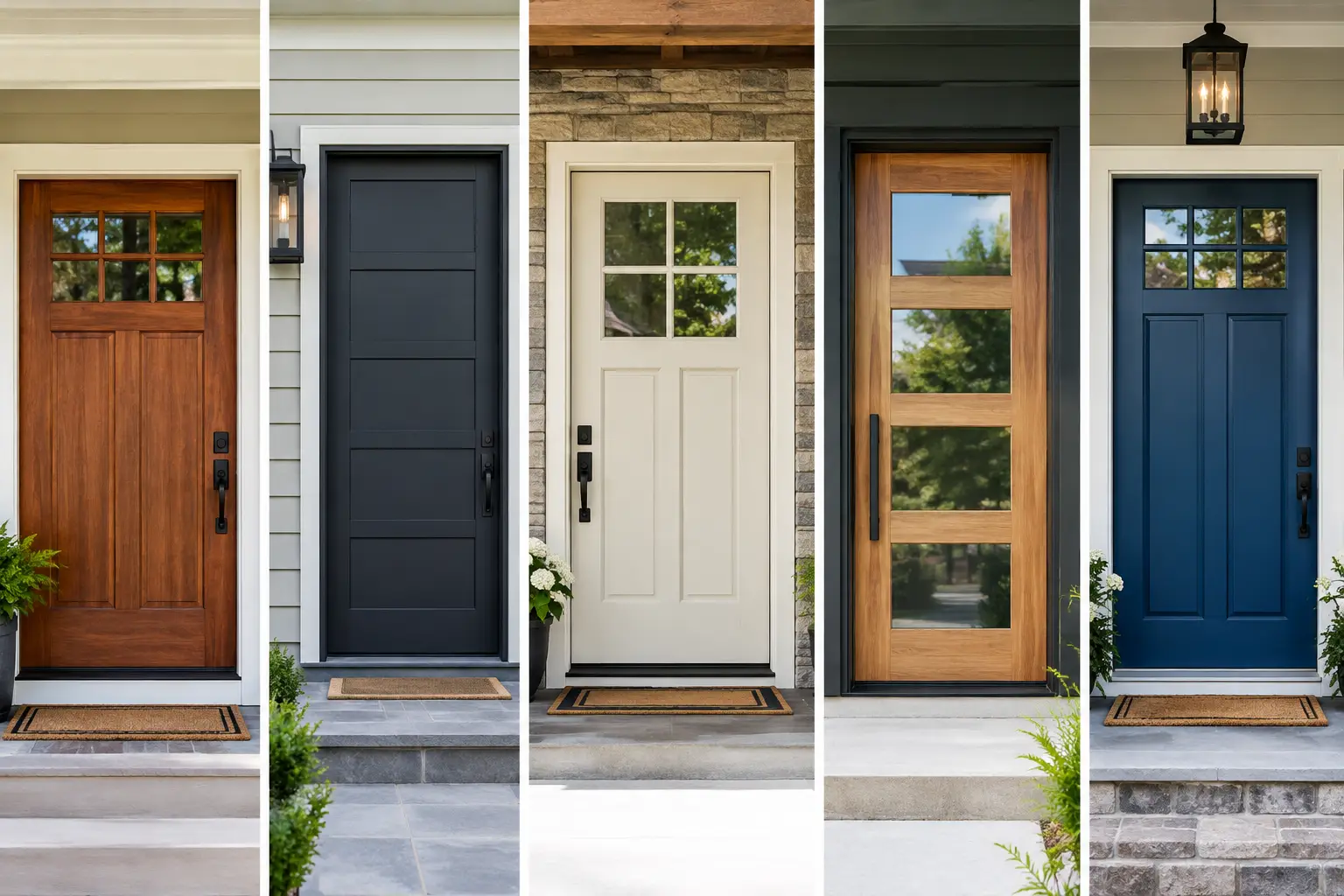

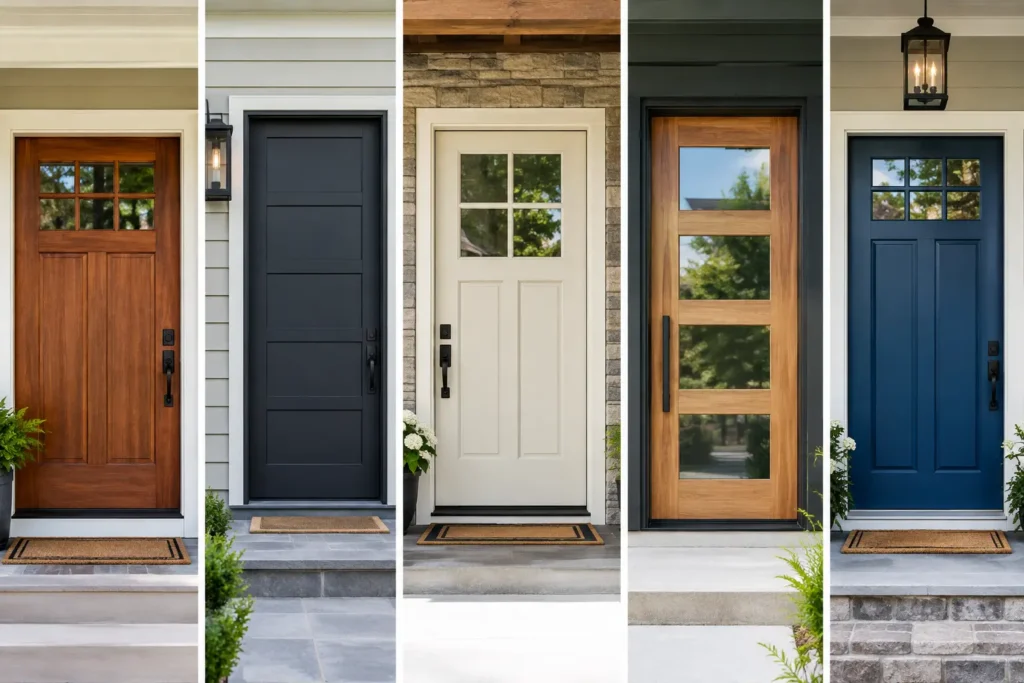
A front door has a difficult job in North Carolina. It needs to stand up to humid summers, wind-driven rain, changing temperatures, daily use, and direct sun, all while making a strong first impression. The best front door materials are not the same for every home, budget, or entryway. The right choice balances appearance, security, maintenance, energy efficiency, and the condition of your existing door frame.
For most homeowners, fiberglass, steel, and wood are the primary choices. Each can be a quality investment when it is properly selected and professionally installed. The key is choosing a door that fits how you live and the exposure your entry receives.
Best Front Door Materials at a Glance
Fiberglass is often the most versatile option for homeowners who want durability, insulation, and the appearance of wood without frequent upkeep. Steel is a practical choice for security and value, particularly for protected entries. Wood offers unmatched natural character, but it requires regular attention to preserve its finish and prevent moisture damage.
Glass also plays an important role, although it is usually an insert or sidelights rather than the entire door material. It can bring welcome daylight into a foyer, but the glass style, privacy level, and energy performance deserve careful consideration.
Fiberglass Front Doors: A Strong All-Around Choice
Fiberglass doors are a popular choice for homes throughout Greensboro, Winston-Salem, High Point, and surrounding areas because they handle changing weather well. They do not rot, rust, or swell the way other materials can. Quality fiberglass doors can also be insulated, helping reduce heat transfer at an entry that may otherwise feel drafty.
A major benefit is design flexibility. Fiberglass can be smooth for a clean, painted finish or textured to resemble stained wood grain. This gives homeowners the ability to match traditional brick homes, ranch-style homes, newer construction, and many other architectural styles without taking on the maintenance requirements of a solid wood door.
Fiberglass does come with a higher upfront cost than many basic steel doors. However, it can be a sensible long-term investment for an exposed front entry, especially where rain and afternoon sun are regular concerns. Look beyond the door slab itself: a well-built fiberglass system should include a durable frame, weatherstripping, threshold, and properly fitted hardware.
Steel Front Doors: Secure and Budget-Conscious
Steel entry doors are known for strength, security, and affordability. A quality steel door can provide excellent resistance to forced entry, and insulated models can offer good energy performance. For homeowners replacing an aging, hollow, or poorly fitted door, steel often delivers a noticeable improvement in comfort and peace of mind.
The trade-off is that steel can dent, scratch, and eventually rust if the finish is damaged and left unaddressed. This is especially relevant on entries exposed to frequent rain or heavy sun. Small scratches should be touched up promptly to protect the metal beneath the paint.
Steel doors work particularly well for covered porches, side entrances, garage-to-home entries, and homeowners who want a dependable door at a more accessible price point. They are available in many panel designs and colors, though they generally do not replicate the warmth or detail of a high-quality wood-grain fiberglass door.
Wood Front Doors: Classic Beauty With Ongoing Care
Nothing quite matches the depth, grain, and custom appearance of a real wood front door. Wood can be painted or stained in a wide range of finishes, and it is a natural fit for historic homes, craftsman-style homes, and entries where curb appeal is the main priority.
That beauty comes with responsibility. Wood reacts to moisture and temperature changes. Without a properly maintained finish, it can fade, crack, warp, or develop areas of deterioration. A covered porch helps, but it does not eliminate maintenance. Homeowners should expect to inspect the finish regularly and refinish the door as needed, especially if it faces strong sun or receives direct rain.
Wood may be the best choice when architectural authenticity matters most and you are comfortable investing time in upkeep. It is less ideal for a completely exposed entry or for homeowners who prefer a low-maintenance exterior.
Engineered Wood and Wood-Clad Options
Some door systems use engineered wood components or wood cladding to provide a refined appearance while improving stability. These products can be worth considering, but they should still be evaluated based on the door’s construction, warranty, exposure, and required maintenance. The label alone does not determine quality.
Glass Inserts and Sidelights: Light, Privacy, and Efficiency
A door with decorative glass, a narrow vertical lite, or sidelights can make an entry feel more open and inviting. For a dark foyer, adding glass may be as meaningful as changing the door color. Yet more glass also means less privacy and potentially more solar heat gain, depending on orientation and glass type.
For a street-facing entry, obscure, textured, or decorative glass can provide daylight without putting the interior on display. Clear glass works well when privacy is less of a concern or when the entry is set back from the road. If your door receives strong afternoon sun, ask about energy-efficient insulated glass and low-emissivity coatings that help manage heat transfer.
Security glass and quality locking hardware matter, too. A beautiful door should still provide dependable protection for your home.
What Matters Beyond the Door Material
Even the best door material can perform poorly if it is installed in a damaged, out-of-square, or water-compromised opening. Gaps around the frame can allow drafts, moisture, and pests into the home. A worn threshold can create a tripping concern and make the door harder to operate. Rotting trim or framing may point to a larger water-management issue that needs repair before a new door is installed.
A complete evaluation should consider the door slab, frame, threshold, hinges, weatherstripping, deadbolt, exterior trim, and any surrounding siding or brick details. This is also the right time to decide whether the entry needs a storm door, new sidelights, upgraded hardware, or improved exterior lighting.
Door swing is another practical detail. An inswing door must clear interior flooring, furniture, and stairs, while an outswing option can be useful in certain situations but requires weather-rated hinges and careful planning. If accessibility is a concern, a wider opening, low-profile threshold, lever handle, or ADA-compliant ramp may make the entry safer and easier to use.
How to Choose the Right Material for Your Home
Start with exposure. A front door under a deep covered porch has different needs than one that faces west with no protection from sun and rain. Next, consider how much maintenance you are realistically willing to perform. A wood door can be a rewarding choice for the right homeowner, but fiberglass is usually better suited to someone who wants a lasting wood-like appearance with less upkeep.
Then consider your priorities. If security and value lead the list, steel may be the right fit. If you want a balanced combination of durability, energy efficiency, and design choices, fiberglass is often hard to beat. If the home calls for true natural wood and you are prepared to maintain it, wood can deliver a distinctive result.
Finally, choose a door system rather than focusing only on the panel. Professional measurement and installation help ensure the door closes correctly, seals tightly, and complements the home. Carolina Improvements can assess the full entry condition, explain material options in plain language, and provide a detailed quote for a replacement that fits your home and budget.
A front door replacement is a chance to improve the way your home looks, feels, and functions every day. Choose a material that suits your entry’s weather exposure and your expectations for upkeep, then give that door the installation quality it needs to protect your home for years to come.