
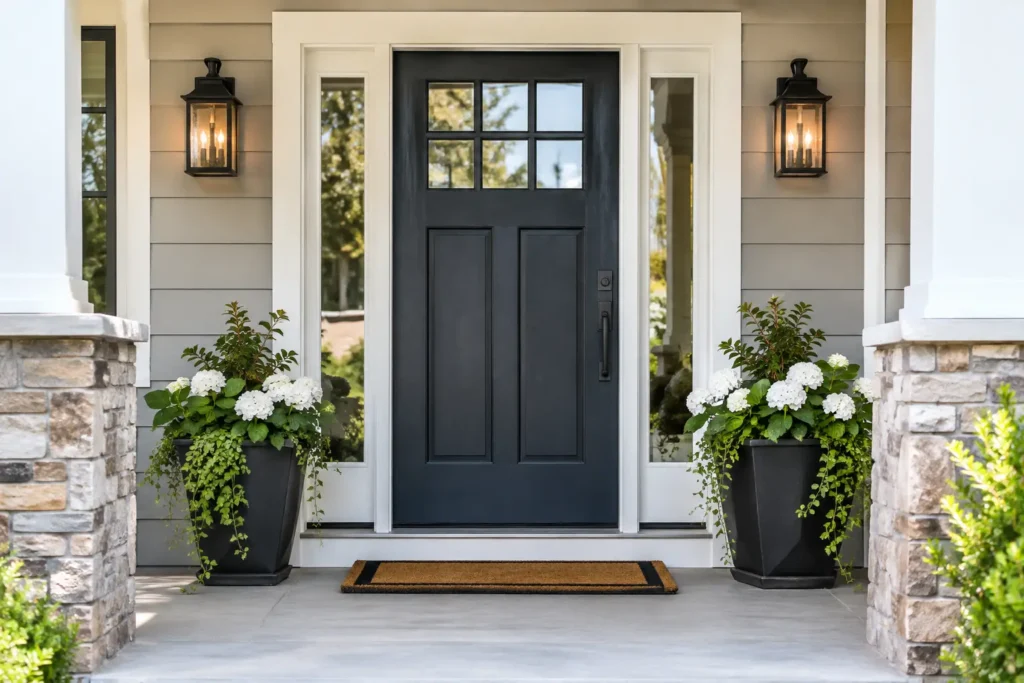
A front door does more work than most homeowners give it credit for. It welcomes guests, helps protect your family, stands up to heat and rain, and can either strengthen or weaken your home’s curb appeal in a single glance. The best front door upgrades address more than appearance. They improve security, weather protection, everyday convenience, and the way your home feels when you arrive.
For homeowners in North Carolina, the right choices should also account for humid summers, driving rain, temperature swings, and direct sun exposure. A beautiful upgrade that is not properly installed or suited to the opening can create drafts, sticking, water intrusion, or premature wear. Here are eight practical ways to improve your entry, from a simple hardware refresh to a complete door replacement.
1. Replace a Door That Has Passed Its Service Life
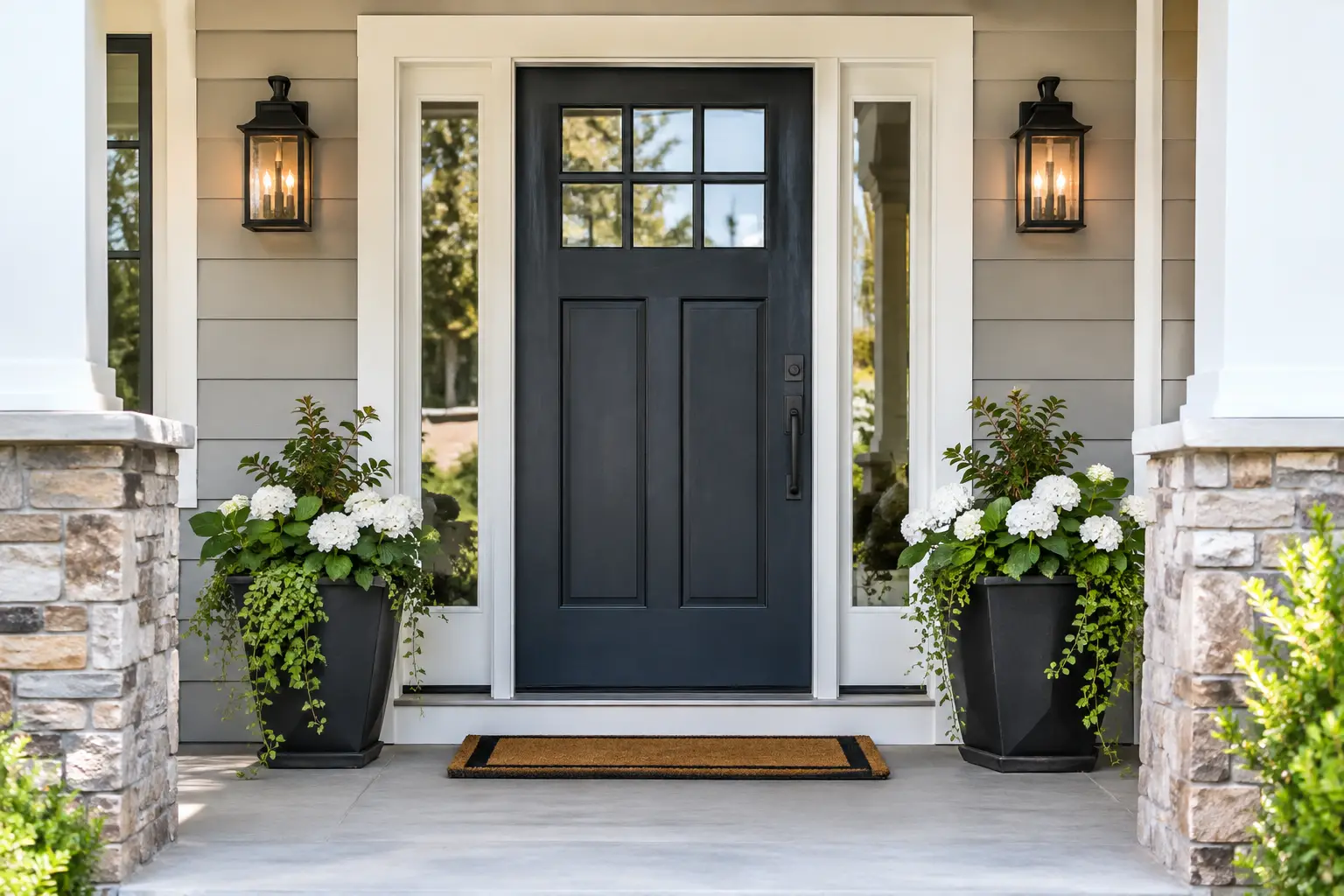
If your front door is warped, cracked, difficult to lock, visibly faded, or letting in outside air, replacement may provide more value than another repair. Older wood doors can absorb moisture and swell, while aging steel doors may rust or dent. Fiberglass doors are a popular choice for homeowners who want the look of wood with dependable resistance to moisture, dents, and changing weather conditions.
Material selection depends on your priorities. A quality steel door can offer strong security and a clean, classic appearance at a practical price point. Fiberglass often performs especially well in exposed entries and can be finished in wood-grain styles. Wood remains an attractive option for a covered porch or historic home, but it requires more ongoing maintenance to preserve its finish.
The door slab is only part of the project. A professional replacement should address the frame, threshold, flashing, weatherstripping, and trim so the entire opening performs as intended.
2. Upgrade the Lockset and Deadbolt
A new lockset is one of the fastest front-door improvements, but it should not be treated as a cosmetic detail alone. If your existing deadbolt is loose, the strike plate is thin, or the latch does not engage smoothly, the door may not provide the level of security you expect.
Choose a quality deadbolt with a reinforced strike plate secured into the wall framing with longer screws. This strengthens the area most likely to be stressed during an attempted forced entry. A coordinated handleset can also make an older door look more intentional and updated without changing the door itself.
Smart locks can be useful for busy households, especially when family members, guests, or service providers need controlled access. They allow homeowners to manage codes rather than distribute physical keys. The trade-off is that smart hardware requires batteries, occasional software updates, and a reliable setup. For some households, a high-quality traditional deadbolt remains the simplest and most dependable choice.
3. Add a Storm Door Where It Makes Sense
A storm door can provide another layer of weather protection, ventilation, and security. It is particularly useful when you want fresh air without fully opening the front entry or when a primary door has decorative glass that benefits from added protection.
Not every home needs one. On a narrow, crowded porch or an entry with an outswinging door, a storm door may create clearance problems. It can also trap heat against a dark-colored or sun-exposed door if ventilation is limited. The best fit is a properly sized, ventilated model installed with enough clearance for smooth operation.
For homes with a covered entry, a full-view storm door can brighten the porch while protecting the main door finish. For more exposed entrances, a model with a retractable screen or interchangeable glass panel offers flexibility through different seasons.
4. Improve Weatherstripping and the Door Sweep
Small air gaps around an entry door can lead to uncomfortable drafts, moisture intrusion, insects, and higher heating and cooling costs. Weatherstripping and door sweeps are modest upgrades, but they have an outsized effect when the door itself is still in good condition.
Look for worn compression seals around the frame, daylight visible at the edges, or a sweep that drags, tears, or leaves a gap below the door. The threshold should support a consistent seal without making the door difficult to open. If you have to force the door shut to latch it, the issue may be the frame alignment rather than the weatherstripping alone.
This is one area where proper diagnosis matters. Adding thicker weatherstripping to a misaligned door can mask the real problem and make the door harder to use. An installer can determine whether adjustments, a new threshold, or frame repairs are needed.
5. Bring in Light With Decorative Glass
Decorative glass inserts, sidelights, and transoms can make a dark foyer feel more open and inviting. They are especially effective on brick, siding, or ranch-style homes where the front elevation needs a stronger focal point.
Privacy should guide the design. Clear glass offers the most daylight but may expose your entryway to street-facing views. Frosted, textured, or divided-light glass can provide brightness while limiting visibility. Energy-efficient insulated glass is also a better choice than older single-pane options, particularly on doors that receive afternoon sun.
More glass is not always the best answer. A fully glazed entry can feel exposed and may require more attention to security and privacy. A smaller decorative insert or narrow sidelights may deliver the right balance of light, character, and comfort.
6. Upgrade Exterior Lighting at the Entry
Good front-door lighting makes the entry safer and easier to use after dark. It also highlights the architecture of the home and improves curb appeal without a major renovation. Wall sconces on both sides of the door create an even, welcoming look when the layout allows it. A single larger fixture can work well beside a narrower entry.
Choose fixtures sized for the space rather than selecting based on appearance alone. Lights that are too small can get lost against a wide facade, while oversized fixtures may overwhelm a compact porch. Warm white bulbs generally create a more welcoming effect than harsh, cool-toned lighting.
Motion sensors, dusk-to-dawn settings, and smart controls can reduce the need to remember switches while improving visibility around steps and walkways. Make sure the fixtures are rated for outdoor use and positioned to avoid glare in the eyes of arriving guests.
7. Refresh the Surrounding Trim, Porch, and Address Details
Sometimes the door is in good condition, but the surrounding features make the entry feel dated. Fresh trim, repaired porch columns, updated house numbers, and a coordinated finish on railings or shutters can change the entire presentation of the front elevation.
This is also a smart time to look for water-related concerns. Rotting trim, peeling paint near the threshold, or loose siding around the entry may indicate that water is getting where it should not. Addressing the source before applying a new finish protects the investment and prevents a cosmetic project from becoming a repeat repair.
Color can make a substantial difference. A bold front door can complement a neutral exterior, while a stained or darker finish can add warmth to brick and stone. Consider how the color will look in full sunlight and how it coordinates with roofing, siding, shutters, and permanent exterior features.
8. Make the Entry Safer and Easier to Access
The best front door upgrades should work for everyone who uses the home. If the entry has uneven steps, a narrow landing, a high threshold, or a handrail that feels unstable, accessibility improvements can make daily life safer and more comfortable.
A properly designed ramp, wider doorway, sturdy handrails, or a lower-profile threshold may be appropriate depending on the home’s layout and the needs of the household. These changes should be planned carefully so they complement the property and handle rainwater correctly. A ramp or landing that directs water toward the home creates a problem no homeowner wants.
For homeowners considering several exterior improvements at once, coordinating the door, porch, lighting, concrete, railings, and accessibility features can produce a cleaner result than tackling each item separately. Carolina Improvements can assess the full entry area and provide recommendations that fit the home’s condition, style, and budget.
How to Choose Between Front Door Upgrades
Start with the issue you notice every day. If the door is drafty, damaged, or difficult to lock, focus first on replacement, sealing, and hardware. If the door is sound but the entry looks tired, lighting, trim, paint, and address details may deliver the biggest visual change for the investment.
Homeowners planning to stay for years often benefit from choosing durable materials and correcting hidden water or framing concerns at the same time. If you are preparing to sell, a well-finished door, updated hardware, and a clean, well-lit entry can improve the first impression without requiring a full exterior remodel.
A front entry should feel secure when it closes, comfortable in changing weather, and welcoming before anyone steps inside. The right improvement is the one that solves the problems your home has now while continuing to serve your family well for years to come.