
A door that sticks, leaks air around the frame, or no longer locks with confidence is more than an everyday frustration. It can affect home security, comfort, energy costs, and the first impression your home makes. Knowing how to choose replacement doors starts with looking beyond color and hardware. The right choice needs to fit the opening correctly, stand up to North Carolina weather, and suit the way your household uses the space.
A new front, patio, storm, or side door is a visible improvement, but it is also a working part of your home’s exterior. A thoughtful selection and professional installation can provide reliable performance for years.
How to Choose Replacement Doors: Start With the Door’s Job
Before comparing materials or styles, consider where the door is located and what it needs to do. A front entry door must balance curb appeal, security, insulation, and daily use. A patio door should bring in natural light and offer easy access to a deck, patio, or backyard. A door between the garage and house needs dependable weather protection and security, while a storm door may add ventilation and another layer of protection for an entry door.
Think about the concerns you want to solve. If your current door is drafty, energy performance should be high on the list. If the lock area is damaged or the frame has begun to rot, security and structural repairs may come first. If a narrow doorway makes moving furniture or helping a family member difficult, a wider opening or accessibility-minded threshold may be worth discussing.
The best replacement door is rarely just the most expensive model or the one that looks best in a showroom. It is the door that addresses the actual conditions at your home.
Choose a Material That Fits Your Priorities
Door materials have different strengths, and the right one depends on your budget, exposure to sun and rain, desired appearance, and maintenance expectations.
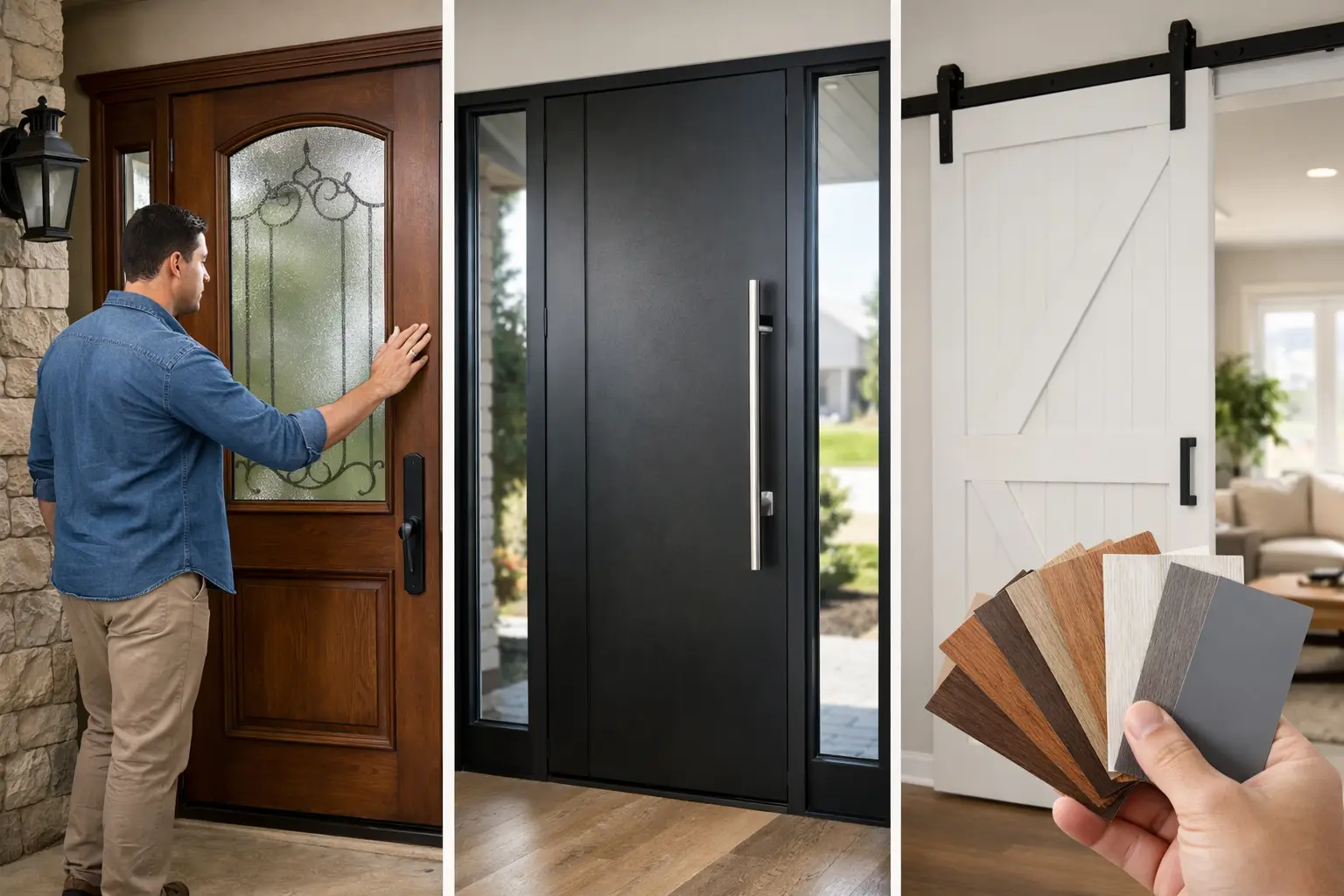
Fiberglass doors offer versatility
Fiberglass is a popular choice for entry doors because it can provide the look of painted or stained wood with less maintenance. It resists warping, denting, and moisture-related concerns better than many wood doors, which can be helpful in humid North Carolina conditions. Insulated fiberglass doors can also offer strong energy performance.
For homeowners who want a traditional woodgrain appearance without regular refinishing, fiberglass is often a practical middle ground. Quality varies by manufacturer, so the construction of the door and the installation details still matter.
Steel doors emphasize strength and value
Steel entry doors are known for security, durability, and cost-effective performance. They are often a sensible option for side entrances, garage access doors, and budget-conscious front-door projects. Many steel doors include an insulated core that helps reduce heat transfer.
The trade-off is that steel can dent, and scratches should be addressed to prevent corrosion. A protected entryway with an overhang may help preserve the finish, particularly on doors exposed to frequent rain or intense afternoon sun.
Wood doors deliver natural character
A real wood door can bring warmth and architectural detail that is difficult to duplicate. It may be a fitting choice for historic homes or homeowners pursuing a specific traditional design. However, wood requires ongoing maintenance, including periodic sealing, painting, or staining.
Wood can also expand and contract with moisture and temperature changes. It is generally best for a well-protected entrance where the homeowner is comfortable maintaining the finish.
Glass and composite options add flexibility
Glass panels, sidelights, and transoms can brighten a dark foyer and make an entry feel more open. Decorative or privacy glass lets in light while limiting visibility from the street. For a patio opening, vinyl or composite-framed doors may offer low-maintenance performance, although the best material depends on the size of the opening and the design of the home.
More glass is not automatically better. Consider privacy, sun exposure, and the type of glass used. Energy-efficient glass packages can help limit heat gain, while tempered safety glass is appropriate in locations where building codes require it.
Pay Attention to Energy Performance
A door’s insulating value is only one part of its energy performance. The glass, weatherstripping, threshold, sweep, frame, and fit all affect whether outside air and water can get inside.
For exterior doors, look for an insulated core, quality perimeter weatherstripping, and a well-designed threshold. If the door includes glass, ask about insulated glass and low-emissivity coatings. These coatings can help manage solar heat gain while still allowing natural light into your home.
In the Piedmont Triad and across central North Carolina, doors can face humid summers, strong sun, heavy rain, and winter temperature swings. A shaded north-facing entry has different needs than a west-facing door that receives hours of afternoon sun. Your installer should evaluate the opening and recommend products that fit those conditions instead of treating every doorway the same.
Do Not Separate Security From Style
The lockset matters, but a secure door system includes more than a deadbolt. The door slab, hinges, strike plate, frame, and installation all contribute to security. A strong lock attached to a weak or damaged frame will not provide the protection homeowners expect.
Choose durable hardware that suits your household. Lever handles can be easier to operate than knobs for children, older adults, or anyone carrying groceries. Reinforced strike plates and longer mounting screws can strengthen the connection to the framing. For doors with glass near the lock, discuss the placement of the glass and suitable security options.
Style still has a place in the decision. Match the door’s panel layout, color, glass design, and hardware finish to the character of the home. A simple craftsman-style door may suit a bungalow, while clean lines and large glass panels can complement a more contemporary exterior. The goal is not to follow a trend that may feel dated quickly. Choose a design that looks appropriate for your home and remains easy to live with.
Measure the Whole Opening, Not Just the Door
Many replacement door problems begin before the new door arrives. Ordering based only on the visible slab size can overlook a damaged jamb, an out-of-square opening, hidden water damage, or an incorrect threshold height.
A professional assessment should consider the full door system: the rough opening, frame condition, exterior trim, flashing, sill area, and connection to nearby siding or brick. This is especially important if the existing door has been leaking, sticking, or showing signs of rot. Installing a new door into a compromised opening can hide the problem temporarily while allowing water damage to continue.
For patio doors, also consider how the panels operate and where they stack. A sliding door saves interior floor space, while a hinged French door can create a wider, more traditional opening. A folding or multi-panel system can make a strong statement, but it requires adequate wall space, budget, and structural planning.
Plan for Installation Quality and Long-Term Care
Even a well-made door can perform poorly if it is not installed correctly. Proper shimming, fastening, flashing, insulation, weather sealing, and trim work are essential for smooth operation and protection from water intrusion. The door should open and close without rubbing, latch securely, and seal evenly along all sides.
Ask your contractor how they will handle existing trim, siding, brick molding, interior casing, and any damage found once the old door is removed. Clear communication before work starts helps avoid surprises and gives you a better understanding of the finished scope.
After installation, keep the threshold clean, inspect weatherstripping periodically, and tighten loose hardware as needed. Painted or stained surfaces should be maintained according to the manufacturer’s recommendations. These small steps help preserve both appearance and performance.
Make the Decision With Your Home in Mind
Replacement doors should make your home feel safer, more comfortable, and more welcoming every time you come and go. If you are weighing materials, glass options, sizing, or signs of frame damage, an in-home evaluation can turn a broad decision into a clear plan. Carolina Improvements can help North Carolina homeowners compare durable, USA-made door options and understand the work required for a finished result that looks right and performs reliably.