
A faded, cracked, or warped exterior is more than a curb-appeal issue. It can allow moisture behind the walls, make the home harder to maintain, and leave homeowners wondering whether a repair will truly last. When comparing vinyl versus fiber cement siding, the better choice depends on your budget, your home’s style, the condition of the existing exterior, and how much maintenance you are willing to take on over time.
Both materials can provide a beautiful, protective exterior when they are properly installed. The key is understanding where each one performs best, especially in North Carolina, where hot summers, humidity, heavy rain, and occasional storm damage can all test a home’s exterior.
Vinyl Versus Fiber Cement Siding at a Glance
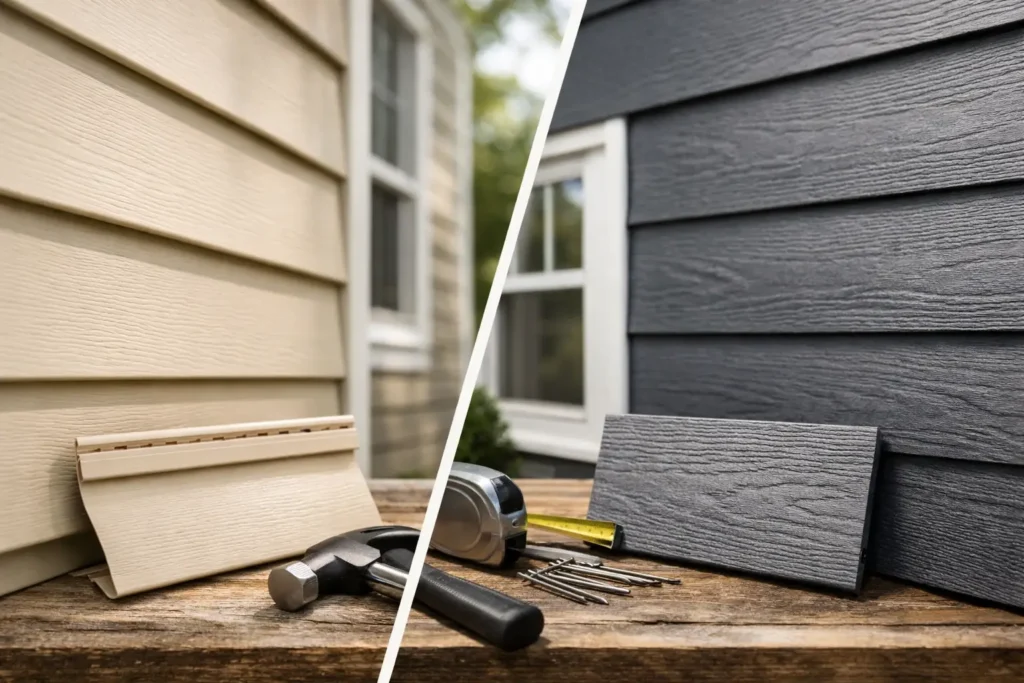
Vinyl siding is a manufactured exterior cladding made primarily from PVC. It is lightweight, cost-effective, and available in a wide range of colors and profiles. Many homeowners choose it because it offers a clean, updated look without the routine painting associated with traditional wood siding.
Fiber cement siding is made from a blend of cement, sand, cellulose fibers, and water. It is heavier and more labor-intensive to install, but it is known for its strength, dimensional stability, and ability to closely resemble painted wood lap siding, cedar shake, or board-and-batten styles. James Hardie is one of the best-known fiber cement siding manufacturers.
Neither material is automatically right for every home. A practical recommendation should account for the home’s existing structure, trim details, exposure to weather, and the homeowner’s long-term plans.
Upfront Cost and Long-Term Investment
For many homeowners, the first major difference is cost. Vinyl siding typically has a lower material and installation cost than fiber cement. Because it is lighter, easier to cut, and quicker to install, labor costs are often more manageable as well. That makes vinyl a strong option for homeowners who need a reliable exterior update while staying within a defined project budget.
Fiber cement usually requires a larger initial investment. The boards are heavier, installation takes more time, and the work requires trained crews using the proper cutting methods, flashing details, fasteners, and paint or finish procedures. Those added requirements are part of why professional installation matters so much with fiber cement.
The higher initial cost does not necessarily mean fiber cement is always the better value. If a homeowner plans to sell soon or needs to replace worn siding without stretching the budget, vinyl may deliver the improvement they need. If the goal is a long-term exterior upgrade with a more traditional painted appearance, fiber cement can justify the added investment.
It is also helpful to look beyond the siding itself. A complete project may include house wrap, damaged sheathing repairs, trim, soffit, fascia, gutters, shutters, and window or door updates. A detailed in-home estimate should separate these items clearly, so you understand what is being repaired and what is being replaced.
Appearance and Design Flexibility
Vinyl siding has come a long way from the limited options many homeowners remember. Today’s products are available in many colors, widths, textures, and profiles. Horizontal lap siding remains popular, but vertical panels, shake-style accents, and insulated options can create a more customized appearance.
Still, fiber cement generally provides more flexibility for homeowners seeking a high-end painted exterior. It can be installed in lap siding, shingle, panel, and board-and-batten designs. Its crisp edges and substantial profile often complement older homes, craftsman-style houses, farmhouses, and homes with detailed trim.
Color preference matters here. Vinyl color is manufactured into the panel, so it does not require repainting in the same way painted siding does. However, changing colors later can be more limited. Fiber cement can be factory-finished or painted, giving homeowners more freedom to update the color of the home in the future.
For homeowners comparing samples, it is wise to view them outdoors at different times of day. North Carolina sunlight can make an exterior color look very different at noon than it does in late afternoon or under a covered porch.
Weather, Moisture, and Everyday Durability
Humidity and rain make moisture management a major concern for homes throughout the Piedmont Triad and surrounding areas. Siding is only one layer of the exterior system. Proper house wrap, flashing around windows and doors, and correct installation details are what help direct water away from the structure.
Vinyl siding does not absorb water and will not rot like wood. It is also resistant to insects. Because vinyl panels expand and contract with temperature changes, installers must allow the correct spacing at fasteners and trim pieces. If siding is installed too tightly, it can buckle or warp as temperatures change.
Fiber cement is resistant to rot, insects, and fire. It also holds up well against wind and impact when installed according to manufacturer requirements. Its thickness and rigidity can make it an appealing choice for homeowners who want a solid, substantial exterior.
However, fiber cement is not maintenance-free. Cut edges, joints, and painted surfaces need proper attention to protect the material and maintain its appearance. Poor installation can lead to avoidable issues with either product, which is why the contractor’s workmanship matters as much as the brand of siding selected.
Maintenance Requirements
Vinyl is often chosen for low maintenance. Most homes only need occasional rinsing with a garden hose or gentle cleaning to remove pollen, dirt, and mildew. Homeowners should avoid using excessive pressure, which can force water behind the panels or damage the surface.
Fiber cement also needs regular cleaning, but it may eventually require repainting or touch-up work depending on the finish, sun exposure, and condition of the exterior. Factory-finished fiber cement can reduce future painting needs, though no painted product remains untouched forever.
This difference is worth considering honestly. Homeowners who want the lowest possible routine upkeep often prefer vinyl. Those who value the look and design options of a painted exterior may be comfortable planning for periodic paint maintenance with fiber cement.
Energy Efficiency Is About the Whole Wall System
Siding alone does not create a highly efficient home. Insulation levels, air sealing, window condition, roof ventilation, and the wall assembly all play a role in comfort and energy use.
Insulated vinyl siding can add a layer of thermal backing and help improve the look of exterior walls by reducing waviness. It is not a substitute for proper wall insulation, but it can be a worthwhile option for certain homes. Fiber cement does not provide much insulation on its own, yet it can be part of an effective exterior renovation when paired with sound weather protection and other home improvements.
If rooms feel drafty or uncomfortable, the conversation may need to include replacement windows, door seals, attic ventilation, or areas where water has damaged the wall system. Looking at the full condition of the home leads to a more useful recommendation than choosing siding based on a single feature.
When Vinyl Is the Better Choice
Vinyl may be the right fit when budget, low maintenance, and a straightforward exterior refresh are the highest priorities. It works especially well for homeowners replacing old, faded siding, preparing a property for sale, or improving curb appeal without committing to regular repainting.
It can also be a practical choice for larger homes where material and labor costs add up quickly. With quality products and careful installation, vinyl siding can provide dependable protection and an attractive finish for many years.
When Fiber Cement Is the Better Choice
Fiber cement may be the stronger choice for homeowners who prefer the appearance of painted wood, want more architectural detail, or are planning to stay in the home for the long term. It is particularly appealing when a home has historic character, prominent trim, or a design that calls for board-and-batten panels or wider lap siding.
It can also be a good fit for homeowners who want a durable exterior material and understand that proper finishing and future paint maintenance are part of ownership. The best results come from a carefully planned installation that addresses trim, flashing, ventilation, and any hidden moisture damage before new siding goes up.
A siding decision should feel clear, not pressured. A qualified contractor can inspect the existing exterior, explain what is happening behind the visible siding, and provide options that match your home and budget. Carolina Improvements helps North Carolina homeowners evaluate exterior upgrades with detailed recommendations, quality materials made in the USA, and professional installation focused on lasting results. The right siding is the one that protects your home well, fits the way you want it to look, and gives you confidence every time you pull into the driveway.