
When your siding is faded, cracked, soft from moisture damage, or simply no longer fits the look of your home, replacement is about more than curb appeal. It is part of the exterior system that helps manage rain, humidity, pests, and seasonal temperature changes. A professional James Hardie siding installation gives North Carolina homeowners a durable, polished exterior, but the results depend heavily on the details behind and around the boards.
James Hardie fiber cement siding is known for its strength, clean appearance, and resistance to many common siding concerns. Still, even premium materials need proper preparation, flashing, clearances, fastening, and finishing. Knowing what the process involves can help you evaluate estimates, prepare your property, and choose a contractor with confidence.
Why Homeowners Choose James Hardie Siding
Fiber cement siding is made from a blend of cement, sand, and cellulose fibers. It is designed to resemble traditional wood lap siding, shakes, or vertical panels without the frequent upkeep associated with natural wood. For homeowners who want a lasting exterior upgrade, it offers a practical balance of appearance and performance.
James Hardie siding does not rot like wood, and it is not a food source for termites or wood-boring insects. It also holds up well against fire exposure and can withstand the day-to-day wear that comes with changing weather. In the Piedmont Triad and surrounding North Carolina communities, that matters. Your exterior may face humid summers, heavy rain, wind-driven storms, pollen buildup, and occasional freezing temperatures in the same year.
The product is not maintenance-free, however. It should be kept clean, caulk should be inspected periodically, and painted finishes will eventually need attention. The payoff is that homeowners can often spend less time dealing with warped boards, peeling areas, and recurring wood repairs.
What a James Hardie Siding Installation Should Include
A quality installation begins before the first siding board goes on the wall. The existing exterior must be evaluated for water damage, soft sheathing, framing concerns, and areas where flashing may have failed. Covering those problems with new siding can leave the home vulnerable to more expensive repairs later.
Removing Old Siding and Inspecting the Walls
Depending on the existing siding material and the condition of the home, the old siding may need to be removed. This gives the installation team a clear view of the wall surface underneath. Any damaged sheathing, trim, or framing should be addressed before the new exterior system is installed.
This step can affect the project cost and schedule, especially on an older home. It is also one of the most valuable parts of the process. A contractor who identifies and explains hidden damage is helping protect the investment rather than rushing to cover it up.
Managing Moisture Before Installing the Siding
Siding is a visible protective layer, but it is not the only barrier that keeps water out. Proper wall protection may include a weather-resistant barrier, flashing around windows and doors, and carefully planned transitions where siding meets roofs, decks, porches, chimneys, and masonry.
These details are especially important around openings and rooflines, where water can collect or be pushed against the wall during a storm. Good moisture management directs water back to the exterior instead of allowing it behind the siding. This work is not always obvious after the project is complete, but it has a major effect on how well the exterior performs over time.
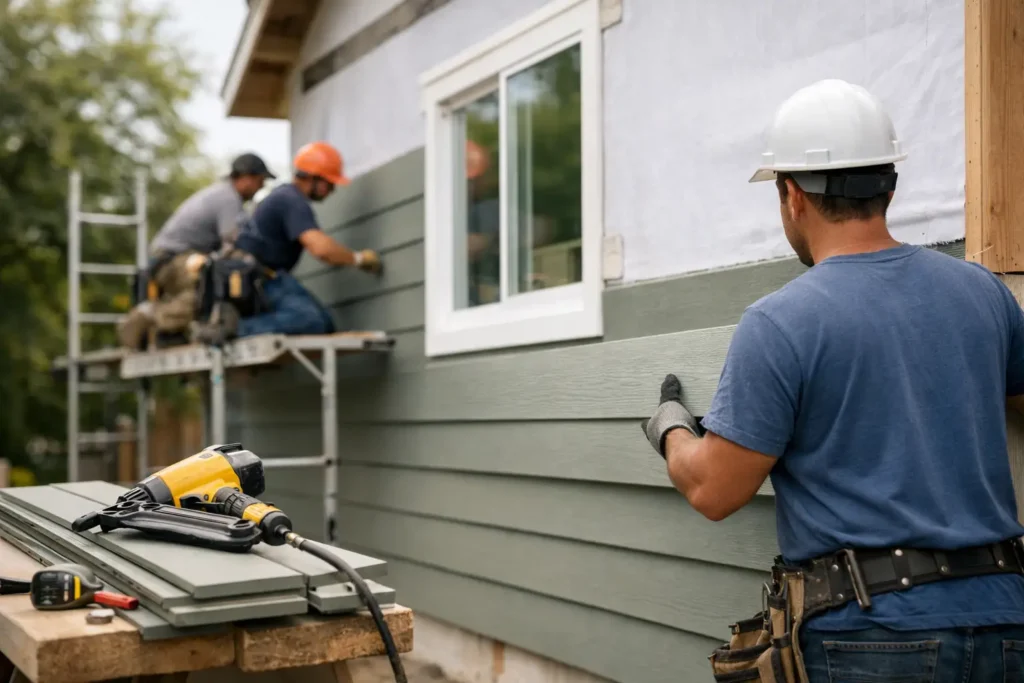
Installing Trim, Flashing, and Siding With Correct Clearances
James Hardie products are installed according to manufacturer requirements, including specific fastening methods and clearance requirements. Siding needs the right spacing from roofing, patios, steps, decks, soil, and other surfaces that can hold moisture or transfer water to the wall.
Trim pieces help create crisp lines around windows, doors, corners, and gables. Flashing is used where water needs to be redirected, such as where a roof meets a wall. These are not decorative afterthoughts. They are essential to a finished exterior that looks clean and functions properly.
A professional crew will also plan the layout so boards align well across the home and cuts are placed thoughtfully. Details such as consistent reveals, straight courses, and clean transitions make a noticeable difference in the final appearance.
Choosing the Right Look for Your Home
James Hardie siding is available in several profiles, so homeowners are not limited to one style. Traditional horizontal lap siding remains a popular choice for ranch homes, Colonials, and many homes throughout North Carolina. Vertical panel siding can create a more contemporary farmhouse or board-and-batten look. Shingle-style siding adds texture to gables, dormers, and accent walls.
Color selection deserves careful thought. A new siding color can refresh the entire property, but it should work with the roof, brick or stone elements, shutters, doors, and landscaping. Lighter colors can make a home feel larger and brighter, while darker colors can give architectural details more definition. The best choice depends on your home’s style, sun exposure, neighborhood character, and how long you expect to stay in the home.
Trim color matters too. Matching trim creates a more unified look, while contrasting trim can frame windows and rooflines for a bolder result. Viewing samples outdoors at different times of day is more useful than choosing from a small color image alone.
How Long Does Installation Take?
The timeline for James Hardie siding installation varies based on the size and design of the home, the amount of old siding removal, weather conditions, repair needs, and the complexity of the trim work. A straightforward project may move quickly, while a larger home with multiple stories, extensive window trim, porches, or hidden wall damage will take longer.
Weather can also affect the schedule. Rainy conditions may delay certain parts of the work, and caulking or painting requirements can be affected by temperature and moisture levels. A dependable contractor should communicate schedule changes clearly rather than compromising installation quality to meet an unrealistic deadline.
Before work begins, ask how the property will be protected, where materials will be staged, and how debris will be handled. Professional crews maintain an organized worksite, protect landscaping where practical, and clean up throughout the project instead of leaving homeowners with a prolonged mess.
What Affects the Cost of James Hardie Siding?
There is no single price for every home because siding replacement is highly dependent on the property. The square footage of the exterior is only one part of the estimate. Two homes of similar size can require very different levels of labor and materials.
Cost is commonly influenced by the existing siding condition, demolition needs, wall repairs, home height, architectural details, trim quantities, window and door openings, gables, soffit and fascia work, and the selected siding profile. Adding gutters, replacement windows, exterior doors, or roofing repairs at the same time may also make sense when related areas of the home are already accessible.
The lowest estimate is not always the best value. A quote should explain what is included and identify any known repair allowances or potential conditions that could affect the scope. Homeowners should be cautious about vague pricing that does not address moisture protection, flashing, trim, cleanup, or disposal.
How to Choose an Installation Contractor
Fiber cement siding is a material that rewards careful workmanship. Look for a licensed and insured contractor that can assess the entire exterior, explain the installation plan in plain language, and provide a detailed written estimate. Ask how the team handles damaged sheathing, flashing around windows, proper clearances, and jobsite cleanup.
It also helps to choose a contractor with broad exterior experience. Siding often connects directly to roofing, gutters, windows, doors, decks, and trim. When one qualified team can evaluate those connected systems, homeowners have a clearer path to a coordinated project instead of managing several separate trades.
Carolina Improvements helps homeowners plan exterior upgrades with free in-home estimates, quality materials made in the USA, skilled installation, and straightforward communication from the first assessment through final cleanup. Financing options may also help qualified homeowners move forward with needed work without delaying protection for their home.
New siding should make your home feel protected, well cared for, and more like your own. Start with an honest exterior assessment, ask questions about the details that are not visible after installation, and choose a team that treats those details as part of the finished job.