
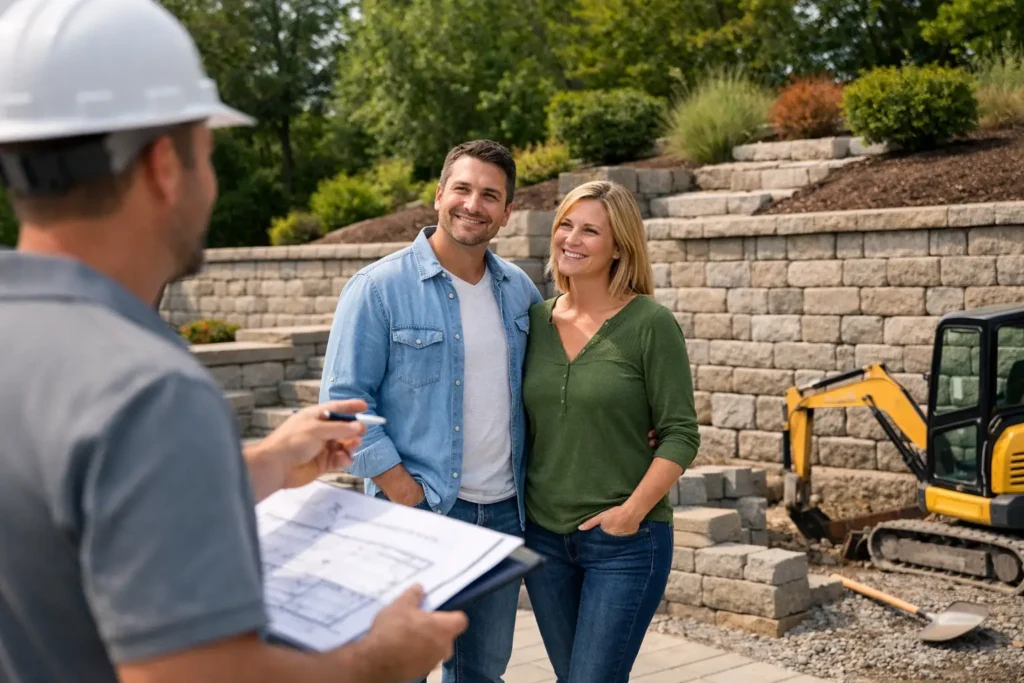
A retaining wall can make a sloped yard usable again, protect a driveway from shifting soil, or create a level space for a patio, garden, or play area. But when the wall is holding back earth, water, and sometimes part of your landscape, appearance is only part of the job. Choosing the right retaining wall contractor in High Point means choosing a team that understands drainage, grading, structural needs, and the lasting value of doing the work correctly.
A wall that looks straight on installation day can still fail if the base is weak, water has nowhere to go, or the design does not suit the slope. Homeowners deserve clear recommendations before construction begins, not surprises after the first hard rain.
Why Retaining Walls Need More Than Good-Looking Blocks
Retaining walls work against constant pressure. Soil becomes heavier when it is saturated, and water behind a wall can create enough force to bow, crack, or push sections out of place. North Carolina’s frequent rain, changing temperatures, and clay-heavy soils can make drainage planning especially important.
A well-built wall is a system, not simply a row of landscape blocks. It typically needs a properly excavated area, a compacted gravel base, appropriate backfill, drainage stone, and a way for water to move away from the wall. Depending on the height, location, and site conditions, it may also need reinforcement, engineering, or permits.
This is why the lowest estimate is not always the best value. A price that leaves out excavation, base preparation, drainage materials, haul-off, or final grading may look attractive at first. It can become expensive when repairs are needed later.
What a Retaining Wall Contractor in High Point Should Assess
Before recommending a material or providing a detailed quote, a professional contractor should look closely at the conditions around your home. The site visit should be a practical conversation about what the wall needs to accomplish and what may be causing the problem.
The slope and the soil
A gradual slope may only require a short landscape wall, while a steep grade can involve more substantial excavation and reinforcement. Soil type also affects the plan. Dense clay can hold water, so it often requires particular attention to drainage and backfill. A contractor should not assume every property needs the same construction approach.
Water flow around the home
Look for standing water, downspouts that discharge near the slope, erosion channels, or soil washing out near a driveway or foundation. A retaining wall can help manage an area, but it should not trap water where it can damage the wall or move toward the house.
In some cases, improving gutters, extending downspouts, adjusting grading, or adding a drainage solution should be part of the broader plan. This is where working with a full-service home improvement contractor can be helpful. The project can be considered in the context of the entire exterior rather than as an isolated wall.
The wall’s purpose and location
A decorative border around a planting bed has different requirements than a wall supporting a parking area or holding back a steep backyard. The contractor should ask whether the space will support a patio, fence, driveway, steps, or other improvement. These details affect the wall’s height, layout, materials, and preparation.
Property lines and utility locations matter as well. A wall placed near a boundary, easement, or buried line requires planning before equipment arrives. Clear expectations at the estimate stage protect both the homeowner and the project.
Choosing the Right Material for Your Property
There is no single best retaining wall material for every High Point home. The right choice depends on the wall’s purpose, height, budget, surrounding architecture, and maintenance expectations.
Segmental concrete block is a popular option because it offers a clean, finished appearance and can be engineered for larger walls when installed properly. It comes in a range of colors and textures, making it easier to complement brick, siding, stone, or outdoor living areas.
Natural stone can create a more traditional or rustic look. It can be an excellent choice for certain landscapes, but material selection and installation skill are especially important because stone shapes vary. Poured concrete may suit a more modern design or a wall that needs a specific structural form, though it requires careful drainage and finishing work.
Timber walls may cost less upfront for small, informal applications, but they generally have a shorter service life than masonry or concrete options. Moisture, insects, and ground contact take a toll over time. A dependable contractor should explain that trade-off plainly rather than recommending a material only because it is the easiest to install.
For homeowners planning patios, steps, fences, or new planting beds, it is also worth considering the full landscape layout before choosing the wall finish. Coordinating these elements can create a more intentional result and may reduce the need to disturb completed work later.
Questions to Ask Before You Sign a Contract
A professional estimate should make the scope understandable. You do not need construction experience to ask the right questions. You do need a contractor willing to answer them directly.
Ask how the wall will be excavated and what will be used for the base and backfill. Ask where water behind the wall will drain, whether reinforcement is included, and whether permits or engineering may be required. It is also reasonable to ask what happens to removed soil, how the crew will protect nearby landscaping, and how the area will be cleaned when work is complete.
The written quote should identify the material, wall dimensions, work included, and any known conditions that could affect the final plan. For example, hidden rock, unstable soil, or unexpected utility conflicts may not be visible until work begins. A trustworthy contractor will explain how those situations are handled instead of leaving homeowners with vague assumptions.
Licensing and insurance matter, too. Retaining wall work involves excavation, heavy materials, and structural considerations. Choose a contractor that is properly insured and prepared to manage the job professionally.
Signs a Retaining Wall May Need Attention
Do not wait for a wall to collapse before asking for an assessment. Small changes can point to larger issues below the surface. A wall that is leaning, bulging, cracking, separating at joints, or losing soil through gaps deserves prompt attention.
Water pooling behind the wall, eroded soil at the base, and loose or displaced blocks are also warning signs. If a wall is near a driveway, walkway, porch, or foundation, the issue can affect more than the landscape. Early repairs may be simpler than rebuilding after movement becomes severe.
It depends on the wall’s condition whether repair is practical. A small drainage correction or reset section may be enough when the main structure is sound. A wall with widespread movement, an inadequate base, or long-term water damage may require replacement to provide a dependable result.
A Better Experience From Estimate to Final Cleanup
Retaining wall construction can disrupt part of a yard for a short time, especially when excavation and material delivery are involved. Good project management makes that process easier on the homeowner. Communication about the schedule, access needs, material placement, and expected site conditions helps everyone prepare.
Carolina Improvements approaches exterior projects with that homeowner-first mindset. A clear in-home assessment helps identify the practical needs of the site, while skilled installation and quality, USA-made materials support a finished result built for long-term use. Homeowners can also discuss related work, such as patios, concrete, gutters, fences, or drainage concerns, with one accountable contractor.
A clean work site matters as much as a good first impression. Once construction is complete, the area should be graded appropriately, excess material should be removed as agreed, and the wall should look like it belongs with the rest of the property.
If a slope is limiting how you use your yard or a failing wall is creating concern, start with a professional on-site evaluation. The right plan can turn an unstable grade into a useful, attractive part of your home while protecting the property around it.