
A heavy North Carolina downpour can send hundreds of gallons of water off a typical roof in a matter of minutes. If that water is not collected and carried far enough from the house, it can soak the soil beside the foundation, wash out landscaping, stain siding, and create problems that are far more expensive than a gutter repair. This residential gutter drainage guide explains how a complete system should work and what homeowners should watch for.
Start With the Whole Water-Management System
Gutters do more than catch rain at the roof edge. They are one part of a connected drainage system that includes the roof, gutters, downspouts, extensions or underground drain lines, grading, and the landscape around the foundation. Each piece needs to do its job.
Water first needs a clear path off the roof and into properly sized gutters. The gutters must be securely fastened, pitched toward the downspouts, and free of standing water. Downspouts then need to carry that flow to a safe discharge point where it will keep moving away from the home.
A system can look fine from the street and still fail during a hard rain. For example, clean gutters will not solve a wet crawl space if every downspout empties beside the foundation. Likewise, long downspout extensions cannot overcome a yard that slopes back toward the house. Looking at the entire route of the water leads to a lasting solution instead of a temporary fix.
How Far Should Gutter Drainage Extend?
As a practical starting point, downspouts should discharge at least 4 to 6 feet away from the foundation. In many yards, more distance is better, especially where the soil is dense clay, the grade is shallow, or a basement or crawl space has a history of moisture.
The goal is not simply to move water a few feet from the wall. It is to send water to an area where it can spread out and continue draining away without crossing a walkway, flooding a neighbor’s property, or causing erosion. The best outlet depends on the layout of the lot, existing drainage patterns, landscaping, and local requirements.
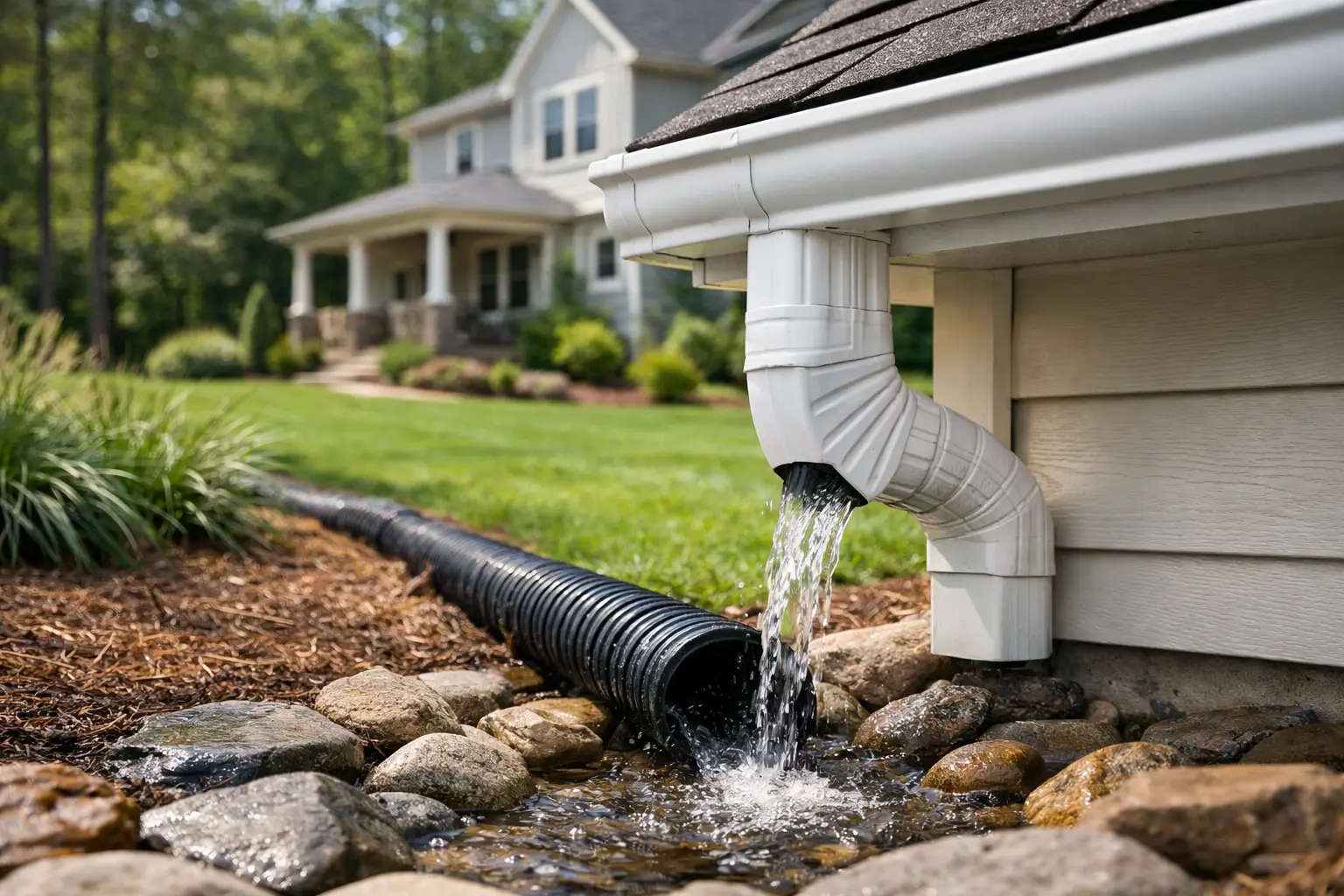
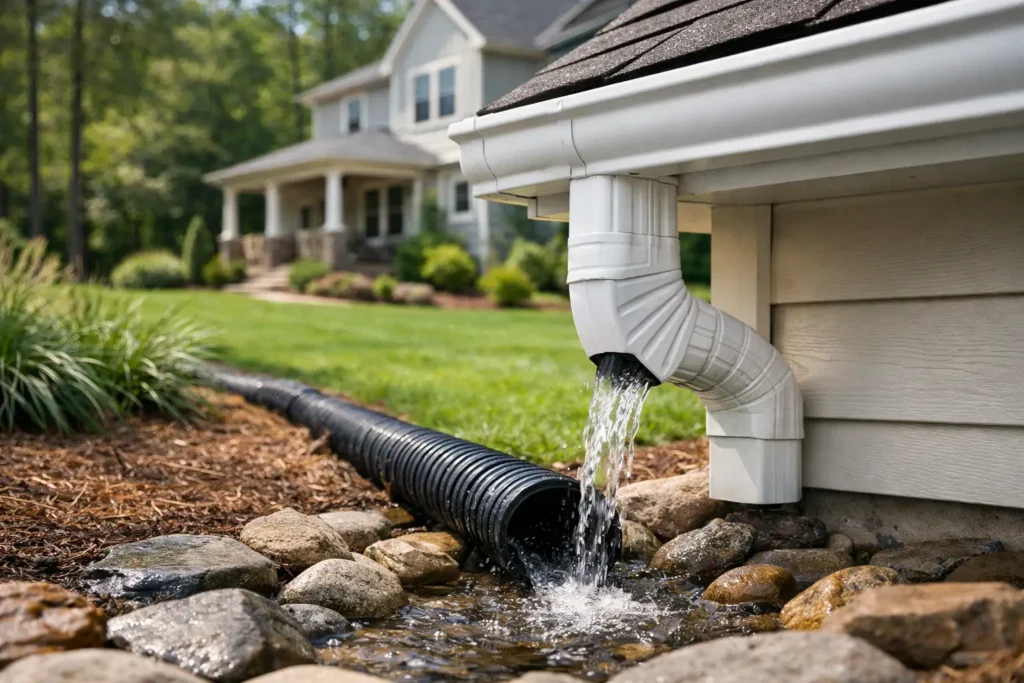
Above-ground extensions are often the most straightforward option. They are visible, easy to inspect, and relatively simple to adjust if water is still collecting near the home. Their trade-off is appearance and convenience. A rigid extension can interfere with mowing or create a tripping concern, while a flexible corrugated extension may be easier to route but can hold debris or become damaged over time.
Underground drain lines can provide a cleaner finished look, particularly near patios, front entries, and landscaped beds. However, they must be installed with the correct slope and a reliable outlet. A buried pipe that ends in a low spot or becomes clogged can trap water below ground and create a problem that is harder to see. Underground drainage is worth considering when it is designed around the property’s grade rather than used only to hide a downspout.
Choose Gutters That Can Handle Your Roof
Gutter capacity matters. A large, steep roof sheds water much faster than a small roof with a gentle slope, and valleys concentrate runoff into a small section of gutter. During intense summer storms, an undersized gutter can overflow even when it is clean.
For many homes, 5-inch gutters are a common fit. Larger 6-inch gutters may be the better choice for broad roof planes, metal roofing, steep pitches, multiple valleys, or areas that regularly see fast, heavy rainfall. Larger downspouts can also improve flow. The right size should be based on the roof design and water volume, not just what was installed previously.
Seamless aluminum gutters are a popular residential option because they provide dependable performance with fewer joints along long runs. Proper fastening is equally important. Gutters that pull away from the fascia, sag between hangers, or lose their slope will not drain correctly, regardless of the material used.
Pay Attention to Roof Valleys and Problem Corners
Roof valleys deserve close attention because they direct a concentrated stream of water into the gutter. If water regularly shoots over the gutter in one location, the answer may be a splash guard, a larger gutter, a repositioned downspout, or a change to the roof-to-gutter transition. Simply adding more sealant will not correct a flow problem.
Corners can also expose installation issues. Leaks at seams, loose end caps, and improperly pitched runs tend to show up first during a storm. Look for drip marks on the fascia, water stains on siding, or soil that is consistently washed out beneath a corner of the roofline.
A Residential Gutter Drainage Guide to Warning Signs
Water-management problems often leave clues before they cause visible interior damage. Walk around the home during or shortly after a steady rain, when it is safe to do so. You may notice one or more of these signs:
- Water spilling over the front or back edge of a gutter
- Gutters that hold standing water after rainfall stops
- Downspouts that discharge directly beside the foundation
- Mulch, soil, or gravel washed away near downspout outlets
- Damp crawl space conditions, musty odors, or recurring foundation moisture
- Staining or algae growth on siding below a gutter line
Overflow does not always mean the gutters are clogged. It could mean there are too few downspouts, the gutters are pitched incorrectly, or a valley is delivering more water than the system can handle. A professional assessment can separate a simple cleaning need from a design issue.
Keep Water Moving With Regular Maintenance
Even a well-designed system needs attention. Leaves, pine needles, twigs, shingle grit, and seed pods can collect in gutters and at downspout openings. In the Piedmont Triad and surrounding North Carolina communities, seasonal leaf drop can make this especially noticeable in fall, but spring storms can also fill gutters quickly.
Cleaning schedules vary by tree cover. A home with mature trees close to the roof may need service more than twice a year, while a more open property may need less frequent cleaning. The better approach is to inspect the system after major storms and during the seasons when debris is heaviest.
Gutter protection can reduce the amount of debris entering the system, but no product eliminates the need for occasional inspection. The right guard depends on the roof, tree types, gutter condition, and how water enters the gutter during heavy rain. A guard should allow strong flow into the gutter while keeping the system accessible for maintenance.
Do not overlook the outlet. Downspouts can clog at elbows and underground connections, even when the gutter trough itself looks clear. If a downspout has little or no flow during rain, or water backs up at the top, it needs to be cleared before the next storm.
Protect the Foundation With Proper Grading
Gutters cannot replace proper grading. The soil around the house should generally slope away from the foundation so surface water does not settle against the structure. Over time, mulch beds, landscaping changes, settling soil, and hardscape additions can alter that slope.
Low areas beside the home deserve attention, particularly near crawl space vents, exterior doors, and corners where several roof lines meet. Adding soil may help in some cases, but it should never be piled high against siding or cover required clearance at the foundation. Grading, gutter discharge, retaining walls, and drainage channels often need to work together.
If the yard is consistently saturated, a drainage solution may need more than longer extensions. French drains, catch basins, swales, or carefully routed underground lines can be useful when they are installed for the specific site conditions. The right recommendation depends on where the water originates and where it can safely go.
When to Repair and When to Replace Gutters
A small leak at a seam, a loose hanger, or a clogged outlet can often be repaired. Replacement becomes more sensible when gutters are repeatedly leaking, heavily dented, pulling away from deteriorated fascia, or too small for the roof’s runoff. Replacing a failing system also creates an opportunity to improve downspout placement and drainage routing instead of repeating the old layout.
For homeowners planning a new roof, siding replacement, or exterior renovation, gutter drainage should be part of the discussion early. Coordinating the work can protect new materials, improve the finished appearance, and avoid reworking areas that have already been completed.
Carolina Improvements can evaluate gutter condition, roof runoff, downspout placement, and the drainage concerns around your home as part of a clear, homeowner-focused recommendation. A properly planned system is one of the most practical ways to protect the investment you have already made in your home.
The next time rain is in the forecast, take a few minutes to observe where the water goes. That simple check can reveal whether your gutters are doing their job or whether your home needs a better path for the next storm.