
A gutter that pulls away from the roofline is more than a curb-appeal issue. When water cannot flow correctly to the downspouts, it can spill against siding, soak fascia boards, erode landscaping, and collect near the foundation. Learning how to fix sagging gutters starts with identifying why the gutter has dropped, then repairing the support system instead of simply pushing it back into place.
For North Carolina homeowners, this problem often shows up after heavy rain, wind, leaf buildup, or years of seasonal expansion and contraction. A sound repair protects the roof edge and directs water where it belongs. The right solution depends on whether the issue is loose hardware, a damaged gutter section, failing fascia, or a gutter system that was undersized from the beginning.
Why Gutters Sag in the First Place
Gutters are designed to carry a considerable amount of water during a storm. If they are installed with proper slope and securely attached to solid fascia, they should stay in position for many years. Sagging occurs when part of that support system fails.
Clogged gutters are one of the most common causes. Wet leaves, pine needles, shingle grit, and standing water add significant weight. Over time, that load can bend spikes, pull hidden hangers loose, or distort the gutter itself. If a section holds water after a storm, the problem may be a blockage, but it may also be a lost slope.
Loose or spaced-out fasteners are another frequent issue. Older systems often use long gutter spikes that gradually work loose from the fascia board. Modern screws and hidden hangers generally provide stronger support, but they can still fail if they are installed into rotted wood rather than solid framing.
In some cases, the gutter is not the real problem. Water that repeatedly overflows behind the gutter may have damaged the fascia board, roof decking, or drip edge. Once the wood behind the gutter softens, new screws have nothing dependable to hold. Repairing only the hangers in that situation may provide a short-term improvement, not a lasting result.
How to Fix Sagging Gutters Safely
Before beginning a repair, inspect the gutter system from the ground. Look for visible dips, gutter sections separating at seams, downspouts that appear loose, peeling paint on fascia, and water stains below the roofline. During the next rainfall, observe where water overflows if it can be done safely. This can reveal whether the gutter is clogged, pitched incorrectly, or overwhelmed by the volume of runoff.
Working on a ladder carries real risk, especially near wet surfaces and roof edges. Use a stable ladder on level ground, have another adult nearby, and avoid gutter work during rain or high winds. If the gutter is high, the fascia appears damaged, or the repair requires removing multiple sections, professional service is usually the safer choice.
Start by Removing Debris and Standing Water
A full gutter can look sagged even when its hardware is still serviceable. Remove leaves, twigs, roof granules, and compacted debris by hand while wearing gloves. Flush the channel with a garden hose, working toward the downspout. If water backs up, clear the downspout before adjusting any hangers.
A downspout clog can often be cleared with a hose from the bottom upward or with a plumbing auger used carefully. Do not force a tool through thin aluminum, as it can puncture or crease the material. Once water flows freely, check whether the gutter still holds water in the middle of a run.
Check the Gutter Slope
Gutters need a slight downward pitch toward the downspout so water drains instead of pooling. The slope is subtle, usually about one-quarter inch for every 10 feet of gutter. It should not be obvious from the ground, but water should move steadily when the gutter is flushed.
If water remains in one area, the gutter may have dropped below its intended line. Use a level or run a taut string from the high end of the gutter toward the downspout to assess the slope. A long gutter run may slope from the center toward downspouts at both ends, so check the overall layout before moving hardware.
Replace Loose Spikes With Gutter Screws
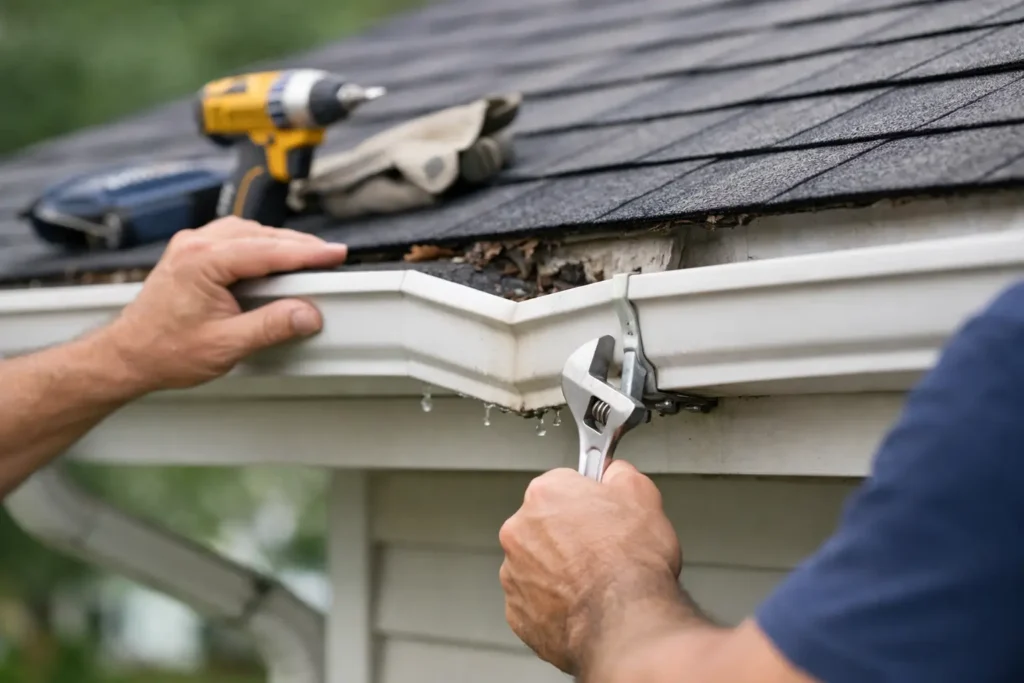
When old gutter spikes are pulling out but the fascia is still solid, replace them with long gutter screws designed for the material and installation. These screws pass through the gutter and fascia and anchor more securely than a loose spike. Work one fastener at a time to keep the gutter from shifting suddenly.
Do not simply drive a new screw into a damaged or enlarged hole. Move to sound wood when possible, and use properly spaced hangers to distribute the load. For standard aluminum gutters, hangers are commonly installed about every two to three feet, with extra support near corners, seams, and downspouts. The exact spacing can vary with gutter size, local weather exposure, and the manufacturer’s system.
Reinstall or Add Hidden Hangers
Hidden hangers sit inside the gutter and fasten through the back of the channel into the fascia. They are a clean-looking option for many aluminum gutter systems and can provide reliable support when installed correctly. If a gutter bows between existing hangers, adding support may solve the problem without replacing the entire section.
Position the gutter to restore its proper slope before tightening the new hanger. Avoid overtightening fasteners, which can dimple thin metal or pull the gutter out of alignment. After the repair, run water through the system again to confirm that it drains toward the downspout without overflowing behind the gutter.
When Fascia Repair Must Come First
If screws spin freely, the fascia feels soft, or you see dark staining and peeling paint along the roof edge, stop before adding more fasteners. The wood behind the gutter may be deteriorated. A gutter cannot remain secure when it is attached to compromised fascia.
Fascia damage can result from overflowing gutters, missing drip edge, roof leaks, or water getting behind the gutter during wind-driven rain. Repair may involve removing the gutter, replacing affected fascia boards, correcting the roof-edge flashing, and reinstalling the gutter with the proper pitch. This is also a good time to inspect the soffit and roof decking for hidden moisture damage.
This work can become more involved than a basic gutter adjustment because the roof edge, trim, and drainage system work together. A qualified contractor can determine whether the problem is isolated or part of a larger roof or exterior repair need.
Signs You May Need Gutter Replacement Instead
Not every sagging gutter is worth repairing. Replacement is often the better long-term value when the gutter has multiple low spots, extensive corrosion, recurring seam leaks, crushed sections, or widespread loose hardware. A system that is too small for the roof area may also overflow even after it is repaired and cleaned.
Seamless gutters reduce the number of joints where leaks can develop, while properly sized downspouts help move stormwater away from the home. Gutter guards can reduce leaf buildup, particularly around mature trees, but they are not a substitute for correct slope, sound fascia, and sufficient drainage capacity.
For homes in Greensboro, Winston-Salem, High Point, and surrounding communities, it is worth considering the full path water takes after it leaves the roof. Downspout extensions, splash blocks, grading, and drainage near the foundation all affect how well the system protects the property.
Prevent Future Gutter Sagging
The best repair is one that does not have to be repeated after the next heavy storm. Clean open gutters regularly, especially after fall leaf drop and spring pollen season. Inspect them after major wind events, and address a loose hanger or small overflow point before it damages the fascia.
Keep tree limbs trimmed back from the roof when practical. Branches can drop debris into gutters and can bend or tear sections during storms. Also check that downspouts discharge away from the foundation, rather than emptying into a mulch bed that stays saturated against the house.
If your gutter problem is paired with roof-edge damage, deteriorated siding, or persistent water near the foundation, a coordinated repair can prevent separate issues from becoming a larger exterior project. Carolina Improvements can evaluate the condition of the gutter system and the surrounding components, then provide a clear recommendation based on what your home actually needs.
A gutter should sit straight, drain quietly, and do its job without drawing attention to itself. When it starts to sag, acting early can protect the roofline, exterior finishes, and foundation from water damage that is far more costly than the original repair.