
A roof in North Carolina has to handle more than its share of weather. Summer heat, heavy rain, wind-driven storms, humid conditions, and occasional winter ice all place demands on the materials protecting your home. That is why metal roof installation North Carolina homeowners can depend on is not simply about selecting an attractive panel. It is about choosing the right roofing system, preparing the home properly, and relying on experienced installation from start to finish.
Metal roofing can be an excellent long-term investment, but it is not a one-size-fits-all answer. The best choice depends on your roof design, budget, neighborhood requirements, and the condition of the structure beneath the existing roof.
Why Metal Roofing Makes Sense in North Carolina
A quality metal roof offers strong protection against the conditions homeowners face across the state. Properly installed metal panels shed rain efficiently, resist many forms of storm damage, and do not absorb moisture the way some other materials can. This is especially valuable during long periods of humidity and frequent rainfall.
Metal roofing also reflects a portion of the sun’s heat. For homes with substantial sun exposure, that can help reduce heat gain in the attic and support a more comfortable indoor environment. The actual energy benefit depends on the panel color, insulation, ventilation, and the overall condition of the home, so it should not be viewed as a replacement for proper attic ventilation or insulation.
Durability is another reason many homeowners consider metal. A well-installed system can last significantly longer than a standard asphalt shingle roof. That longer service life may make the higher initial cost worthwhile for homeowners planning to remain in their homes for many years.
Choosing the Right Metal Roofing System
Not every metal roof has the same appearance, performance level, or price. During a consultation, the goal should be to match the system to the home rather than push a single option.
Standing Seam Panels
Standing seam roofing uses long vertical panels with raised seams. Fasteners are generally concealed beneath the seams, creating a clean appearance and reducing exposed points where water could enter. It is a popular choice for homeowners who want a modern look, dependable water shedding, and long-term performance.
Standing seam systems often cost more than exposed-fastener panels, but their design can make sense for homes where appearance and durability are top priorities. Panel length, roof complexity, and the number of chimneys, skylights, valleys, or transitions all affect the final price.
Metal Shingles and Stone-Coated Styles
Some homeowners like the durability of metal but prefer the familiar look of shingles, slate, or shake. Metal shingles and stone-coated metal products can offer that traditional appearance while providing the benefits associated with metal roofing.
These systems may be a good fit for historic-style homes, neighborhoods with architectural guidelines, or homeowners who do not want the vertical-panel look. Installation details are different from standing seam roofing, which is why the contractor’s experience with the specific product matters.
Exposed-Fastener Panels
Exposed-fastener panels are often selected for garages, workshops, carports, and some residential applications. They can be a practical, cost-conscious option, particularly on simpler roof designs. Because fasteners are visible and use sealing washers, they require careful placement and periodic inspection over time.
This type of roofing can perform well when it is correctly specified and installed. It may not be the preferred choice for every home, especially where a more refined residential appearance or concealed-fastener design is desired.
What a Professional Metal Roof Installation Includes
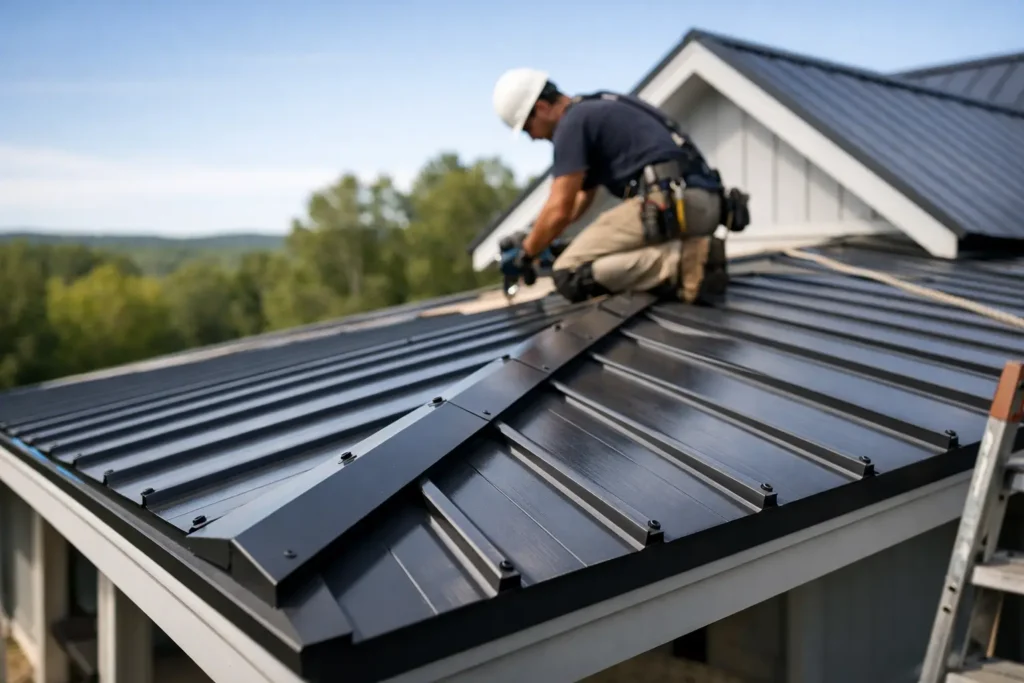
A dependable installation begins well before the first panel is placed. The existing roof, roof deck, flashing, ventilation, and drainage all need attention. Skipping those details can shorten the life of even the best roofing material.
The process usually starts with an in-home assessment and clear measurements. A contractor should identify soft decking, signs of water intrusion, aging flashing, or ventilation concerns before providing a detailed recommendation. If repairs are needed, addressing them before the new roof is installed helps protect the investment.
Next comes preparation of the roof surface. Depending on the project, this may include removing the existing roof or installing the metal system over an approved existing layer. While an overlay may save time and disposal costs in certain situations, a tear-off gives the installer the opportunity to inspect the decking directly. The right approach depends on local code requirements, the existing roof condition, and the metal system being installed.
Underlayment is a critical layer beneath the panels. It provides added protection against moisture and helps manage condensation. Flashing around chimneys, walls, valleys, vents, and penetrations deserves equal attention. Most roof leaks do not start in the middle of a panel. They begin at transitions where materials meet, which is why careful flashing work is essential.
A professional crew should also protect landscaping, keep the worksite organized, and complete a final cleanup. Homeowners should know who to contact during the project, what work is planned each day, and how weather delays will be handled.
Important Considerations for Metal Roof Installation in North Carolina
North Carolina’s climate makes installation details particularly important. Heavy rain tests valleys, penetrations, and flashing. Wind events test panel attachment and edge details. Warm, humid weather makes attic ventilation and moisture management part of the larger roofing conversation.
Roof pitch is another factor. Some metal products are better suited to low-slope applications than others. A contractor should never assume that any panel can be installed on any roof. The product must be appropriate for the pitch, and the installation must follow manufacturer specifications.
Noise is a common question. When a metal roof is installed over proper decking and underlayment, most homeowners do not find rain noticeably louder than it is on other roofing materials. Open-framed structures, such as some carports or porches, may produce more noticeable sound because they do not have the same insulation and interior ceiling layers.
Color deserves thoughtful consideration as well. Lighter colors can help reflect solar heat, while darker colors may better suit a home’s style. Look at the siding, trim, brick, and surrounding homes before deciding. A roof is a large visual feature, and the right color can improve curb appeal for decades.
Cost Factors Homeowners Should Understand
Metal roofing costs more upfront than many shingle roofs, but square-foot pricing alone does not tell the whole story. The final investment is affected by the product selected, roof size, slope, access, structural repairs, tear-off needs, and the complexity of flashing details.
A simple ranch-style roof with few penetrations is typically less expensive to complete than a steep, multi-level roof with dormers, valleys, skylights, and chimneys. Material gauge, coating quality, panel profile, and trim work also make a difference.
When comparing estimates, make sure each proposal clearly describes the roofing system and the work included. It should address underlayment, flashing, ventilation, removal or disposal, decking repairs if needed, and cleanup. A lower estimate may leave out necessary work that becomes an added cost later.
Financing can also make a long-term roofing project more manageable. Qualified homeowners may have options that allow them to move forward with needed protection without postponing the project until damage becomes more extensive.
How to Choose a Contractor for Metal Roof Installation North Carolina Homeowners Can Trust
Metal roofing requires specialized knowledge. The installer must understand panel layout, expansion and contraction, attachment methods, flashing details, and manufacturer requirements. A contractor who does excellent shingle work is not automatically experienced with every metal roofing system.
Ask whether the contractor is licensed and insured, which materials will be used, and how the roof will be protected from water at critical transitions. Request a written estimate that explains the work in plain language. You should also feel comfortable asking how changes, weather interruptions, and unexpected decking repairs will be communicated.
Carolina Improvements approaches roofing projects with a practical focus on lasting results, quality materials made in the USA, and clear homeowner communication. A free in-home estimate gives you the opportunity to discuss your roof’s condition, compare appropriate options, and receive a recommendation built around your home rather than a generic sales pitch.
A metal roof is a major decision, but it can provide dependable protection, lasting curb appeal, and confidence through changing North Carolina seasons. The best next step is a thorough roof assessment that gives you clear answers before the work begins.