
A new roof is one of the biggest protection decisions you can make for your home. Knowing how to choose roof shingles means looking beyond a color sample or the lowest estimate. The right shingles need to handle North Carolina heat, heavy rain, humidity, wind, and the occasional winter storm while fitting your home’s style and your long-term budget.
Start With Your Roof’s Real Needs
Every roof has different demands. A low-slope section, a large shaded roof, a home surrounded by tall trees, or a roof exposed to open wind can each call for different materials and installation details. Before selecting shingles, have the roof inspected for aging, leaks, damaged decking, flashing concerns, ventilation issues, and signs of moisture in the attic.
Shingles are only one layer of a roofing system. Underlayment, ice and water protection where appropriate, flashing, ventilation, starter shingles, and ridge caps all contribute to how well the finished roof performs. A quality shingle installed over a weak system can still leave a homeowner with problems.
For homes in Greensboro, Winston-Salem, High Point, and surrounding North Carolina communities, weather resistance should be part of the conversation from the start. Summer heat can accelerate wear, while wind-driven rain can find weaknesses around valleys, chimneys, skylights, and roof penetrations.
Choose the Right Type of Asphalt Shingle
Asphalt shingles remain the most common residential roofing choice because they offer dependable performance, broad design options, and a practical price range. Within that category, however, there are meaningful differences.
Three-tab shingles
Three-tab shingles have a flatter, more uniform appearance. They are generally the most affordable asphalt option, but they typically have lower wind ratings and a shorter expected service life than architectural shingles. They can make sense for certain budget-conscious projects, but they are less common on full roof replacements today.
Architectural shingles
Architectural shingles, also called dimensional or laminated shingles, are thicker and layered to create more depth. They offer a more substantial appearance, stronger durability, and often better wind performance than three-tab products. For many homeowners, architectural shingles provide the best balance of value, curb appeal, and long-term protection.
Premium designer shingles
Premium shingles are designed to create the look of slate, cedar shake, or other high-end roofing materials. They can add distinctive character to a home and may be a good fit for homeowners prioritizing curb appeal. The trade-off is cost and weight, so your contractor should confirm that the roof structure and budget support the product you choose.
Match Shingle Performance to North Carolina Weather
A roof in North Carolina needs more than a pleasing color. Review the performance ratings that matter for your property and location.
Wind resistance is especially worthwhile when your home is exposed to storms or sits on an open lot. Many shingles are rated for higher wind speeds when installed as part of the manufacturer’s complete roofing system. Ask what wind rating applies to the exact shingle and installation method included in your quote.
Algae resistance is another valuable feature in humid areas. Those dark streaks seen on many roofs are often caused by airborne algae, especially on shaded or tree-covered homes. Algae-resistant shingles can help preserve the roof’s appearance, although regular gutter cleaning and tree trimming still matter.
Impact resistance may be worth considering if hail is a concern in your area. Class 4 impact-resistant shingles are designed to better withstand hail strikes than standard options. They cost more upfront, but some homeowners may find the added protection worthwhile. Check with your insurance provider before assuming a premium discount applies.
Do not overlook attic ventilation
Heat and moisture trapped in an attic can shorten the life of roofing materials and make your home less comfortable. Proper intake and exhaust ventilation helps manage attic temperature and moisture levels. It also supports the performance of your new shingles.
Ventilation requirements depend on the home’s design, insulation, existing vents, and roof layout. A professional assessment is more reliable than simply adding more roof vents, which may not solve an imbalance in the system.
Pick a Shingle Color That Works With the Whole Exterior
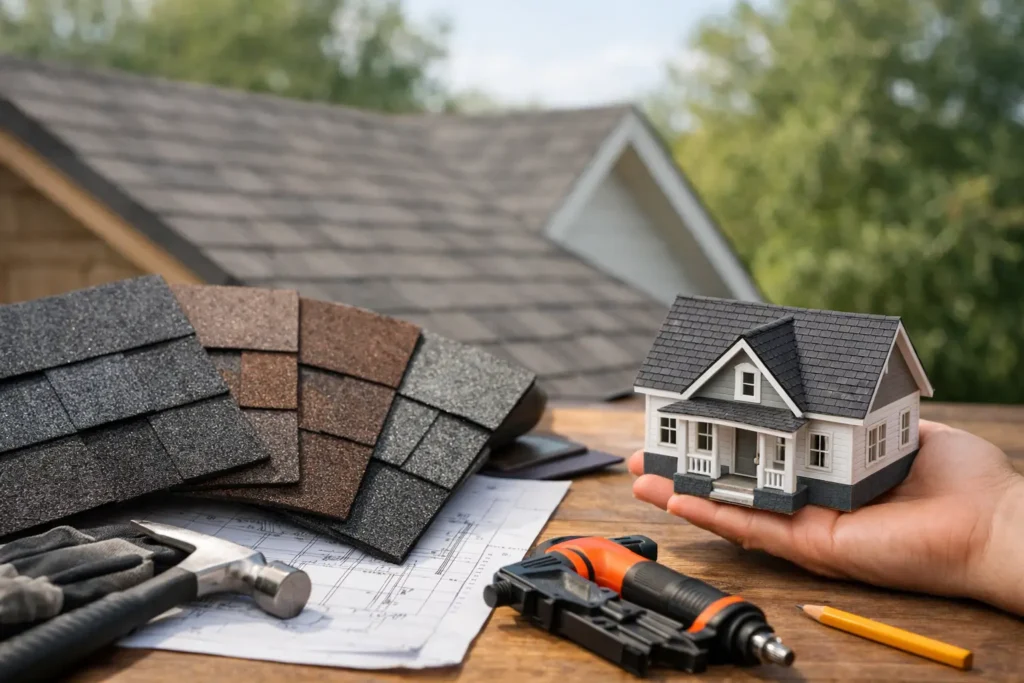
Shingle color has a major effect on curb appeal because the roof covers so much of the home’s visible exterior. Rather than choosing a color in isolation, compare samples with your siding, brick, trim, shutters, gutters, and exterior doors.
Warm brown, weathered wood, and charcoal blends often work well with traditional North Carolina homes. Gray shingles can complement brick, stone, white siding, and contemporary exteriors. Black can look crisp and dramatic, but on some homes it may make the roofline feel heavier. Lighter colors can soften the appearance of a large roof and may absorb somewhat less heat, though attic ventilation and insulation have a greater influence on indoor comfort.
View samples outdoors at different times of day. Sunlight can make a color appear much lighter, warmer, or cooler than it does inside a showroom. Also consider the permanent surroundings of the property, including mature trees, neighboring homes, and masonry that will remain after the roof replacement.
Compare Warranties Carefully
A long warranty can be reassuring, but it should not be the only reason to choose a shingle. Read what the warranty covers, how long full coverage lasts, whether labor is included, and what conditions may limit coverage.
Manufacturer warranties generally address defects in the roofing product. Workmanship coverage is separate and addresses installation-related concerns. Both matter. Even excellent materials need proper installation, especially around roof transitions and areas where water naturally concentrates.
Ask whether the estimate includes a complete manufacturer system and whether registration is required. A clear, written proposal should identify the shingle brand and line, underlayment, flashing work, ventilation recommendations, cleanup expectations, and warranty details. Vague estimates make it difficult to compare contractors fairly.
Balance Initial Cost With Long-Term Value
The least expensive shingle is not always the most affordable roof over time. A lower-priced option may have a shorter service life, less wind resistance, or a look that does not add much to your home’s appearance. On the other hand, the most premium product is not automatically necessary for every home.
A practical approach is to compare two or three options that fit your needs. Consider the installed cost, expected durability, performance ratings, warranty coverage, maintenance needs, and how long you plan to remain in the home. If you expect to stay for many years, a higher-quality architectural shingle may offer more value than a basic product. If you are preparing to sell soon, a durable, attractive mid-range option may be the better fit.
Financing can also make a roof replacement more manageable, but it should support a sound product decision rather than push you beyond a comfortable budget. A detailed estimate gives you a better basis for planning than a broad price range or verbal promise.
Select a Contractor, Not Just a Shingle
The installer has as much influence on your roof’s performance as the shingle itself. Look for a licensed, insured contractor that provides a thorough inspection, explains recommendations in plain language, and gives you a written scope of work.
A professional roofing crew should protect landscaping and exterior surfaces, remove old materials responsibly, address damaged decking when discovered, install flashing correctly, and leave the property clean. Good communication matters as well. Homeowners should know what will happen before work begins, what may change if hidden damage is found, and who to contact with questions.
Carolina Improvements helps homeowners evaluate roofing systems as a whole, using quality, USA-made materials and experienced installation practices. A free in-home estimate can clarify which shingle options fit your roof, your home’s appearance, and your budget without pressure.
The best shingle choice is the one that gives your home reliable protection and a finished look you will be comfortable seeing every day. Start with a careful roof assessment, compare performance details instead of labels alone, and choose an installer prepared to stand behind the work.