
A roof rarely fails all at once. More often, a few missing shingles, dark streaks, or a small ceiling stain signal that the roof is reaching a point where a simple repair may no longer be enough. Knowing when to replace roof shingles helps North Carolina homeowners protect the structure beneath their roof before water damage becomes a larger and more expensive project.
The right timing depends on the roof’s age, its condition, the type of damage present, and how well previous repairs have held up. A professional inspection can separate a repairable concern from a roof that is nearing the end of its service life.
When to Replace Roof Shingles Instead of Repairing Them
Roof repair is often the sensible choice when damage is limited to one area. A handful of shingles blown off during a storm, a flashing issue around a chimney, or a small leak caused by a damaged vent boot can frequently be corrected without replacing the entire roof.
Replacement becomes the better long-term decision when problems are widespread, repeated, or tied to aging materials. If repairs are becoming a regular expense, the roof may no longer provide dependable protection even if individual trouble spots can still be patched.
A replacement also deserves consideration when shingles cannot be matched closely. New shingles installed beside faded, weathered materials can create an uneven appearance. More importantly, a roof with widespread wear may continue developing leaks in new locations after each isolated repair.
8 Signs Your Shingles May Need Replacement
1. The roof is near or beyond its expected age
Many asphalt shingle roofs last roughly 20 to 30 years, though actual life span varies with shingle quality, installation, ventilation, sun exposure, and storm activity. North Carolina’s heat, humidity, heavy rain, and seasonal wind can be hard on roofing materials.
Age alone does not automatically mean replacement is necessary. A well-installed roof that has been maintained may still have useful life remaining. However, once a roof approaches its expected range, an inspection is a practical way to plan ahead rather than wait for a leak.
2. Shingles are curling, cupping, or cracking
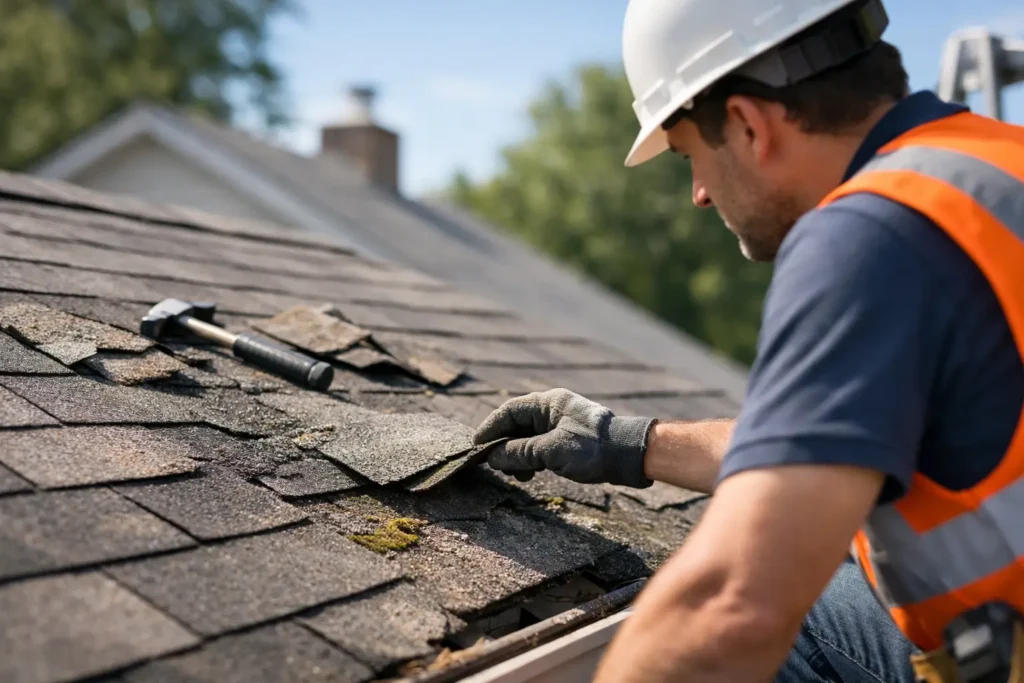
Shingles should lie relatively flat against the roof. Curling edges, raised corners, cupping, and visible cracks often indicate that the material has dried out or lost flexibility. These conditions can allow wind-driven rain to work beneath the shingles.
A few damaged shingles may be replaced. When curling or cracking appears across multiple roof sections, it is usually a sign of broader age-related deterioration.
3. Granules are collecting in gutters or at downspouts
The gritty surface of an asphalt shingle is made of granules that help protect it from sunlight and weather. Some granule loss is normal, especially on a newer roof, but heavy accumulation in gutters is worth investigating.
Bald or darker-looking patches on shingles can mean the protective surface is wearing away. Once that wear is widespread, shingles may become more vulnerable to heat, moisture, and cracking.
4. Missing, loose, or lifted shingles keep appearing
A single missing shingle after a severe storm does not always call for a new roof. Replacing it quickly can prevent water from reaching the underlayment and roof decking.
Repeated missing or lifted shingles are different. They may point to weakened adhesive strips, brittle materials, improper installation, or wind damage across a larger area. If a roof cannot reliably withstand normal weather, replacement may provide better value than recurring spot repairs.
5. You see water stains, damp insulation, or active leaks
A brown ceiling stain, peeling paint near the ceiling, or damp insulation in the attic should never be ignored. These clues can indicate a roof leak, although they may also come from plumbing or condensation issues.
The location of an interior stain does not always match the point where water entered the roof. Water can travel along rafters or decking before appearing indoors. A qualified inspection can identify whether the cause is damaged shingles, flashing, ventilation, or another component.
6. The roof deck looks uneven or feels soft
A roofline should appear straight and consistent from the ground. Sagging areas, visible dips, or sections that look uneven can suggest moisture damage to the roof decking or a structural concern below it.
This is not a condition to watch and wait on. Soft or deteriorated decking can compromise the roofing system’s ability to hold fasteners and shed water properly. The needed scope may include replacing damaged wood along with the shingles.
7. Moss, algae, or staining is hiding deeper wear
Dark algae streaks are common in humid climates and do not necessarily mean shingles have failed. They are often an appearance issue that can be addressed with appropriate roof-safe cleaning methods.
Moss is more concerning because it can trap moisture against the roof surface and lift shingle edges over time. Avoid aggressive pressure washing or harsh scraping, which can remove granules and shorten the life of the roof. An inspection can determine whether the growth is surface-level or contributing to material damage.
8. Storm damage affects more than one part of the roof
Hail, fallen branches, wind, and wind-driven debris can damage shingles in ways that are not obvious from the yard. Hail impacts may bruise or fracture the shingle surface, while wind may break seals or crease shingles without fully tearing them away.
After a significant storm, look for obvious debris and interior leaks, but avoid climbing onto the roof. A professional assessment is safer and can identify damage to shingles, flashing, vents, gutters, and the areas where the roof meets walls or chimneys.
What a Roof Inspection Should Consider
A dependable recommendation should be based on more than the number of shingles visible from the ground. A thorough assessment considers the condition of the field shingles, ridge caps, valleys, flashing, pipe boots, attic ventilation, gutters, and roof decking where accessible.
Ventilation matters because excess attic heat and moisture can shorten shingle life from underneath. If the roof is replaced without addressing ventilation concerns, new shingles may face the same conditions that contributed to premature wear on the old roof.
The inspection should also account for the home’s future plans. Homeowners preparing to sell may choose a targeted repair if the roof has meaningful life left. Those planning to remain in the home for many years may prefer replacement before recurring repairs, water risk, and emergency scheduling become a concern.
Do Not Wait for a Major Leak
By the time water is dripping into a living space, damage may already extend beyond the shingles. Moisture can affect insulation, ceiling materials, wall finishes, decking, and framing. In some cases, it can create conditions for mold growth.
Calling for help at the first sign of concern gives you more options. You may be able to schedule a repair at a convenient time, protect a limited area before it worsens, or plan a replacement around your budget and household schedule. Waiting can turn a manageable roofing project into a broader restoration job.
Planning a Roof Replacement With Confidence
If replacement is recommended, ask for a clear explanation of why. The estimate should identify the condition of the existing roof, the materials proposed, and whether the project includes related work such as decking repairs, flashing replacement, ventilation improvements, or gutter service.
Material quality and installation quality both matter. A roofing system performs best when its components work together and installers follow manufacturer requirements. Homeowners should also expect a clean, organized job site and straightforward communication about scheduling, weather delays, and the work being completed.
For homeowners in the Piedmont Triad and surrounding North Carolina communities, Carolina Improvements can provide a free in-home assessment and a practical recommendation based on the condition of your roof. Whether the answer is a targeted repair or a full replacement, the goal is the same: durable protection for the home and fewer surprises when the next storm arrives.
If your shingles are showing their age or you have noticed a new stain indoors, arranging an inspection now can give you clarity before a small warning becomes an urgent repair.