
A driveway can look like a simple slab, but it carries daily traffic, manages runoff, and creates one of the first impressions of your home. Concrete driveway replacement cost depends on much more than the visible square footage. The existing slab, the ground below it, drainage conditions, access to the site, and the finish you choose all affect the final investment.
For North Carolina homeowners, a professionally replaced concrete driveway is often a long-term decision. A properly prepared and installed driveway can improve curb appeal, make parking safer, and provide dependable performance for years. The right quote should explain the work behind the new concrete, not simply provide a number for pouring a slab.
What Does Concrete Driveway Replacement Cost?
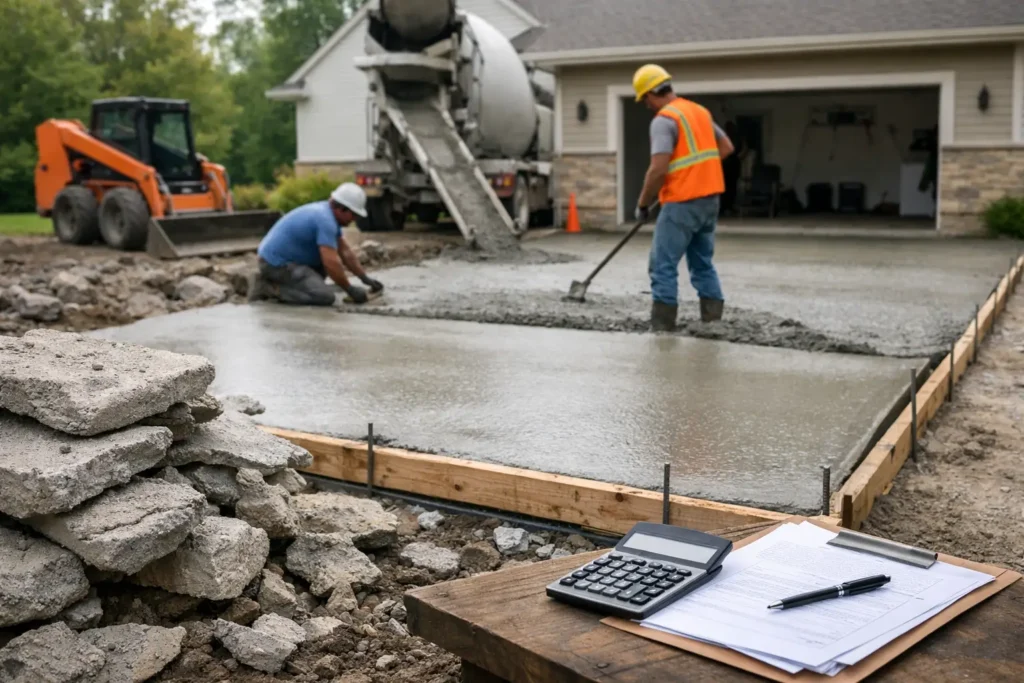
Most concrete driveway replacements are priced by square foot, but a meaningful estimate needs to account for demolition, disposal, preparation, concrete thickness, reinforcement, finishing, and curing. A straightforward replacement on a level site generally costs less than a project involving a badly settled driveway, poor drainage, limited equipment access, or an expanded parking area.
As a general planning range, homeowners may see installed replacement costs from roughly $10 to $20 or more per square foot. A standard two-car driveway can vary widely based on its dimensions and site conditions. Smaller driveways can carry a higher per-square-foot price because mobilizing equipment, removing debris, and forming the work still require a complete crew and process.
Decorative finishes, thicker concrete for heavier vehicles, curved layouts, borders, and extensive grading can raise the investment. On the other hand, a simple broom-finished driveway with good access and a stable base will typically fall closer to the lower end of the range. A free in-home assessment is the best way to replace broad averages with a detailed project price.
The Biggest Factors in a Driveway Replacement Quote
Removal of the existing concrete
Old concrete has to be broken up, loaded, hauled away, and disposed of before the new surface can be installed. Thickness matters here. A thin, cracked residential slab is different from a thick driveway apron or an old section that was poured over previous concrete.
Access matters as well. If a crew can bring equipment directly to the driveway, removal is generally more efficient. A narrow lot, gated backyard access, retaining walls, mature landscaping, or nearby structures may require more hand work and careful planning.
Base preparation and soil conditions
The concrete is only as reliable as the material beneath it. A driveway that sank, cracked severely, or developed low spots may have an underlying base or drainage problem. Simply pouring over that problem can lead to the same failures in the new surface.
Professional replacement includes evaluating the subgrade, removing unsuitable material when needed, adding and compacting a stable stone base, and grading the area for proper support. This work is not always visible after the project is complete, but it is one of the most important parts of a durable driveway.
North Carolina soil can change significantly from one property to the next. Clay-heavy ground, areas with recurring runoff, and sites near slopes may need additional attention to keep water from undermining the driveway edges or washing out the base.
Driveway size, shape, and thickness
A larger driveway requires more concrete, labor, forms, and reinforcement, but size is not the only measurement that matters. A long, narrow drive may be harder to reach than a compact, open parking pad. Curves, turnarounds, side parking areas, and connections to garages or sidewalks also increase forming and finishing work.
Most passenger-vehicle driveways are designed with an appropriate residential concrete thickness. If you regularly park a heavy truck, RV, work trailer, or other substantial equipment, a contractor may recommend thicker concrete or additional reinforcement in selected areas. Paying for the right design up front can be more cost-effective than repairing premature cracking later.
Reinforcement, joints, and edges
Concrete naturally expands and contracts as temperatures and moisture conditions change. Properly placed control joints help guide cracking into planned lines rather than allowing random cracks across the surface. Reinforcement can also improve the slab’s performance, depending on the design and site conditions.
The details around garage entries, street connections, and driveway edges deserve special attention. These are common stress points, especially where vehicles turn, brake, or transition from one surface to another. A detailed quote should identify what is included rather than treating every driveway as the same installation.
Drainage and grading corrections
Water is one of the most expensive variables in concrete driveway replacement cost. If water flows toward the garage, pools near the foundation, or runs across the driveway after a storm, the project may need a drainage solution in addition to a new slab.
That could involve adjusting the driveway slope, regrading adjacent areas, installing a drain where appropriate, or addressing gutter discharge that empties onto the drive. These additions increase the initial cost, but they protect the driveway and help reduce the risk of water issues around the home.
Finish and appearance options
A standard broom finish offers practical traction and a clean appearance for many homes. Homeowners who want a more customized look may choose exposed aggregate, stamped patterns, integral color, borders, or saw-cut detailing. These finishes involve added materials, labor, and maintenance considerations.
For a primary driveway, durability and drainage should come before decoration. A finish should suit the home and the way the space is used, while still providing safe footing in rain and reliable performance under vehicle traffic.
When Replacement Makes More Sense Than Repair
A few hairline cracks do not automatically mean your driveway needs to be replaced. Minor surface imperfections, isolated cracks, or small edge damage can sometimes be repaired or sealed, particularly when the slab remains level and the base is stable.
Replacement becomes the more sensible choice when cracking is widespread, sections have shifted or settled, the surface is spalling badly, or water is consistently collecting where it should drain away. Large cracks that continue to open, uneven panels that create a trip hazard, and deterioration near the garage are signs that a patch may only delay a larger problem.
Overlays can be appealing because they appear less expensive, but they are not a cure for a failing foundation beneath the concrete. If the existing slab is moving or the base has washed out, an overlay often follows the same cracks and settlement. Removing the damaged concrete gives the installer an opportunity to correct the underlying conditions.
Questions to Ask Before Approving a Quote
A lower price is not always a better value if important preparation steps are missing. Before making a decision, ask whether the estimate includes demolition and hauling, base material and compaction, concrete thickness, reinforcement, control joints, grading, cleanup, and any needed drainage work.
It is also helpful to ask how long you should wait before walking, parking, or placing heavy vehicles on the new concrete. Concrete gains strength over time, and following the recommended curing period protects your investment. Discuss where vehicles, dumpsters, and equipment will be placed during the project so the work stays organized and your property is protected as much as possible.
At Carolina Improvements, the goal is to give homeowners a clear recommendation based on the condition of the existing driveway and the demands of the property. A thorough on-site review helps identify whether you need a straightforward replacement, a larger driveway, or site work that addresses drainage and support before concrete is poured.
Plan for a Driveway That Lasts
A new concrete driveway should not be treated as a cosmetic cover-up. It is a structural exterior improvement that depends on careful removal, a stable base, proper slope, quality materials, and professional finishing. Once installed, protect it by keeping heavy loads within the design of the slab, directing downspouts away from the edges, and addressing small issues before they become larger ones.
The most helpful next step is an on-site estimate that evaluates your driveway as part of the entire property. When you understand what is happening below the cracks as well as above them, you can make a confident decision that supports your home’s appearance, access, and long-term value.