
A roof over a low-slope addition, porch, sunroom, or modern-style home has a different job than a steep shingle roof. Water moves more slowly across it, seams matter more, and the wrong material can leave a homeowner dealing with recurring leaks. TPO roofing for homes is often a practical answer for these roof areas because it creates a continuous, weather-resistant surface designed for low-slope applications.
TPO is not the right choice for every house or every roofline. The best material depends on the roof pitch, drainage, existing structure, local exposure, and how the roof connects to the rest of the home. Knowing where TPO performs well helps homeowners make a confident, long-term decision.
What Is TPO Roofing?
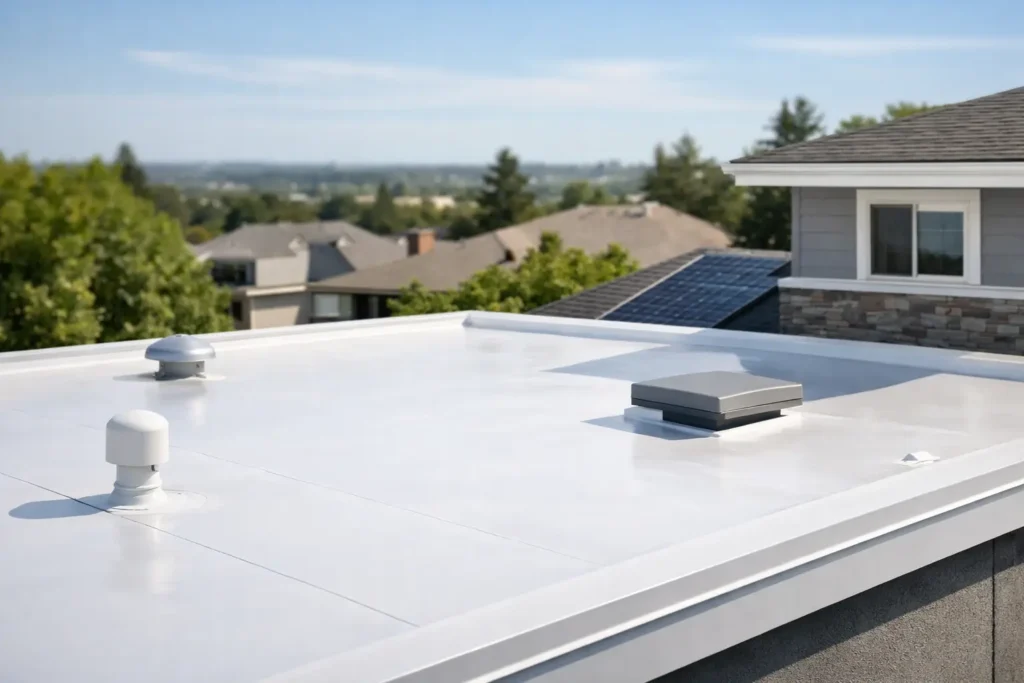
TPO stands for thermoplastic polyolefin. It is a single-ply roofing membrane, commonly white or light-colored, that is installed in broad sheets over a properly prepared roof deck or insulation system. The sheet seams are heat-welded together, creating a bonded connection that is designed to resist water intrusion.
Unlike asphalt shingles, which are installed in overlapping rows and shed water down a steep slope, TPO is made for roofs with little pitch. It is frequently used on commercial buildings, but it also has a valuable place in residential construction. Flat or low-slope roof sections on additions, garages, carports, workshops, enclosed patios, and contemporary homes can be strong candidates.
The membrane itself is only one part of a roofing system. A successful installation also depends on proper insulation, edge metal, flashing, drains or scuppers, and careful detailing around walls, pipes, skylights, and transitions. Those areas deserve as much attention as the field of the roof.
Where TPO Roofing for Homes Makes Sense
TPO is most useful when a roof has a low slope, generally a pitch where shingles may not shed water reliably. It can provide a clean, finished appearance on a rear addition or porch enclosure without trying to force a steep-slope material onto a nearly flat surface.
It is also a good fit when heat management is a concern. A white TPO membrane reflects a significant amount of sunlight compared with dark roofing materials. During North Carolina summers, that can help reduce heat absorbed by the roof assembly. The actual effect on indoor comfort and cooling costs depends on insulation levels, attic design, air sealing, ceiling height, and the amount of direct sun the roof receives, so it should not be treated as a guaranteed energy-bill fix.
Homeowners sometimes choose TPO when replacing a deteriorating rolled roof. Traditional rolled roofing can be economical up front, but it may have more vulnerable seams and a shorter useful life depending on the product and installation. A professionally installed TPO system offers a more substantial option for homeowners planning to keep and protect the space below.
Benefits That Matter to Homeowners
The biggest benefit of TPO is its watertight seam system. Heat-welded seams are not simply glued together. When completed correctly, they form a strong connection that helps the roofing system stand up to standing water, wind-driven rain, and normal expansion and contraction.
TPO also remains flexible enough to handle changing temperatures. That matters in the Piedmont Triad and across central North Carolina, where hot, humid summers, heavy rain, occasional ice, and seasonal temperature swings can all put stress on exterior materials.
Its light-colored surface is another advantage. A white roof can make a low-slope addition look brighter and cleaner while reducing surface temperatures in direct sun. TPO membranes are also generally resistant to ultraviolet exposure, algae growth, and many common rooftop contaminants.
For homeowners, the practical appeal is straightforward: TPO can deliver dependable protection on roof areas that are difficult to cover well with shingles. It is a purpose-built material, not a workaround.
The Trade-Offs to Consider Before Choosing TPO
TPO is a specialized low-slope roofing material, not a universal replacement for shingles. On a highly visible, steeply pitched main roof, architectural shingles or metal may better match the home’s design and neighborhood character. In many cases, the most sensible solution is a combination: shingles or metal on the main roof, with TPO on the low-slope section.
Drainage must also be addressed. TPO can tolerate water better than many roofing materials, but no roof benefits from water sitting in the same spot for extended periods. A qualified contractor should inspect the slope, deck condition, drainage path, gutters, and any existing ponding before recommending a system. Sometimes the right repair involves improving the slope or drainage, not just installing a new membrane.
Installation quality is especially important. A membrane can be durable, but poorly welded seams, incomplete flashing, loose perimeter details, or inadequate preparation can lead to leaks. Homeowners should look for a contractor who evaluates the full roof assembly rather than quoting a membrane alone.
Cost varies based on roof size, access, tear-off needs, insulation, flashing complexity, and whether structural repairs are required. A simple garage roof is very different from an addition tied into multiple walls, valleys, and drainage points. A detailed on-site estimate is more useful than a square-foot price that does not account for those conditions.
How a TPO Roof Is Installed
Every project begins with an assessment of the existing roof. The contractor checks for soft decking, active leaks, trapped moisture, failed flashing, poor drainage, and signs that water has affected framing or interior finishes. Covering damaged material without correcting the underlying issue can create a bigger repair later.
After preparation or tear-off, the installer builds the roof system according to the project’s needs. This may include insulation or a cover board, followed by the TPO membrane. The membrane can be mechanically attached, adhered, or installed using another approved method based on the structure and system design.
The critical work happens at the details. Seams are heat-welded, edges are secured, and penetrations receive properly formed flashing. Where the TPO roof meets siding, a shingle roof, masonry, or a vertical wall, the transition must direct water out and away from the home. A clean worksite and a final inspection help ensure that the project is complete, not merely covered.
Caring for a Residential TPO Roof
TPO roofing is relatively low maintenance, but it should not be forgotten. Check the roof after major storms and have it inspected periodically, especially if it sits beneath trees. Remove branches, leaves, and debris that can block drains, scuppers, or gutters and hold moisture against the roof surface.
Avoid walking on the membrane unnecessarily, and do not allow other trades to puncture it when servicing equipment or making exterior changes. If a branch damages the roof or a leak appears inside, schedule an inspection promptly. Small penetrations and flashing issues are usually far easier to repair before water reaches the deck or framing.
A professional inspection is also worthwhile before adding solar equipment, skylights, or rooftop mechanical components. Those upgrades can work with a low-slope roof, but their supports and penetrations need to be planned as part of the roofing system.
Choosing the Right Contractor for the Job
A good TPO recommendation starts with questions, not a one-size-fits-all sales pitch. Your contractor should explain why TPO fits the roof slope, how drainage will work, what material system is being proposed, and how transitions to existing roofing will be handled. Ask whether damaged decking will be replaced if discovered, how the property will be protected during construction, and what warranty coverage applies to materials and workmanship.
For homeowners in Greensboro, Winston-Salem, High Point, and surrounding North Carolina communities, Carolina Improvements can assess low-slope roof areas alongside related exterior needs such as gutters, siding, additions, and enclosure work. Working with one licensed and insured contractor can make it easier to coordinate details that affect the roof’s long-term performance.
The right roof should fit the shape of your home, manage water effectively, and give you confidence when the next hard rain arrives. A free in-home assessment can turn a questionable low-slope roof into a clear plan for lasting protection.