
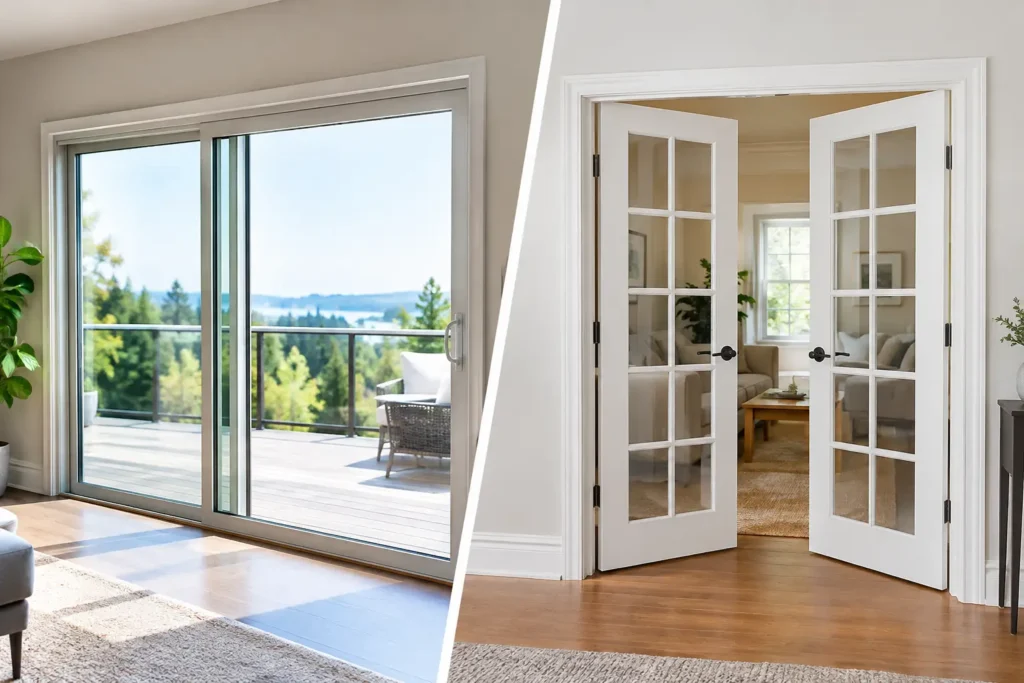
A patio door has a bigger job than simply getting people outside. It affects how your kitchen, living room, sunroom, or bedroom feels every day, from the furniture you can place nearby to the amount of natural light that reaches the room. When comparing sliding doors versus French doors, the better choice depends on your available space, how you use the opening, and the character of your home.
Both styles can provide a beautiful connection to a deck, patio, porch, or backyard. Both can be built with energy-efficient glass and secure locking systems. The meaningful differences come down to operation, layout, appearance, and installation details.
Sliding Doors Versus French Doors at a Glance
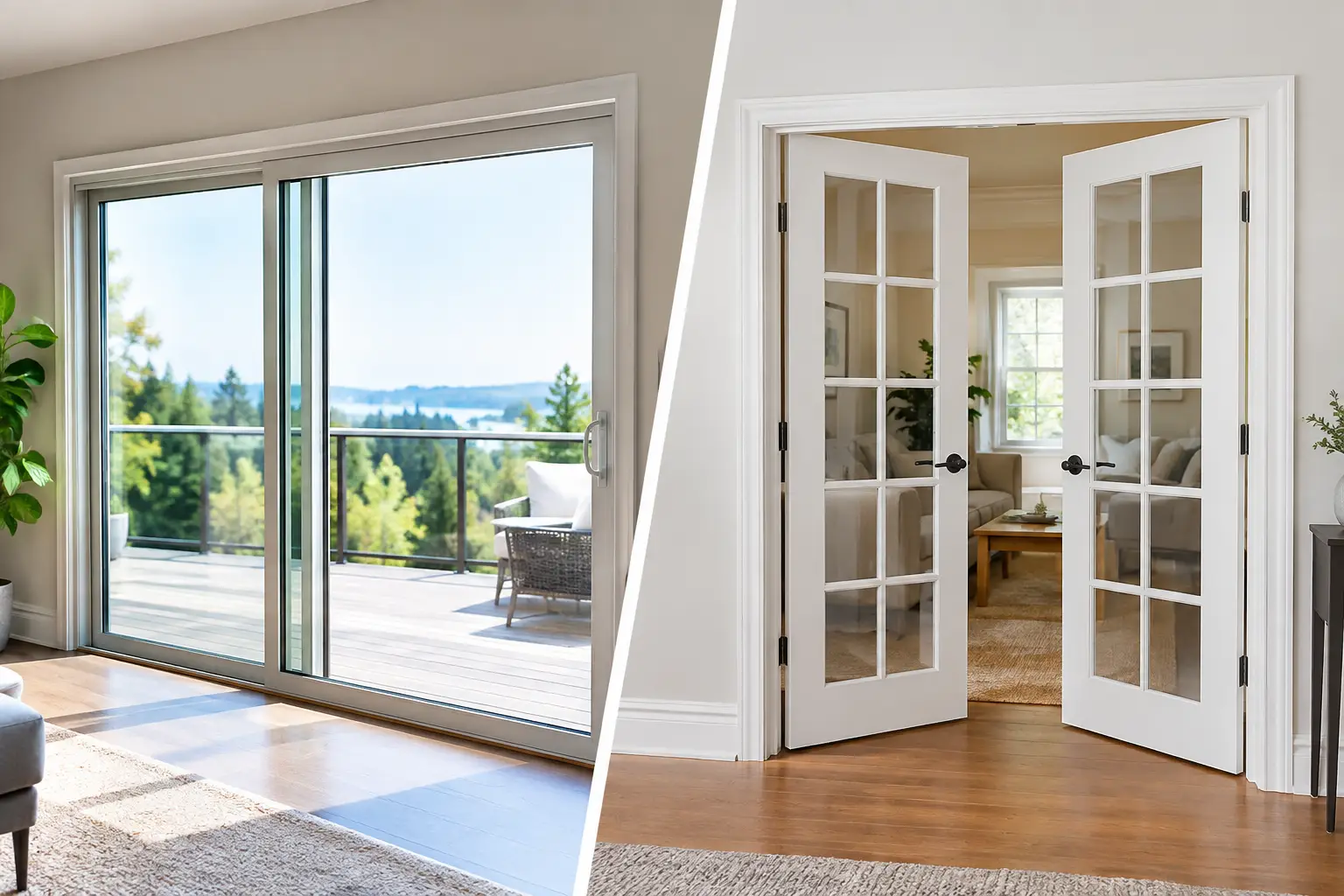
Sliding patio doors move horizontally on a track. One panel usually glides behind the other, although larger configurations can include multiple moving panels. Because the door panels stay within their own frame, they do not swing into the room or onto the patio.
French doors use two hinged panels that swing open from the center. They may open inward, outward, or include one active panel and one fixed panel, depending on the product and layout. Their divided-door appearance creates a more traditional, architectural look.
A sliding door is often the practical answer for a tight room or narrow patio. French doors are often chosen when homeowners want a more formal entry point and a wider, fully open passage. Neither is automatically better. The right selection should support the way your household uses the space.
Space and Daily Use
The clearance required for a door is one of the first decisions to make. French doors need room for the panels to swing. In a smaller dining area or family room, an inward-swinging door can conflict with a table, sofa, rug, or walkway. An outward-swinging option may solve the indoor clearance issue, but it requires open patio space and careful consideration of steps, railings, furniture, and prevailing weather.
Sliding doors do not create that swing zone. This makes them especially useful beside breakfast nooks, in compact rooms, or where outdoor furniture sits close to the house. They are also easy to operate when carrying a tray of food or helping children and pets move in and out.
That said, a standard sliding door typically leaves only about half of its full width open at one time. French doors can open nearly the entire rough opening, which is helpful for entertaining, moving furniture, or creating a more open connection between indoor and outdoor living areas. If your patio is the center of family cookouts and gatherings, that wider passage may be worth planning around.
Think Beyond the Door Opening
Measure the space on both sides of the door, not just the opening itself. Consider the path from the kitchen or living area to the patio, the location of nearby outlets and light switches, and whether a storm door, screen door, or pet access solution is part of the plan.
For North Carolina homes, also consider where rainwater moves across the patio or deck. A well-installed exterior door needs proper flashing, a correctly integrated sill, and a sound transition to the exterior surface. The door style matters, but installation is what helps protect the framing and interior flooring from water intrusion.
Light, Views, and Home Style
Sliding doors generally offer broad, uninterrupted glass panels. If your home overlooks a landscaped yard, pool, deck, or wooded lot, a slider can maximize the view and bring more daylight into the room. Modern sliding doors are available with slimmer frames than older units, making the glass area feel even more expansive.
French doors have more visible framing because of the center meeting point and hinged panels. Some homeowners prefer that look. It brings definition and symmetry to a traditional brick home, farmhouse-inspired exterior, or classic colonial-style property. French doors can also feel more intentional as a transition from a dining room or formal living area to a covered porch.
Grille patterns can further change the appearance of either option. Clear glass provides a cleaner, more contemporary look, while divided-light grilles add traditional detail. The best visual choice usually relates to the home’s existing windows, siding, trim, and architectural lines rather than following a short-term trend.
Energy Efficiency and Comfort
Older patio doors are often a source of drafts, difficult operation, condensation, and uncomfortable rooms near the opening. Replacing them can improve comfort, but homeowners should compare the performance features rather than choosing based on style alone.
Look for insulated glass, quality weatherstripping, low-emissivity coatings, and a properly engineered frame. Low-E glass helps manage solar heat gain while allowing useful daylight into the home. This can be particularly valuable on sunny exposures, where afternoon heat can make a room uncomfortable during warmer months.
French doors have more perimeter weatherstripping and a center seam where the panels meet. A quality unit that is installed and adjusted correctly can perform very well, but it has more sealing points than a sliding system. Sliding doors rely on tight interlocks, weatherstripping, and a track system that must remain clean and aligned.
Energy performance is not just a product label. If the opening is out of square, the sill is not properly supported, or flashing is skipped, even a premium door may not deliver the comfort and protection you expect. Professional installation matters as much as selecting durable, made-in-the-USA materials.
Security and Maintenance Considerations
Today’s sliding and French patio doors can both be secure when equipped with quality hardware and installed correctly. Sliding doors should include a strong locking mechanism, a secure interlock where panels meet, and properly functioning rollers that keep the panel seated in the frame. French doors should have reliable multipoint locking hardware, strong hinges, and a secure meeting stile.
Maintenance needs are different, not necessarily greater for one style. Sliding-door tracks collect dust, leaves, pet hair, and grit over time. Regular vacuuming and gentle cleaning help rollers operate smoothly and prevent unnecessary wear. Avoid applying heavy grease to tracks, since it can attract more debris.
French doors do not have tracks to clean, but their hinges, weatherstripping, and hardware should be checked periodically. If a door begins to rub, stick, or leave an uneven gap, addressing it early can prevent damage to the frame or finish. For either style, inspect the exterior caulking and trim as part of routine home maintenance.
Cost and Installation Scope
Door cost varies widely based on size, glass package, frame material, hardware, custom colors, and structural conditions around the existing opening. A standard sliding patio door may be a more economical choice in many situations. French doors can cost more because of the additional hardware, panel construction, and configuration options.
However, product price alone does not tell the full story. Changing from a sliding door to French doors, or the reverse, may require reframing, exterior trim work, flooring repairs, deck adjustments, or changes to a screen system. If you want a larger opening, the project may also involve structural planning for the header above the door.
A thorough in-home assessment should identify these details before work begins. Clear recommendations and a detailed quote help homeowners understand whether the project is a straightforward replacement or part of a larger exterior improvement.
Which Patio Door Is Right for Your Home?
Choose a sliding door when preserving floor space, maximizing glass area, and keeping the layout simple are your top priorities. It is a practical fit for smaller rooms, busy family spaces, and patios where furniture sits close to the house.
Choose French doors when you want a classic appearance, a wider open passage, and a more defined architectural feature. They can be an excellent choice for homes with adequate swing clearance and homeowners who want the patio entry to feel more like a destination than a utility opening.
For many homeowners, the decision becomes clearer once they stand in the room and picture the everyday details: where the chairs go, how groceries come inside, how the dog gets to the yard, and whether the open door will block a path. A door should look right, but it should also make the home easier to enjoy for years to come. A professional measurement and on-site conversation can turn those practical details into a choice you will feel good about every time you step outside.