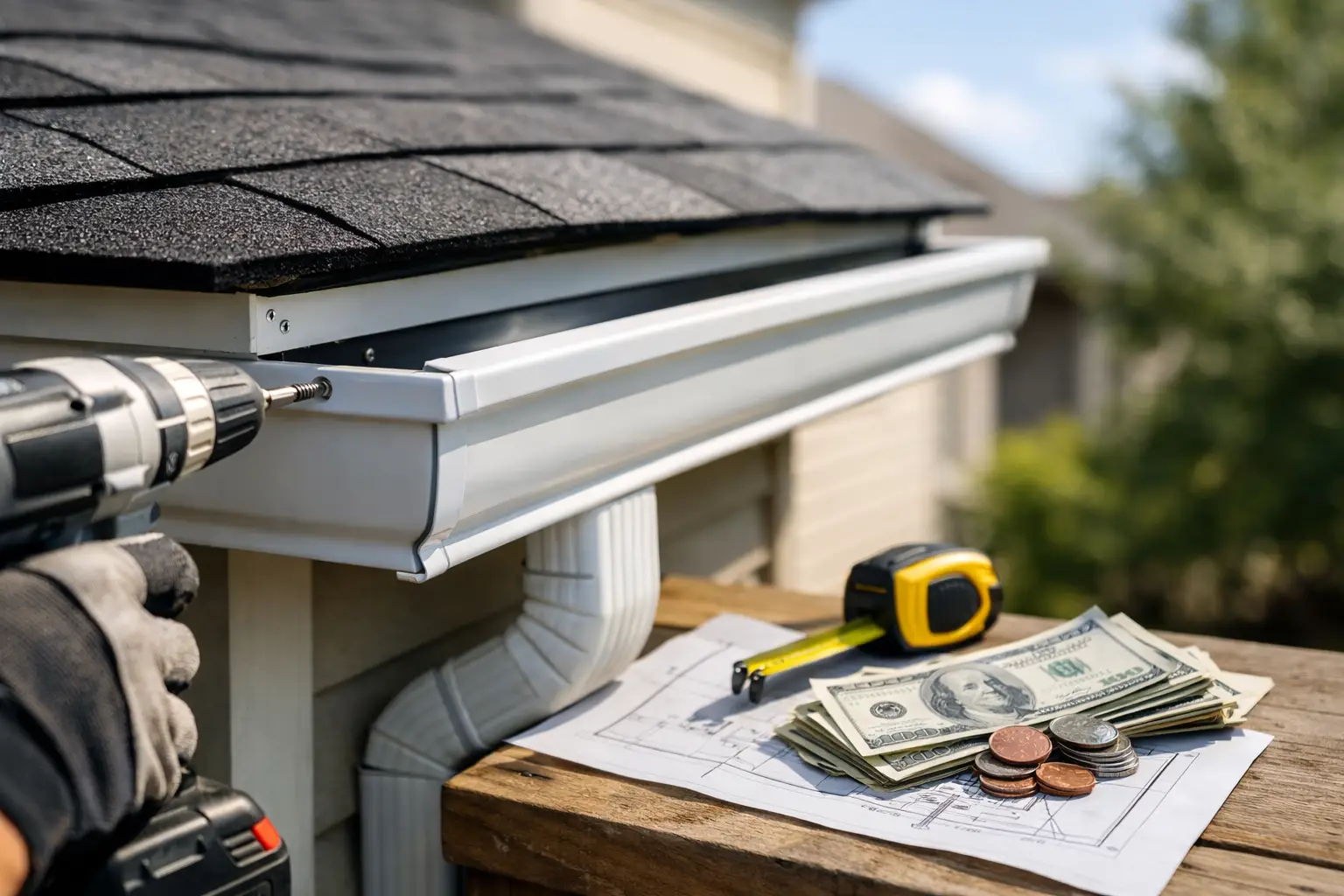

A gutter system can look like a small exterior upgrade until rainwater starts spilling near the foundation, washing out landscaping, or staining siding. Understanding seamless gutter installation cost helps North Carolina homeowners plan for a system that fits the home, manages heavy rainfall, and holds up over time.
Unlike sectional gutters sold in pre-cut lengths, seamless gutters are formed on-site to match each roofline. They still have joints at corners and downspouts, but fewer seams along straight runs can mean fewer common leak points. The right price depends on more than the number of feet around your roof. Material, gutter size, roof design, drainage needs, and the condition of the fascia all matter.
What Is the Average Seamless Gutter Installation Cost?
For many homes, professionally installed aluminum gutters fall in the range of roughly $7 to $14 per linear foot. A straightforward project on a modest one-story home may land near $1,000 to $2,000, while larger homes with multiple rooflines, second-story work, oversized gutters, or added protection systems can run $3,000 or more.
Those ranges are useful for early budgeting, not a substitute for an on-site quote. A 160-linear-foot ranch home with easy access is a very different installation from a two-story home with steep landscaping, several valleys, and long runs that need additional downspouts. The installed price should account for the complete water-management system, not simply the gutter material.
Material makes a meaningful difference
Aluminum is the most common choice for residential gutters because it is lightweight, rust-resistant, available in many colors, and offers good value. It performs well for most Piedmont Triad homes when properly sized, pitched, and secured.
Galvanized steel is stronger but requires attention to its finish over time because exposed areas can eventually rust. Copper costs substantially more, often several times the price of aluminum, but it offers a distinctive appearance and a long service life when installed correctly. Vinyl may have a lower initial material cost, yet it is generally sectional rather than custom-formed and can become brittle or sag over time. For homeowners focused on long-term performance, aluminum is often the practical middle ground.
Gutter size affects capacity and price
Most homes use 5-inch K-style gutters. A 6-inch system costs more, but it carries more water and may be a smart investment for larger roofs, steep roof slopes, metal roofing, or areas where valleys concentrate runoff in one location.
Choosing the smaller size to reduce the upfront cost is not always a savings. If gutters overflow during hard rain, water can still reach fascia boards, siding, walkways, and the foundation. A professional assessment should look at roof area and runoff patterns before recommending a size.
What Changes the Cost of Gutter Installation?
The linear footage is the starting point, but several site-specific details influence the final estimate. Understanding them makes it easier to compare quotes fairly.
Home height and access
A one-story home with open ground around the perimeter is usually faster and safer to work on than a two-story home with restricted access. Taller ladders, additional safety measures, and more labor can increase the price. Landscaping, decks, fences, HVAC equipment, and sloped lots can also affect access to the eaves.
Corners, rooflines, and custom fabrication
A simple rectangular roof needs fewer fittings than a home with bump-outs, porches, dormers, bay windows, or multiple gables. Each inside and outside corner requires carefully fitted components. Complex rooflines also create more opportunities for concentrated runoff, which may require larger gutters or extra downspouts.
Downspouts and drainage extensions
Downspouts are not an afterthought. They move water from the gutter to a safe discharge point away from the house. The number, size, location, and length of downspouts can change the total cost, especially when a home needs extensions to direct water beyond planting beds or prevent erosion.
In some cases, the best solution includes underground drainage or adjustments to grading. Those items are separate from a standard gutter installation, but they may be worthwhile when water regularly pools near the foundation.
Fascia and soffit repairs
Gutters need solid wood or trim behind them. If existing gutters have leaked, pulled loose, or overflowed for years, the fascia board may be soft or deteriorated. Replacing damaged fascia or repairing soffit before installing new gutters adds cost, but fastening new gutters to compromised material is not a lasting repair.
A dependable contractor should point out these conditions during the estimate rather than covering them up. Addressing the cause of water damage protects the new installation and the roof edge above it.
Should You Add Gutter Guards?
Gutter guards increase the initial project cost, but they can reduce the amount of leaf and debris buildup inside the system. For homes with mature trees, especially pine needles, oak leaves, and small seed pods, guards may reduce the frequency of cleaning and help water move more freely.
They are not maintenance-free, and no product eliminates every cleaning need. Debris can still collect on top of guards, around valleys, and near downspout openings. The value depends on the trees around your home, the roof design, and how difficult the gutters are to access. A homeowner with a low, open roof may prefer occasional cleaning, while someone with a tall roof and heavy tree cover may find the added protection worthwhile.
How to Compare Gutter Quotes With Confidence
A low number can be appealing, but it may not include everything needed for a complete installation. Ask whether the quote identifies the gutter size and material, total linear footage, downspout quantity, removal of old gutters, disposal, and any fascia repairs. It should also clarify whether gutter guards, splash blocks, or extensions are included.
Pay attention to installation details as well. Proper slope allows water to travel to downspouts without leaving standing water in the trough. Secure hangers placed at appropriate intervals help prevent sagging. Cleanly sealed corners and outlets matter because those are the areas where leaks are most likely to develop.
For North Carolina homeowners, local experience also has value. Heavy summer storms, leaf drop in fall, and occasional winter freezes all place demands on a gutter system. The best recommendation is based on your roof, site drainage, and the way water moves around your specific property.
When Replacement Is Worth the Investment
Frequent leaks, visible sagging, loose fasteners, peeling paint near the roofline, overflowing water, and erosion below downspouts are signs that repair may not be enough. A few isolated issues can sometimes be corrected, but widespread seams, failing sections, or recurring drainage problems often make replacement the more sensible long-term choice.
It can also be efficient to replace gutters during roofing, siding, or fascia work. Coordinating related exterior improvements can prevent duplicate labor and helps ensure that the roof edge, trim, and water drainage work together as they should.
A free in-home estimate from Carolina Improvements can provide a clear recommendation based on your home’s measurements, drainage needs, and existing exterior condition. The goal is not just a clean new gutter line, but dependable water control that helps protect the investment you have made in your home.