
A gutter can look perfectly ordinary right up until a hard North Carolina rain sends water over the edge, onto the siding, and toward the foundation. If you are asking whether you need gutter guards, the better question is how often debris is preventing your gutters from doing the job they were installed to do: moving water safely away from your home.
Gutter guards are not necessary for every property, and they are not a substitute for sound gutters, proper slope, or reliable downspouts. For many homeowners, though, they are a practical upgrade that reduces clogged gutters, limits cleanup, and helps protect the roofline, exterior, landscaping, and foundation from repeated water exposure.
What Gutter Guards Actually Do
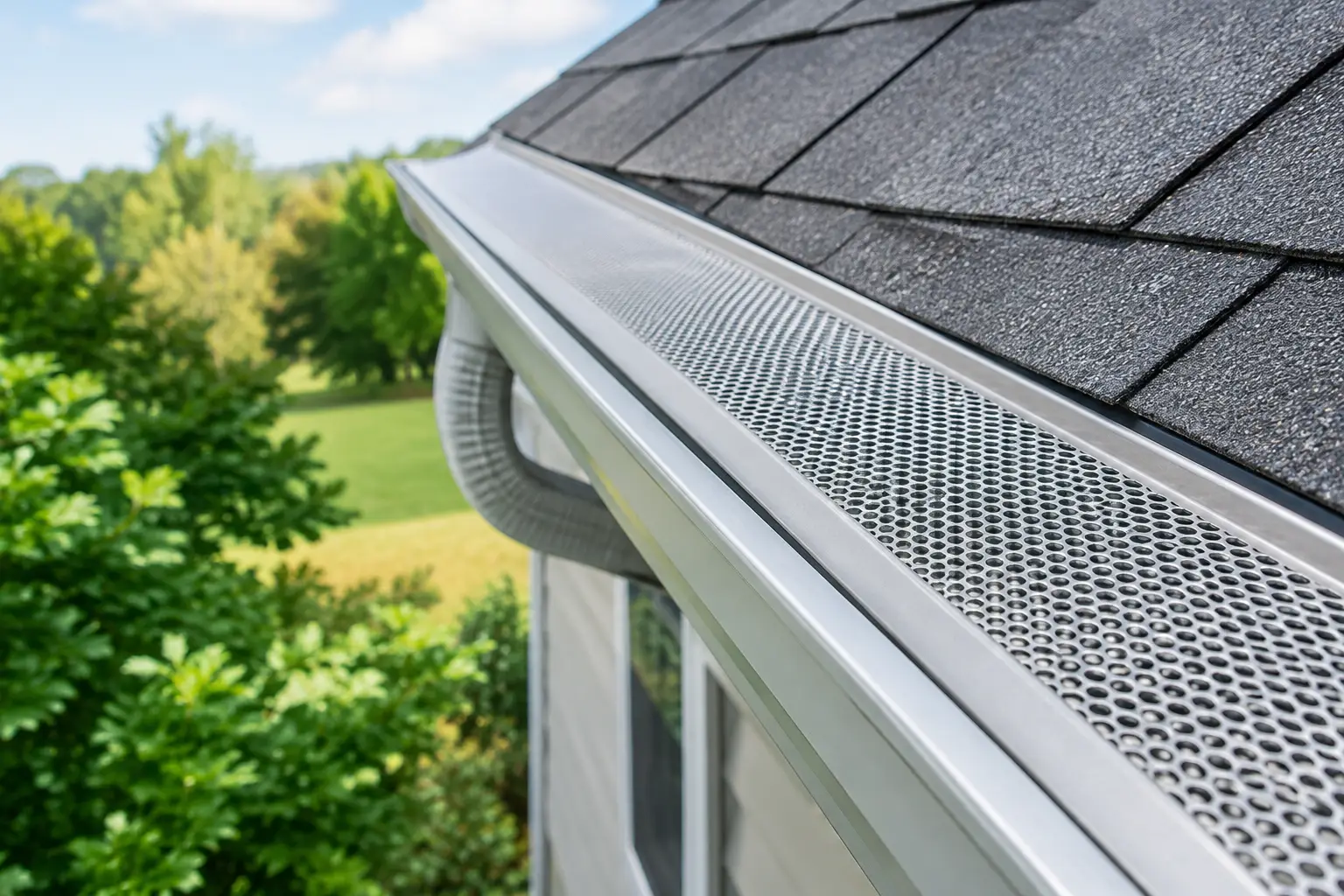
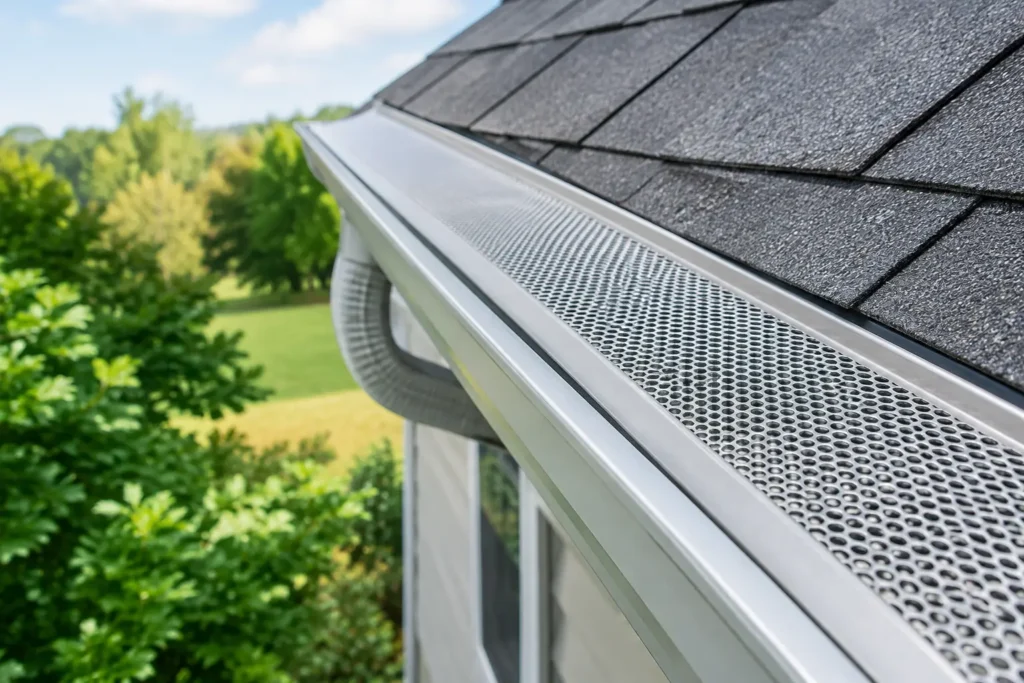
Gutter guards cover or filter the top of the gutter so leaves, twigs, seed pods, and other debris are less likely to collect inside the channel. Rainwater passes through or around the guard and into the gutter, where it should flow through the downspouts and discharge away from the house.
Their main purpose is not to make gutters completely maintenance-free. No gutter system is truly maintenance-free, especially around mature trees. The goal is to reduce the volume of debris entering the gutter and make occasional service simpler, safer, and less frequent.
This matters because a clogged gutter creates more than a messy edge along the roof. When water backs up, it can spill over the gutter, soak fascia boards, stain siding, erode mulch, and pool near the foundation. In colder weather, trapped water and debris can also contribute to ice-related stress along the roof edge.
Signs You May Need Gutter Guards
The clearest sign is repeated clogging. If you clean your gutters in spring and fall but still see overflow after ordinary storms, guards may be worth considering. This is especially common at homes surrounded by oak trees, pine trees, maples, or sweetgums.
Look up during or shortly after rainfall. Water pouring over the front lip of the gutter, streaks on the siding, and washed-out areas in your landscaping are all signs that the system may be blocked or undersized. A downspout that releases only a trickle during a steady rain may also have debris packed inside it.
You may also benefit from guards if your roof valleys direct a heavy stream of water into one area of the gutter. Valleys naturally carry a concentrated amount of rainwater, along with roof grit, leaves, and small branches. A quality guard and a properly installed gutter system can help manage that flow, but the installation details matter.
Safety is another legitimate reason. Climbing a ladder several times a year is not ideal for many homeowners, particularly when gutters sit above a steep roofline, a deck, or uneven ground. Guards do not remove every maintenance task, but they can reduce how often you need to get on a ladder to remove wet, decaying debris.
When Gutter Guards Make the Most Sense
Homes with significant tree coverage are usually the strongest candidates. In Greensboro, Winston-Salem, High Point, and surrounding communities, many established neighborhoods have large, mature trees that shed debris through multiple seasons. Spring pollen and seed pods, summer storms, fall leaves, and winter pine needles can each create different clogging problems.
Guards are also useful when you have a history of moisture issues near the home. If overflowing gutters have contributed to soil erosion, basement or crawl space moisture, peeling exterior paint, or water staining, preventing recurring clogs should be part of the solution. It is equally important to make sure downspouts extend far enough away from the foundation.
For a homeowner planning a roof replacement, siding project, or new gutters, this is often an efficient time to consider guards. The contractor can assess the condition of fascia boards, gutter hangers, and drainage paths before installing the new system. Adding guards to failing or poorly pitched gutters will not correct the underlying problem.
When You May Not Need Them Yet
If your home has few nearby trees and your gutters remain clear between scheduled cleanings, guards may not be a priority. A simple routine of checking gutters after major storms and clearing them seasonally can be enough for some properties.
You may also want to address basic repairs first. Loose gutters, improper pitch, undersized downspouts, damaged fascia, or water that drains too close to the home should be corrected before investing in guards. A guard can keep debris out of a gutter, but it cannot make a damaged drainage system work properly.
Budget is a fair consideration as well. A good gutter guard system costs more than a one-time cleaning, so the value depends on your property, the amount of debris you manage, and the ongoing cost or inconvenience of maintenance. Homeowners who need frequent professional gutter cleaning often find the upgrade more worthwhile over time.
Not All Gutter Guards Handle Debris the Same Way
Gutter guards come in several designs, including screens, perforated covers, fine mesh systems, and surface-tension styles. Each can work well in the right setting, but no single option is perfect for every roof or tree type.
Fine mesh guards are often effective at blocking small debris, but pollen, roof grit, and fine organic matter can collect on top and may need to be brushed away occasionally. Larger-holed screens allow strong water flow and are easier to install, though they may admit smaller debris. Surface-tension designs can shed leaves effectively when installed at the correct angle, but they must be matched carefully to the roof edge and expected water volume.
Pine needles deserve special attention. They can slip through large openings, bridge across a guard, or mat together when wet. If your property has several pine trees, ask for a recommendation based on that specific debris rather than choosing a guard based only on price or appearance.
Installation Quality Matters as Much as the Guard
A gutter guard should support the performance of the entire water-management system, not interfere with it. Poorly fitted guards can cause water to overshoot the gutter during heavy rain, create gaps where debris accumulates, or make future cleaning more difficult.
Before installation, the gutter should be cleaned and inspected. The installer should confirm that it is securely fastened, correctly sloped toward the downspouts, and free of standing water. Downspouts should be open, properly connected, and positioned to carry water away from the foundation.
Roof condition matters too. Guards should not be installed in a way that compromises shingles, flashing, or the roof edge. This is one reason homeowners often prefer working with an experienced exterior contractor who can look at the roof, gutters, siding, and drainage as connected parts of the home.
Carolina Improvements helps homeowners evaluate those connected issues during a free in-home estimate, so the recommendation can fit the condition of the property rather than relying on a one-size-fits-all solution.
What Maintenance Is Still Required?
Even with guards, plan to inspect the system periodically. After a severe storm, check for branches resting on the roof, debris piled in valleys, or material collecting on top of the guards. Watch how the gutters perform during a steady rain, especially near roof valleys and corners.
Most guarded systems need less frequent cleaning, but occasional maintenance is still wise. Depending on the trees around your home, that may mean rinsing the guard surface, clearing debris from roof valleys, and checking the downspout outlets once or twice a year. Keeping the roof clear helps the guards work better and protects roofing materials at the same time.
A Practical Way to Make the Decision
Start with what you can observe. How often do your gutters clog? Do they overflow in rain? Are you paying for regular cleanings or avoiding a ladder because the task feels unsafe? Do you see erosion, staining, or moisture near the foundation?
If the answer to one or more of those questions is yes, gutter guards are worth discussing as part of a complete gutter and drainage evaluation. The right system will not promise zero maintenance, but it should make water management more dependable and give you fewer reasons to worry every time a heavy storm moves through.
A well-functioning gutter system is a quiet form of home protection. When it is clean, correctly installed, and sized for your roof, rainwater goes where it belongs – away from the parts of your home that are most expensive to repair.