
A thin crack across a concrete walkway can look minor on a dry afternoon. After a season of rain, freezing temperatures, and traffic, that same opening can collect water, widen at the edges, and create a trip hazard. Knowing how to repair cracked concrete early helps protect the appearance, safety, and service life of your driveway, patio, steps, or sidewalk.
Concrete is durable, but it is not flexible. North Carolina homes see temperature changes, heavy rain, soil movement, and drainage challenges that can all affect a slab over time. The right repair depends less on making the crack disappear and more on understanding why it formed in the first place.
Start by Looking at the Crack, Not Just the Surface
Not every concrete crack signals a major structural problem. Many are surface-level shrinkage cracks that develop as fresh concrete cures. Others result from normal settling beneath a driveway or patio. These cracks may be repairable with the right filler or patching material, especially when the slab remains level and stable.
The width, depth, location, and movement of the crack tell a more complete story. A narrow, stable crack in a patio may need simple cleaning and sealing. A crack that runs across a driveway and leaves one side higher than the other points to settling or soil movement underneath. Filling that opening without correcting the movement may improve the appearance briefly, but it will not deliver a lasting repair.
Pay close attention when cracks are growing, branching, or allowing water to wash out the soil below the slab. Water is often the issue homeowners can see but not fully trace. Downspouts that empty beside a driveway, poor grading, clogged gutters, or runoff from a roof can saturate the base under concrete and contribute to shifting.
When a Small Concrete Crack Can Be Repaired
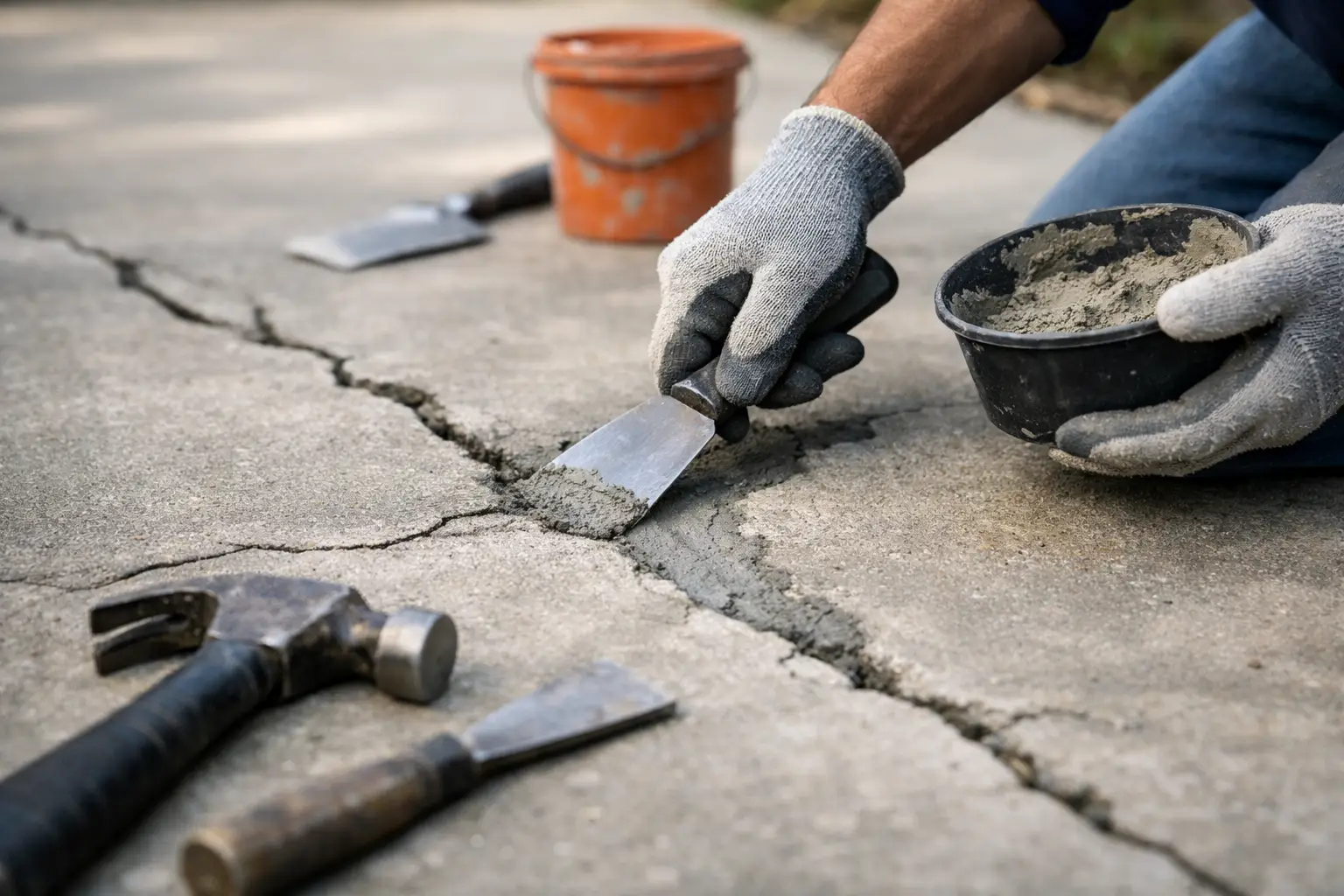
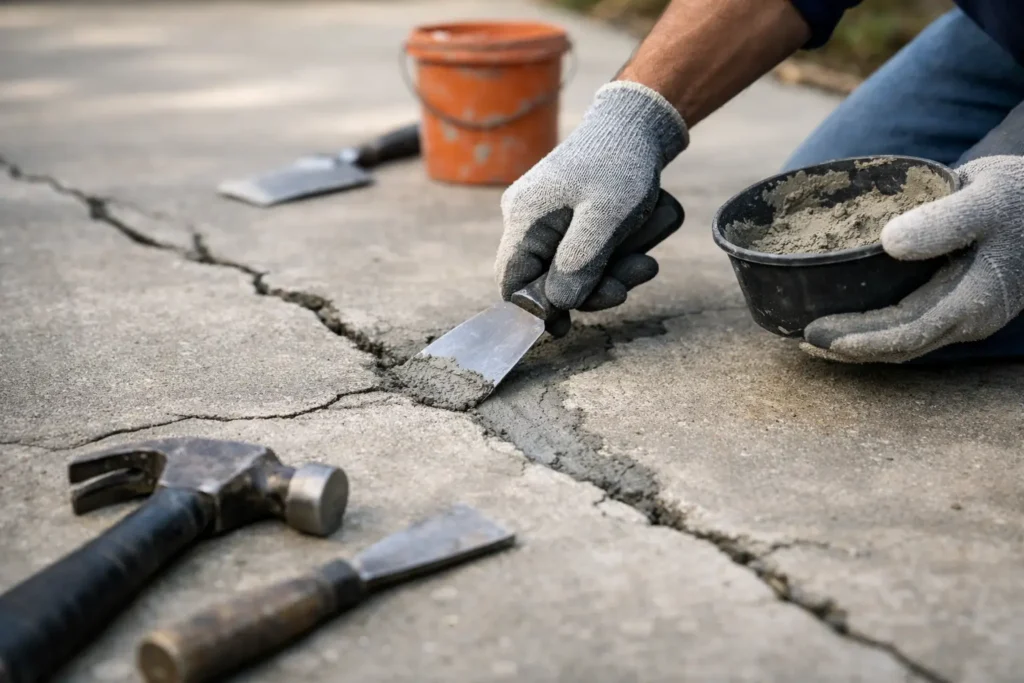
Hairline cracks and narrow openings can often be addressed before they become more expensive problems. The process starts with preparation. Loose debris, dirt, weeds, and old failed filler need to be removed so the repair material can bond properly. A wire brush, stiff broom, shop vacuum, and careful cleaning can make a significant difference in the finished result.
For narrow cracks, a flexible concrete crack sealant is typically a better choice than rigid mortar. Concrete expands and contracts with changing temperatures. A flexible material can move slightly with the slab, reducing the chance that the repair separates right away. For wider but stable cracks, a concrete patching compound may be appropriate if the edges are sound and there is no noticeable height difference.
Let the repaired area cure as directed by the product manufacturer. Avoid driving on a repaired driveway or placing heavy furniture on a patio too soon. Rushing this step can damage a repair that otherwise had a good chance of holding.
A do-it-yourself repair makes the most sense when the crack is small, stable, clean, and easy to reach. It is a maintenance task, not a solution for a slab with a failing base or persistent drainage issue.
Signs You Need Professional Concrete Repair
Concrete repairs become more complex when the problem involves more than the visible crack. A professional assessment is worthwhile if you notice any of the following:
- One side of the crack sits higher than the other, creating a lip or trip hazard.
- The crack is wide, deep, or continues to open after previous repairs.
- A driveway, walkway, or patio is sinking toward the home or holding standing water.
- Several cracks form a connected pattern across the slab.
- Crumbling edges, exposed aggregate, or flaking surfaces appear around the damaged area.
A raised edge in a walkway can be especially concerning near entry doors, steps, and areas used by children or older family members. The same is true for driveways with deterioration near the garage. Water that reaches the foundation, garage threshold, or underlying soil can create costs well beyond the concrete surface.
Professionals can determine whether crack repair, resurfacing, drainage improvements, partial removal, or full replacement is the sensible investment. There is no single answer for every slab. A small section of damaged concrete may be removed and replaced while the surrounding concrete remains in good condition. In other cases, replacing the full section creates a better long-term result because it eliminates mismatched repairs and addresses the underlying base properly.
Why Filling the Crack Is Not Always Enough
A crack filler can block water and improve curb appeal, but it cannot stabilize unstable soil. If a slab has settled because water repeatedly softens or erodes the base, the most durable plan includes managing that water first.
This may mean extending downspouts away from the concrete, correcting the slope of nearby soil, improving gutter performance, or changing how water drains across the property. These details matter around patios, driveways, garage pads, retaining walls, and walkways. Concrete should direct water away from the home, not trap it against siding, doors, or the foundation.
Tree roots are another common consideration. Roots can lift portions of sidewalks and patios as they grow, while decaying roots can leave voids that contribute to settling. Removing or cutting roots without a plan can harm the tree or leave the concrete unsupported. A site-specific evaluation helps determine whether a targeted concrete repair is practical or whether a new layout is the better option.
Repair Cracked Concrete or Replace It?
The decision often comes down to the condition of the slab as a whole. Repair is usually the better value when damage is isolated, the concrete remains structurally sound, and drainage can be controlled. It preserves usable concrete and limits disruption to the property.
Replacement may be more appropriate when widespread cracking, deep settling, surface deterioration, or poor installation affects much of the area. A deteriorated driveway, for example, may continue to crack even after multiple patches if the base was not prepared correctly or water has compromised it. Replacing damaged concrete allows the contractor to address grading, reinforcement, thickness, and the compacted base before the new pour begins.
Appearance also matters, particularly at the front of a home. Patches can vary in color from older concrete, and resurfacing is not a cure for slabs that continue to move. Homeowners planning broader exterior improvements often find that replacement provides a cleaner result and coordinates better with new walkways, patios, retaining walls, or drainage work.
Protect New and Repaired Concrete From Future Damage
Once concrete is repaired or replaced, regular care helps it perform longer. Keep gutters clean and direct downspouts away from paved surfaces and the home. Watch for low spots where water pools after storms, and address them before water repeatedly reaches the slab edges.
Avoid using harsh deicing chemicals during winter, particularly products containing ammonium sulfate or ammonium nitrate. These can damage concrete over time. Use a plastic shovel instead of a metal one when clearing snow or ice, and avoid dropping sharp-edged tools or heavy equipment onto finished surfaces.
Sealing may be helpful for certain concrete surfaces, especially patios and driveways exposed to moisture and stains. The right schedule depends on the concrete’s age, finish, exposure, and the sealer used. A quality repair or replacement job should also include control joints placed to guide normal movement, rather than allowing cracks to form unpredictably across the surface.
Get a Clear Plan Before the Crack Gets Worse
A concrete crack is easier to address when it is still a localized problem. If you are seeing uneven slabs, water pooling, recurring cracks, or driveway deterioration, an on-site review can identify what is happening below the surface as well as above it.
Carolina Improvements helps North Carolina homeowners evaluate concrete concerns in the context of the whole property, including drainage, walkways, patios, driveways, and surrounding exterior improvements. A clear recommendation and detailed quote give you a practical path forward, whether the right answer is a targeted repair or a replacement built for lasting performance.
The best time to act is before rain, traffic, and changing seasons turn a manageable crack into a larger safety or water-management concern.