
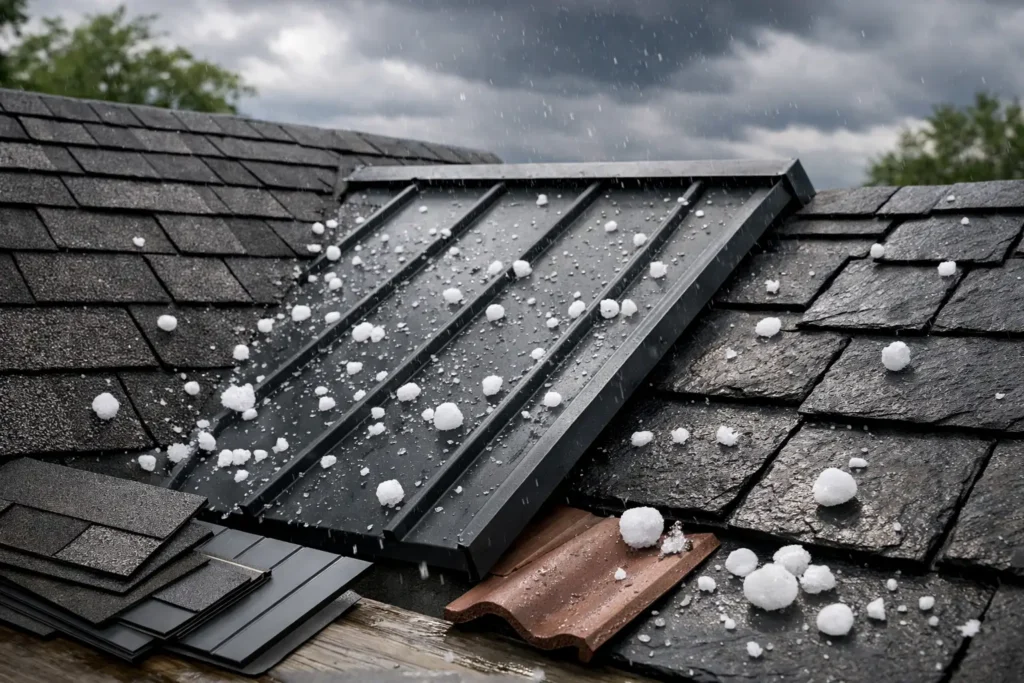
A hailstorm can leave a roof looking mostly normal from the driveway while causing damage that shortens its service life. For North Carolina homeowners comparing the best roofing materials for hail, the right answer is not simply the thickest or most expensive option. It is the material and installation system that fits your roof design, budget, local weather exposure, and long-term plans for the home.
Hail is not an everyday concern in every part of North Carolina, but severe spring and summer storms can bring sudden, damaging impacts. A roof that stands up well to hail can reduce the risk of cracked shingles, punctures, loosened granules, leaks, and an early replacement. It can also provide greater peace of mind when the next storm rolls through.
What Makes a Roofing Material Hail Resistant?
Hail resistance is commonly measured with an impact rating. For residential roofing, Class 4 is generally the highest impact-resistance classification homeowners will see. Materials are tested for their ability to withstand simulated hail impacts without cracking, splitting, or puncturing.
That rating matters, but it is not a lifetime guarantee against storm damage. The size, density, and speed of hail all affect the outcome. So do the roof’s age, slope, installation quality, attic ventilation, and the condition of the decking underneath. A new, properly installed impact-resistant roof has a better chance of handling hail than an aging roof with brittle shingles or existing wear.
When reviewing products, ask whether the specific shingle or roofing panel has a verified Class 4 impact rating. Also ask what components are included in the roofing system. Underlayment, flashing, ridge ventilation, fasteners, and proper installation are all part of protecting the home from water after a storm.
Best Roofing Materials for Hail: Your Main Options
Class 4 Architectural Asphalt Shingles
For many homeowners, Class 4 impact-resistant architectural shingles offer the strongest balance of hail protection, curb appeal, cost, and practical installation. They look similar to traditional dimensional shingles but are manufactured with enhanced reinforcement or polymer-modified asphalt to better absorb impacts.
This is often a sensible choice for homes throughout the Piedmont Triad and surrounding North Carolina communities. Architectural shingles work with a wide range of home styles, offer many color choices, and are generally more affordable than metal or specialty roofing. They can also be a straightforward replacement option when the existing roof is already shingle-based.
The trade-off is that even a Class 4 shingle can lose granules or show cosmetic marks after a major storm. It may resist functional damage better than a standard shingle, but it is not invincible. Homeowners should still arrange a professional inspection after significant hail, especially if they notice debris, damaged gutters, dented metal components, or shingles on the ground.
Standing Seam Metal Roofing
Metal roofing is widely recognized for its durability, long service life, and ability to resist fire, wind, and water. Standing seam metal panels are especially strong because the concealed-fastener design reduces the number of exposed points where water could enter.
For hail, metal has an important advantage: it is difficult to puncture under typical hail conditions. A properly installed metal roof can remain structurally sound through storms that might crack conventional shingles. It is a strong option for homeowners who plan to stay in their home for many years and want a low-maintenance roof with a clean, distinctive appearance.
However, metal can dent. Whether a dent is merely cosmetic or affects performance depends on the panel type, gauge, profile, and severity of the impact. Some homeowners do not mind minor dimpling, while others prefer a roof that maintains a more uniform appearance after a storm. Metal roofing also requires a higher initial investment and experienced installation to ensure details around valleys, penetrations, and transitions are handled correctly.
Stone-Coated Steel Roofing
Stone-coated steel combines the strength of metal with the look of more traditional roofing profiles. Depending on the product, it can resemble shingles, shake, or tile while offering excellent impact resistance. The stone coating may help reduce the visibly dented appearance associated with smooth metal panels.
This material can be an appealing middle ground for homeowners who want long-term metal performance without the standing seam look. It is durable and attractive, but it is typically a premium roofing choice. Availability, roof complexity, and qualified installation should be discussed early when considering this option.
Synthetic Composite Shingles
Composite roofing products are designed to mimic slate, cedar shake, or architectural shingles while offering greater resistance to impact, moisture, and rot than many natural materials. Some premium composite products carry high impact ratings and can perform well in hail-prone conditions.
The appearance can be a major advantage for homeowners seeking a distinctive roof without the weight and maintenance concerns of natural slate or wood. Still, product quality varies. A high-quality composite roof may be an excellent investment, while a lower-grade product may not deliver the same durability or long-term appearance. Review the product’s impact rating, warranty terms, and installation requirements rather than choosing based on appearance alone.
Rubber and TPO Roofing for Low-Slope Areas
Most homes have a primary sloped roof, but porches, additions, sunrooms, and certain modern designs may include low-slope sections. Rubber and TPO roofing systems are often appropriate for these areas because they create a continuous waterproof surface that is better suited to low drainage conditions than standard shingles.
These materials can handle impacts well, but the key concern is proper installation and seam integrity. Hail can damage a membrane, particularly if it is older or stretched over an uneven surface. A contractor should evaluate the full roof design and recommend the correct material for each section rather than applying one solution everywhere.
Materials That May Need More Consideration
Standard three-tab asphalt shingles are typically the least expensive choice, but they are also more vulnerable to wind and hail damage than quality architectural or impact-resistant shingles. They can make sense for a limited budget or a short-term repair, but they are rarely the best long-term choice for a homeowner focused on storm protection.
Natural wood shakes can offer beautiful character, yet they require regular upkeep and may split or crack with impact over time. Clay and concrete tile can be long-lasting, but individual tiles may crack when struck by hail. They are also heavy, so the home’s framing must be able to support the load. These materials are not automatically poor choices, but they require a more specific evaluation of the home and the homeowner’s priorities.
Do Not Choose by Material Alone
A high-performing roof is a complete system. Even the best hail-resistant shingle or metal panel can underperform when installed over deteriorated decking, paired with inadequate flashing, or fastened incorrectly. This is why a detailed roof assessment matters before a replacement.
A professional estimate should identify the condition of the existing roof, attic ventilation needs, areas of previous leakage, chimney and wall flashing details, and any low-slope sections that require a different roofing approach. It should also explain which impact rating is being recommended and why it suits the home.
Homeowners should consider practical questions as well: How long do you expect to own the home? Is minimizing upfront cost the priority, or are you investing for decades of service? Do you value the look of shingles, or would a metal roof better suit the property? Is your neighborhood subject to homeowner association requirements? These answers often narrow the decision more effectively than a single product feature.
What to Do After a Hailstorm
After a storm, do not climb onto the roof to inspect it yourself. Hail damage can be difficult to identify from the ground, and wet or damaged roofing creates a serious fall hazard. Instead, look for safe, visible signs such as dents in gutters and downspouts, damage to window screens, torn landscaping, or shingle granules collecting near downspouts.
Schedule a professional inspection if the storm was significant or if you see signs of impact around the property. A contractor can check for bruised shingles, broken tabs, damaged flashing, punctures, compromised seals, and issues that could allow water into the home. Prompt documentation is also helpful if you need to speak with your insurance carrier.
For homeowners considering a replacement, Carolina Improvements can provide a free in-home estimate and explain the roofing options that make the most sense for your property. The best choice is the roof that gives your family dependable protection, fits your home well, and is installed with the care needed to perform when the weather turns severe.