
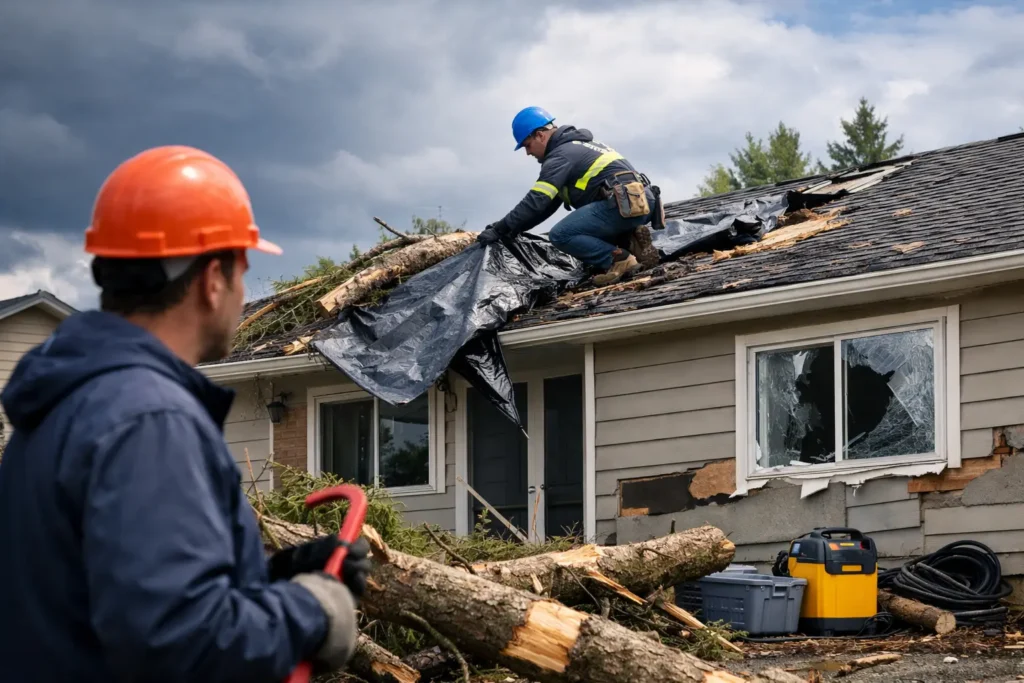
A hard spring storm can leave a home looking mostly normal from the driveway while water is moving behind siding, shingles are lifting at the roof edge, and gutters are pulling away from the fascia. This storm damage restoration example shows how a homeowner can move from the first inspection to a clear repair plan without guessing at what needs attention.
The situation is fictional, but it reflects the kind of weather-related issues homeowners across the Piedmont Triad and surrounding North Carolina communities often face. The right response is not always a full replacement of every exterior surface. It is a careful assessment of the damage, the age and condition of existing materials, and the work needed to protect the home for the long term.
The Call After a High-Wind Storm
A homeowner notices several shingle tabs in the yard the morning after a storm. One section of gutter is sagging, and a brown water mark has appeared on the ceiling near an upstairs bedroom window. The roof is 16 years old, the vinyl siding was installed later, and the home has original wood trim around several windows.
The homeowner’s first priority is stopping additional damage. If water is actively entering the house, a temporary protective measure may be needed while permanent repairs are planned. It is also wise to photograph visible damage from the ground, take pictures of interior water marks, and make notes about when the storm occurred and when the leak was first noticed.
Safety comes first. Homeowners should not climb onto a wet roof, pull on loose gutters, or try to remove damaged siding from a ladder. A professional on-site assessment can identify issues that are easy to miss from the ground, including lifted flashing, punctured roof areas, soft roof decking, damaged pipe boots, and water entry around windows or wall penetrations.
Storm Damage Restoration Example: What the Inspection Finds
During the exterior inspection, the contractor finds that wind has creased and loosened shingles on the rear slope of the roof. A few shingles are missing near a ridge vent, exposing the underlayment below. The gutter problem is not limited to a loose hanger. Water weight and wind have bent a section of gutter, damaged the fascia board behind it, and separated a downspout connection.
The ceiling stain has a related but separate cause. Wind-driven rain entered through failed sealant and deteriorated trim at the bedroom window. The siding itself remains in serviceable condition, but the wall area around the window needs to be opened carefully so the contractor can check the sheathing and framing for moisture damage.
This is where a complete inspection matters. Repairing only the missing shingles could leave the homeowner with a recurring interior leak. Replacing only the window trim could overlook roof damage that continues to allow water into the attic. Storm restoration should follow the path of water and wind damage, not simply address the most visible symptom.
Deciding Between Repair and Replacement
In this example, the roof has widespread wind damage and is already near the later part of its expected service life. A small repair is technically possible, but it would be a short-term measure. Matching older shingles can be difficult, and repaired areas may not provide the consistent protection the homeowner needs if the rest of the roof is becoming brittle.
The recommendation is a full roof replacement with new underlayment, properly installed flashing, ventilation review, and replacement of damaged roof components. This approach costs more than patching a few shingles, but it avoids investing in repairs that may soon be followed by a separate roof replacement.
The window, however, does not need to be replaced automatically. If the frame, glass, and operating hardware are sound, the appropriate work may be limited to repairing damaged trim, replacing failed sealant, correcting any wet sheathing, and restoring the siding around the opening. If moisture has damaged the window frame or the unit already has air leaks and operating problems, replacement can be the better long-term choice.
Building a Practical Scope of Work
A reliable storm restoration plan separates urgent protection from permanent improvements. In this case, the contractor may first secure the damaged roof area and prevent further water intrusion. Once materials, weather, and scheduling allow, the permanent work can be completed in an organized sequence.
The project scope includes replacing the roof system, repairing the damaged fascia, installing a properly pitched gutter section and reconnecting the downspout, and correcting the window-side water damage. The contractor also checks that the downspout directs water away from the foundation. Water management is often overlooked after a storm, yet it can prevent future erosion, staining, basement moisture, and damage to landscaping.
Before work begins, the homeowner should receive a detailed quote describing the recommended materials, the areas being repaired or replaced, and any allowances or potential conditions found after damaged materials are removed. Clear communication is especially valuable when storm damage reveals hidden rot or moisture. No contractor can always see every issue until access is available, but the homeowner should understand how those discoveries will be documented and addressed.
For a larger exterior project, it can make sense to consider related improvements at the same time. If gutters are aging throughout the home, replacing only one storm-damaged section may create a mismatched system and leave other weak areas in place. If the roof replacement exposes worn chimney flashing or deteriorated trim, addressing those items during the project can be more efficient than scheduling another exterior repair later.
That does not mean every storm repair needs to become a full renovation. The best recommendation depends on the condition of the home, the homeowner’s priorities, and the value of completing related work now versus later.
Working With Insurance Without Losing Focus on the Home
Many homeowners begin a storm restoration project by contacting their insurance carrier. The policy, the cause of damage, the deductible, prior repairs, and the insurer’s inspection all affect whether coverage applies and how much may be paid. A contractor can provide a detailed repair estimate and document observable damage, but the insurance company makes coverage decisions.
Keep copies of photos, inspection notes, estimates, receipts for emergency protective work, and communication about the claim. Review the scope carefully. If an insurance estimate includes only a limited repair while a contractor identifies additional visible damage, ask questions and provide supporting documentation through the proper claims process.
It is also worth distinguishing between storm-caused damage and pre-existing wear. A roof may have both. Honest restoration work identifies damage related to the event while also explaining maintenance or age-related conditions that may not be covered. That straightforward approach helps homeowners make sound decisions instead of expecting an insurer to pay for work outside the policy.
What Quality Restoration Looks Like on Site
A professional result is more than new materials. It includes protecting landscaping and driveways where practical, keeping the work area organized, removing debris and exposed nails, and communicating when the crew will be on site. For roofing work, that also means using compatible materials and installing them according to the roof system requirements, rather than treating shingles as a cosmetic layer.
During this example project, the crew replaces damaged roof decking where needed before installing the new roofing materials. The fascia repair is completed before the new gutter section is hung, so the gutter has a secure backing. At the window, wet material is removed, the opening is inspected, and the repaired area is properly sealed before trim and siding are restored.
The homeowner should expect a final walkthrough. This is the time to review completed areas, ask about basic care, confirm that downspouts are draining correctly, and make sure the property is clean. A good contractor makes the project understandable from the estimate through the final inspection.
Steps Homeowners Can Take After the Work Is Complete
Storm restoration is not a one-time substitute for home maintenance. After repairs are complete, homeowners can reduce the chance that small issues become costly ones by checking the attic and ceilings after heavy rain, keeping gutters clear, and watching for loose siding, peeling trim paint, or soil washing away near downspouts.
After the first major rain, take a quick walk around the home. Look for overflowing gutters, water pooling near the foundation, or new stains at repaired interior areas. These observations do not replace professional service, but they can catch a drainage or sealing issue early.
For homeowners who prefer one experienced team to coordinate roofing, gutters, siding, windows, and other exterior repairs, Carolina Improvements can provide a free in-home estimate and a straightforward plan built around the condition of the home. The goal is not simply to make storm damage less visible. It is to restore the protection, drainage, and finished appearance your home needs to stand up to the next season.