
A backyard should feel like an extension of your home, not a space where every conversation, cookout, or quiet morning is on display. A well-planned backyard privacy fence installation creates a clearer boundary, adds security for children and pets, and makes patios, decks, and gardens more enjoyable. The difference between a fence that looks good for years and one that begins leaning or warping early usually comes down to planning, materials, and installation quality.
Start With the Purpose of Your Fence
Privacy is often the main reason homeowners install a fence, but it is rarely the only one. You may also want to contain a dog, define a property line, block an unattractive view, create a safer play area, or give a new patio more of a finished feel. Each goal affects the best fence height, layout, style, and material.
For example, a solid six-foot fence can provide meaningful privacy around a seating area, while a shorter picket-style fence may be better for a front or side yard where visibility matters. If wind protection is a concern, a fully solid fence can catch more wind than a design with spacing or an open decorative top. A professional assessment helps balance privacy with the conditions of the property.
Before choosing a style, think about how the fence will work with the rest of your outdoor improvements. A fence that frames a deck, patio, enclosure, driveway, or garden can make the entire yard feel more organized and useful.
Confirm Boundaries and Local Requirements First
A fence should be built on your property, not based on assumptions about where the line appears to be. Old fences, landscaping edges, utility boxes, and driveway lines are not always accurate indicators of a boundary. If there is any uncertainty, review your survey or consider having the property line confirmed before work begins.
Homeowners should also check neighborhood association rules and local requirements. Communities can regulate fence height, materials, placement, gate direction, and whether the finished side must face outward. Corner lots may have visibility restrictions near streets and intersections. These details are easier and less expensive to address before materials are ordered.
Utility locations matter as well. Fence posts need to be set below ground, and digging without confirming the location of underground lines can create a serious safety problem and delay the project. Proper preparation protects the property and keeps the installation moving forward.
Choose a Material That Fits Your Yard and Maintenance Preferences
There is no single best material for every backyard privacy fence installation. North Carolina weather brings heat, humidity, rain, and occasional strong storms, so the right choice depends on the look you want, the maintenance you are comfortable handling, and your budget over time.
Wood offers a traditional, flexible look
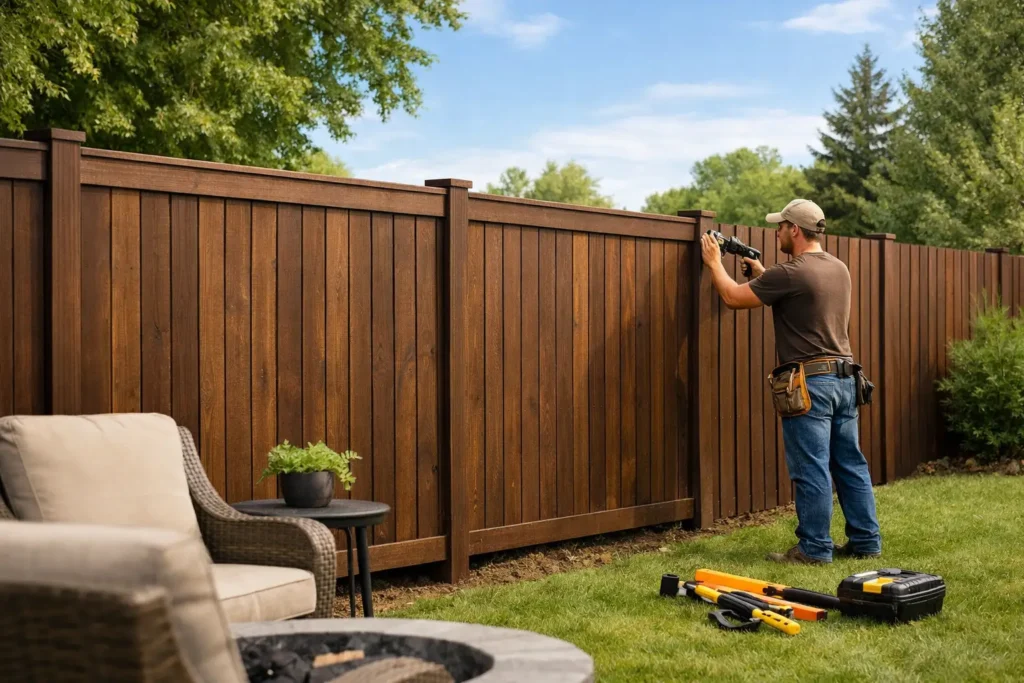
Wood privacy fencing remains popular because it looks natural and can be built in many styles. It works especially well near wooded lots, gardens, and homes with classic exterior finishes. Wood can be stained or painted to complement the house, and individual boards may be replaced if damage occurs.
The trade-off is maintenance. Even quality wood needs periodic care to help prevent moisture damage, fading, cracking, and insect issues. Posts and framing must be properly installed from the start, because structural weaknesses below ground can affect the entire fence.
Vinyl provides a clean, low-maintenance option
Vinyl fencing is a strong choice for homeowners who want a consistent appearance with less upkeep. It does not require painting or staining, and routine cleaning is generally straightforward. Privacy panels can create a crisp, finished look around a backyard or pool area.
However, not all vinyl products perform the same way. Thicker, quality materials and proper reinforcement are worth considering, particularly in areas exposed to wind. Vinyl also offers fewer opportunities for easy color changes later than painted wood.
Aluminum and chain link serve different needs
Aluminum fencing is durable and attractive but is generally not a complete privacy solution on its own. It can be ideal for defining a boundary, enclosing a pool, or protecting pets while preserving sightlines. Privacy landscaping or panels may be added where appropriate.
Chain link is practical for large yards and pet enclosures, especially when budget is a major factor. Privacy slats or screening can increase coverage, but they do not create the same finished appearance as a solid wood or vinyl fence. The right choice depends on whether privacy, containment, cost, or visibility is the leading priority.
Layout Matters as Much as the Fence Style
A privacy fence should make the yard more functional, not create awkward access or cut off useful areas. During the planning stage, consider gates, trash-bin access, mower access, drainage paths, mature trees, utility equipment, and the way people move between the house, driveway, deck, and backyard.
Gate placement is easy to overlook. A single gate may be enough for a small yard, but a wider double gate can be valuable if you need access for lawn equipment, a workshop project, or future patio work. Gates should be positioned on stable ground and built with hardware designed to resist sagging over time.
Pay close attention to slopes. A fence line across a sloped yard can be installed in a stepped pattern or can follow the grade more closely, depending on the fence type and the look you prefer. Stepped panels can leave gaps underneath, which may be a concern for small pets. A site visit allows the installer to recommend an approach that looks intentional and works for your household.
Proper Posts and Drainage Protect the Investment
The visible boards or panels get most of the attention, but posts carry the structure. Posts need appropriate depth, spacing, and support for the fence height, material, and site conditions. A fence may look straight when it is new, yet weak post installation can lead to movement, leaning, loose gates, or uneven sections after heavy rain and seasonal changes.
Drainage also deserves consideration. Water that repeatedly collects along a fence line can contribute to soil movement, wood deterioration, and muddy low spots. In some yards, grading, gutter extensions, retaining work, or a revised fence layout may be part of the best long-term solution. Treating the fence as one part of the property rather than an isolated project helps prevent avoidable problems.
Know What Professional Installation Should Include
A dependable contractor should make the process understandable before construction starts. The estimate should identify the fence type, approximate height and length, gate locations, materials, and any known site conditions that could affect the work. You should also understand who is responsible for permits or association documentation, if required.
During installation, a professional crew should establish the layout carefully, protect the work area as reasonably as possible, set posts securely, and keep lines straight and consistent. The finished fence should have properly functioning gates, clean transitions near the home and existing structures, and a worksite that is cleaned up after completion.
For homeowners in Greensboro, Winston-Salem, High Point, and surrounding North Carolina communities, Carolina Improvements can assess the full outdoor space rather than treating the fence as a stand-alone purchase. That is particularly helpful when fencing is part of a larger plan involving a deck, patio, drainage improvement, or retaining wall.
Plan for the Years After Installation
A new fence needs only basic attention, but small maintenance steps can preserve its appearance and performance. Keep leaves, soil, and mulch from building up against the bottom of the fence. Check gates periodically for loose hardware or changes in alignment. After major storms, look for shifted posts, damaged boards, or branches that may be rubbing against panels.
Wood fences should be cleaned and protected on a schedule that matches the product used and the exposure of the yard. Vinyl and aluminum benefit from occasional washing and a quick inspection of connections and gates. Addressing a loose board or latch early is usually simpler than waiting for a minor issue to affect a larger section.
A privacy fence is more than a line around the yard. When it is planned around your property, installed with quality materials, and built to handle local conditions, it gives your family a more comfortable place to spend time outside for years to come.