
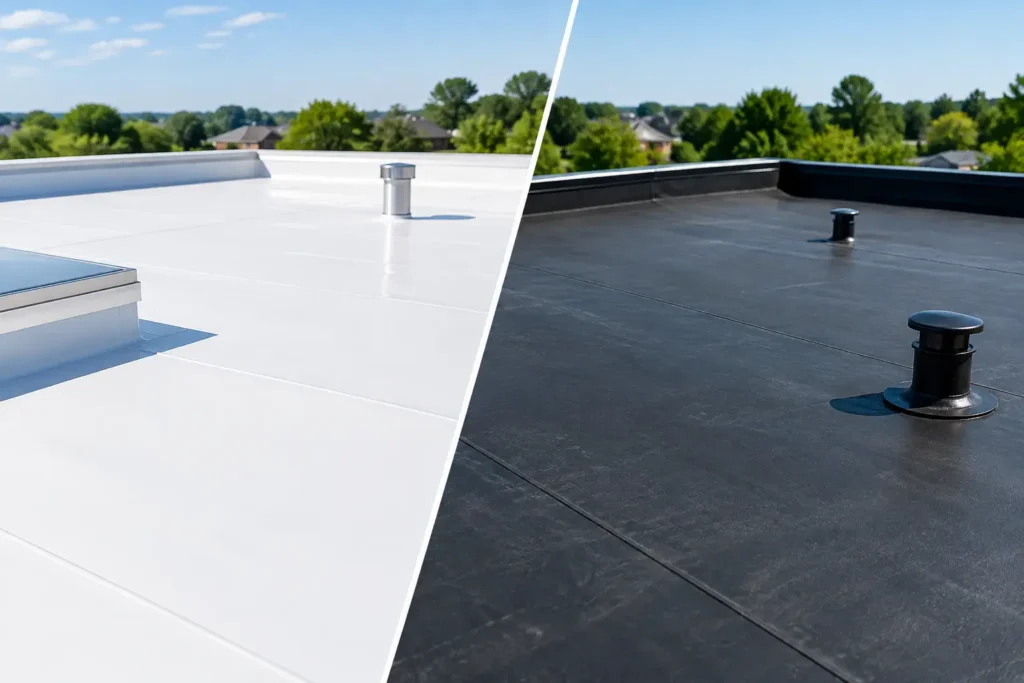
A low-slope roof over a sunroom, garage, porch, addition, or workshop has different needs than the sloped shingle roof over the main part of your home. When comparing TPO versus EPDM, homeowners are usually looking for the same things: dependable leak protection, a reasonable long-term cost, and a material that can handle North Carolina heat, rain, humidity, and changing seasons.
Both are proven single-ply roofing systems, but they perform differently in certain conditions. The best choice depends on the roof’s design, how much direct sunlight it receives, the condition of the existing structure, and how long you plan to own the home.
TPO versus EPDM: The Basic Difference
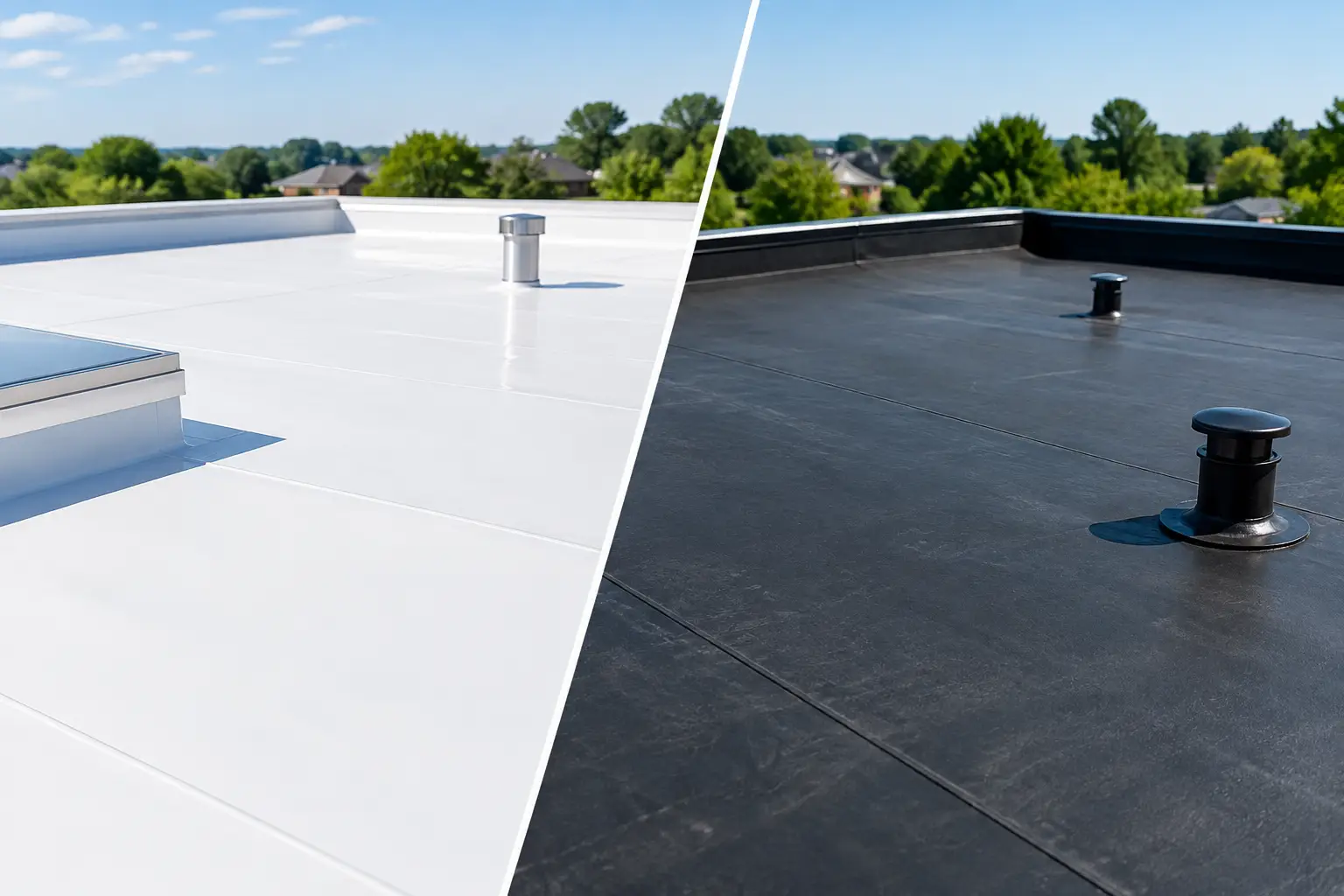
TPO stands for thermoplastic polyolefin. It is a flexible membrane roofing material, most often white or light-colored, that is installed in large sheets across a low-slope roof. Its seams are heat-welded, creating a continuous bond designed to resist water intrusion.
EPDM stands for ethylene propylene diene monomer. It is a synthetic rubber membrane that has been used on low-slope roofs for decades. Traditional EPDM is black, although lighter options are available. Its seams are typically sealed with specialized adhesives or seam tape rather than heat welding.
At a glance, these systems can look similar from the ground. The meaningful differences are in seam construction, heat reflectivity, installation requirements, maintenance needs, and cost.
When TPO Roofing Makes Sense
TPO is often a strong fit for homeowners who want a light-colored, energy-conscious roof covering. Its white surface reflects a significant amount of sunlight, which can help reduce heat absorbed by the roof. That may be especially useful over conditioned spaces such as room additions, enclosed porches, finished garages, or living areas with a low-slope roof section.
The heat-welded seams are another major advantage. Unlike seams that depend on adhesive, properly welded TPO seams become a fused connection. This can offer excellent resistance to standing water and wind-driven rain when the roof is designed and installed correctly.
TPO can also be a practical choice when appearance matters. A clean white membrane often looks more polished on a visible flat or low-slope section than traditional black rubber roofing. For homes in Greensboro, Winston-Salem, High Point, and surrounding communities, that can be a consideration when an addition, porch roof, or garage is visible from an upstairs window or neighboring property.
TPO does have trade-offs. Quality varies among manufacturers, and the installer’s experience matters greatly. Heat-welding requires the right equipment, preparation, and technique. A strong roofing system is never just the membrane itself. Flashings, drains, edge details, transitions, penetrations, and the condition of the roof deck all need careful attention.
When EPDM Roofing Makes Sense
EPDM remains a dependable option for many residential low-slope applications. Its flexibility is one of its strongest qualities. Rubber membrane can accommodate normal building movement and can perform well through temperature changes when installed with compatible materials and proper detailing.
Black EPDM absorbs more heat than white TPO. That is not always a disadvantage. On an unconditioned garage, shed, workshop, or carport, reducing solar heat gain may be less important than choosing a proven material that fits the project budget and roof layout. In cooler months, a darker roof can also absorb some warmth, although that should not be the deciding factor by itself.
EPDM is well known for its long service history. It is frequently selected for roofs with straightforward layouts and for property owners who value a familiar, established rubber roofing system. Repairs can often be manageable when problems are addressed early, particularly if the membrane remains in good overall condition.
Its seams deserve attention. Modern seam tapes and adhesives are designed for strong performance, but they must be installed on properly prepared surfaces. Dirt, moisture, poor adhesion, or aging materials can affect seam reliability over time. Regular inspections help identify lifted edges, loose flashing, punctures, and drainage problems before water reaches the structure below.
Cost: Look Beyond the Initial Quote
There is no universal answer to which material costs less. Material pricing changes, and labor can vary based on the roof’s size, accessibility, slope, number of corners, wall flashings, skylights, vents, drains, and the amount of old roofing that must be removed.
In some projects, EPDM may have a lower initial installed cost. In others, TPO may be competitively priced, particularly when its seam strength and reflective surface are priorities. A roof with multiple penetrations or complicated transitions can require more labor regardless of the membrane selected.
The more useful question is not simply, “Which roof is cheaper?” It is, “Which system gives this specific part of my home the best value?” A lower upfront number can become expensive if the roof is not correctly matched to its use, drainage conditions, or exposure to sun and foot traffic.
A detailed estimate should identify the membrane type and thickness, insulation needs, removal of existing materials, flashing work, edge metal, drainage considerations, and any repairs to damaged decking. That level of detail makes it easier to compare proposals fairly.
Heat, Energy Efficiency, and Comfort
For a conditioned space, TPO’s reflective surface is often a meaningful advantage. A white roof can keep the membrane surface cooler under direct sunlight, which may help reduce the heat load entering the space below. This is especially relevant for flat-roof additions that tend to feel warm in summer.
However, a reflective membrane does not replace adequate insulation or ventilation where those elements apply. If the roof assembly lacks proper insulation, the room below may still be uncomfortable and energy costs may remain higher than expected. The roof deck, insulation, ceiling construction, and HVAC system all influence comfort.
EPDM can still be a sound choice for many homes. If the roof covers an unconditioned structure or is shaded by mature trees, reflectivity may carry less weight in the decision. The condition of the existing roof and the quality of installation should remain central to the conversation.
Durability Depends on the Whole Roofing System
Both TPO and EPDM can provide years of service, but neither material can overcome poor drainage or careless installation. Low-slope roofs should shed water effectively, even though they may appear flat from the ground. Persistent ponding water can stress seams, flashing, and roof materials over time.
Tree branches, storm debris, foot traffic from servicing equipment, and punctures from sharp objects can also damage a membrane roof. A roof over a deck or patio enclosure may see more nearby activity than a roof over a detached garage, so its exposure should be considered during material selection.
The edges and transitions are often where roofing problems begin. Places where the membrane meets siding, brick, parapet walls, chimneys, gutters, or another roofing material require careful flashing. This is why choosing an experienced contractor matters as much as choosing TPO or EPDM.
Repair and Maintenance Considerations
Neither roofing system should be ignored until a leak appears inside. Water can travel beneath a membrane or through framing before it becomes visible on a ceiling. An annual visual inspection, along with a check after major storms, can help catch minor concerns early.
Keep drains, scuppers, and gutters clear so water has a reliable path off the roof. Remove fallen limbs and avoid dragging sharp furniture or equipment across the membrane. If you notice bubbles, loose edges, cracked sealant, open seams, stains on interior ceilings, or standing water that remains after dry weather, schedule an inspection promptly.
TPO repairs commonly involve cleaning the affected area and welding a compatible patch. EPDM repairs generally use approved primers, tapes, or patch materials. In either case, repair materials should be compatible with the existing roof system. Applying a generic sealant may temporarily hide a problem while allowing water to continue working beneath the surface.
How to Choose Between TPO and EPDM
TPO may be the better fit if you want a reflective white surface, heat-welded seams, and improved solar reflectivity over a conditioned living space. EPDM may be the better fit if you prefer a proven rubber membrane, need flexibility for a straightforward low-slope application, or are prioritizing the project budget for an unconditioned structure.
The decision also depends on roof slope, drainage, shade, building use, existing materials, and the details around walls, vents, and edges. A professional on-site assessment can identify issues that are impossible to judge from a photo or a quick measurement.
Carolina Improvements helps homeowners evaluate low-slope roofing with clear recommendations based on the structure in front of them, not a one-size-fits-all answer. The right membrane is the one that is properly installed, drains correctly, fits the way you use the space, and gives you confidence the next time heavy rain moves through.