
A concrete driveway should make arriving home feel easy, not create a growing list of cracks, stains, and uneven spots to worry about. In North Carolina, frequent rain, humid summers, tree debris, and occasional freezing temperatures can all affect its condition. Knowing how to maintain concrete driveways helps homeowners protect curb appeal, reduce avoidable repairs, and get more years from a major exterior investment.
Concrete is durable, but it is not maintenance-free. Water can work into small cracks, oil can leave lasting stains, and poor drainage can weaken the soil beneath the slab. A practical routine catches those issues while they are still manageable.
Start With Regular Cleaning
Routine cleaning is the simplest way to preserve a concrete driveway. Sweep away leaves, pine needles, soil, and gravel every few weeks, especially in fall and after storms. Organic debris holds moisture against the surface and can leave dark stains or encourage mildew in shaded areas.
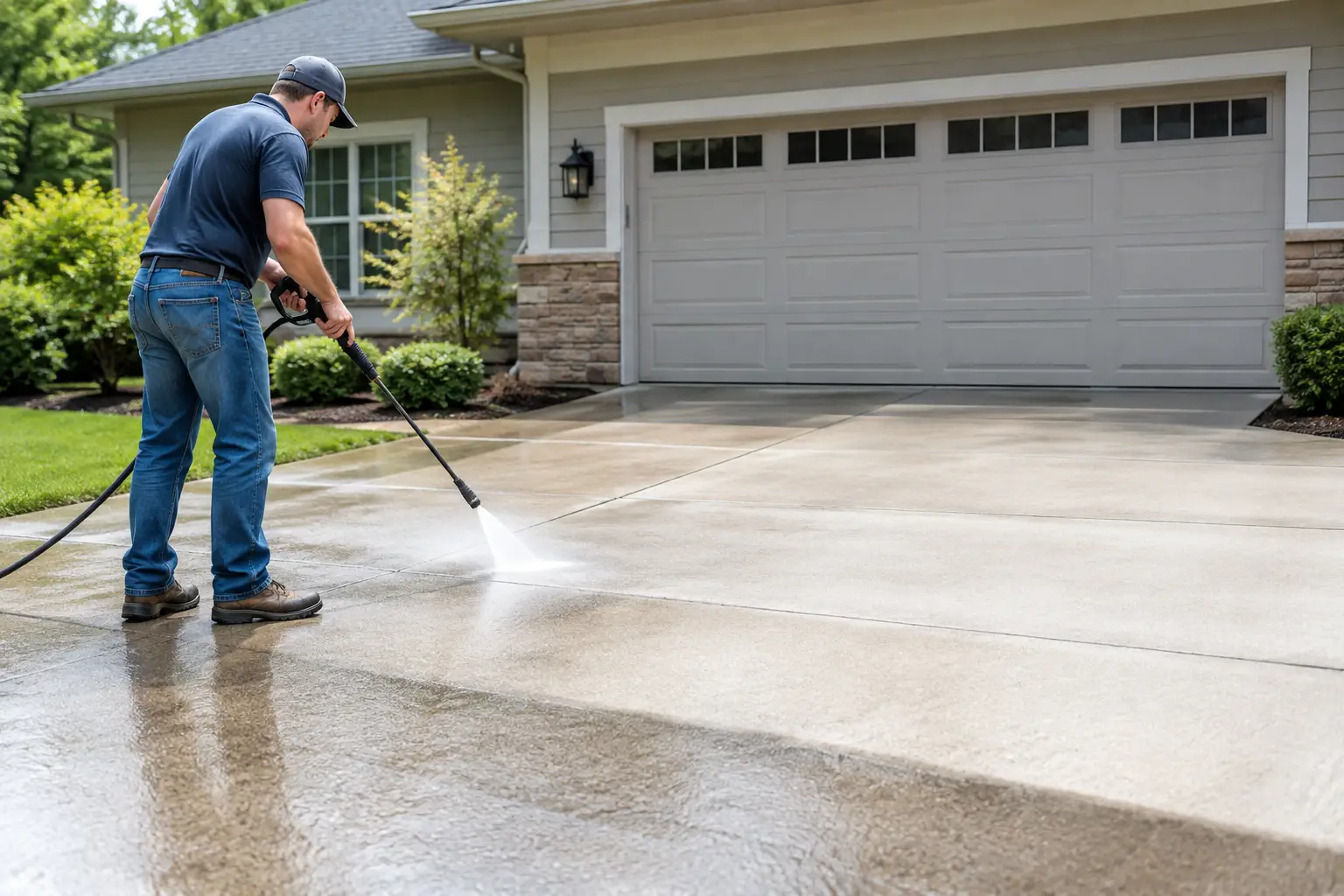
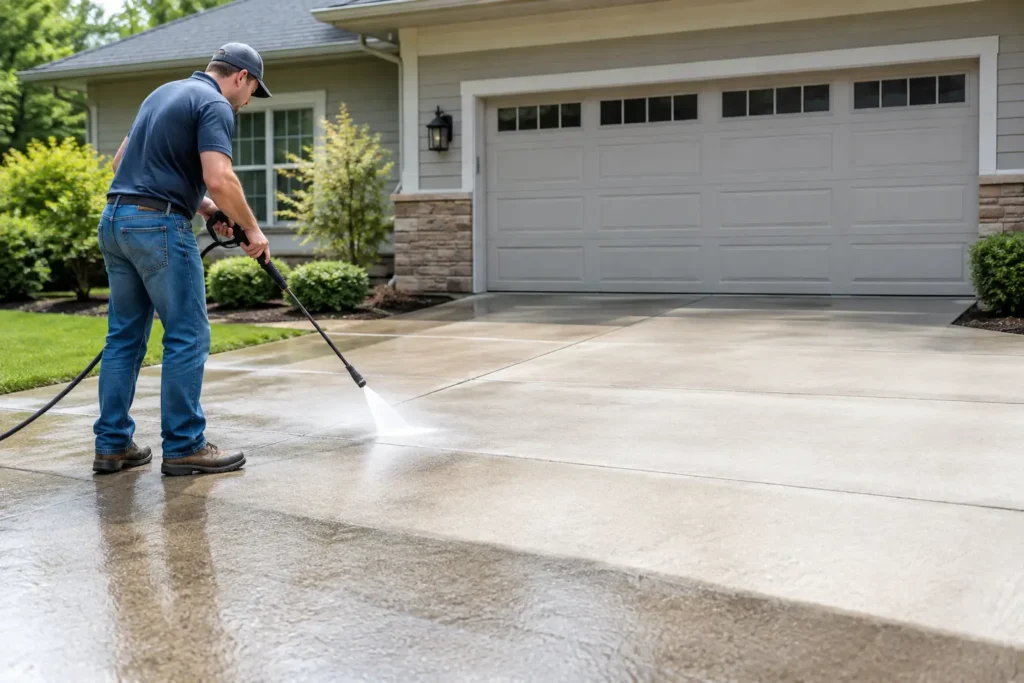
For general cleaning, rinse the driveway with a garden hose and use a stiff-bristle broom with a concrete-safe cleaner for stubborn dirt. A pressure washer can be useful, but it should be handled carefully. Excess pressure or a nozzle held too close to the surface can etch concrete, exposing aggregate and creating a rough, patchy appearance. If you use one, start with a lower setting and keep the nozzle moving.
Mildew and algae are common concerns in shaded driveways around Greensboro, Winston-Salem, High Point, and other humid areas of the state. Treat these areas with a cleaner designed for concrete, following the product directions closely. Avoid harsh acid-based cleaners unless a professional recommends them. They can damage the concrete surface and create runoff concerns near landscaping.
Deal With Spills Before They Set
Oil, transmission fluid, fertilizer, paint, and de-icing products can all mark concrete. The longer a spill remains, the more likely it is to soak below the surface. Address fresh automotive fluids as soon as possible by covering them with an absorbent material, then sweeping it up after it has had time to pull up the liquid.
For an older oil spot, apply a concrete degreaser and scrub with a stiff brush. More than one treatment may be needed. The goal is not always to make a years-old stain disappear completely, but to prevent it from continuing to discolor or break down the surface.
Be especially careful with fertilizers. Products containing iron can leave orange or rust-colored stains, while other lawn treatments may discolor the slab. Keep bags, spreaders, and mixing containers off the driveway when possible. If fertilizer lands on the concrete, sweep it away promptly and rinse the area.
Inspect Your Driveway Each Season
A seasonal walk-through gives you the best chance of spotting minor concerns before they become structural repairs. Check the driveway in daylight when the surface is dry, then look again after a heavy rain to see where water collects.
Pay attention to these signs:
- Hairline cracks that are growing wider or longer
- Cracks with chipped, crumbling edges
- Low areas where water puddles after rain
- Sections that have settled or lifted out of level
- Gaps around driveway joints, garage thresholds, or borders
- Surface flaking, scaling, or exposed aggregate
Not every crack means the driveway needs replacement. Concrete naturally shrinks slightly as it cures, and small hairline cracks can be common. What matters is movement. A crack that widens, develops an uneven edge, or allows water below the slab needs attention sooner rather than later.
How to Maintain Concrete Driveways With Crack Repair
Small, stable cracks can often be cleaned and sealed with a flexible concrete crack filler. First remove loose debris, dirt, and weeds from the crack. Let the area dry completely before applying the product. A flexible repair material is usually a better choice than a rigid patch for narrow cracks because it can tolerate small amounts of movement.
Larger cracks, missing edges, and deteriorated joints need a closer assessment. A patch may improve appearance temporarily, but it will not solve the underlying problem if water is washing away soil beneath the driveway or tree roots are pushing the slab upward. In those situations, the repair should address both the damaged concrete and the cause of movement.
Driveway joints deserve attention as well. These intentional gaps allow concrete sections to expand and contract. When joint filler fails, water can enter below the slab. Remove failing material and install a compatible joint sealant to help keep moisture out.
Keep Water Moving Away From the Slab
Water management has a direct effect on driveway life. Standing water can stain the surface, seep through cracks, wash out supporting soil, and contribute to settlement. The driveway should slope so water moves away from the home and does not sit near the garage door.
Keep gutters clean and make sure downspouts discharge away from the driveway edges. Water pouring from a short downspout onto the same spot during every storm can erode soil and create a soft area beneath the concrete. Extensions, splash blocks, or a drainage improvement may be appropriate depending on the grade of your property.
Also look at the soil and landscaping along the driveway. Mulch, soil, and grass should not be piled high against the slab edge. Maintaining a clear edge helps water drain properly and makes it easier to inspect for cracking, erosion, or insect activity.
If a section is sinking, adding more sealant or patch material will not correct the issue. A professional can determine whether the slab is a candidate for lifting, whether drainage changes are needed, or whether replacement is the more dependable long-term option.
Seal the Concrete When Conditions Call for It
A quality concrete sealer can help reduce moisture absorption, staining, and surface wear. It is particularly worthwhile for driveways exposed to frequent rain, heavy vehicle traffic, tree cover, or repeated staining. Sealer is not a cure for existing structural damage, but it can help protect sound concrete.
The right schedule depends on the type of sealer, the driveway’s exposure, and the condition of the surface. Many homeowners find that resealing every few years is reasonable, while a driveway with significant shade or vehicle use may need more frequent attention. Check whether water beads on the surface after rain. If it absorbs quickly and the concrete looks dull or porous, it may be time to evaluate the sealer.
Preparation matters more than speed. Clean the driveway thoroughly, remove stains as much as possible, repair cracks, and allow the concrete to dry before sealing. Applying sealer over dirt, moisture, or loose material can trap problems below the coating and lead to an uneven finish.
Avoid applying sealer during rainy weather, extreme heat, or when temperatures are outside the manufacturer’s recommended range. A dry forecast gives the material time to cure properly.
Protect the Driveway From Daily Damage
A few habits can prevent unnecessary wear. Avoid parking very heavy equipment, dumpsters, or loaded trailers on a residential driveway unless it was designed for that weight. Concrete is strong under even loads, but concentrated weight near an edge can cause cracking.
Use caution with metal snow shovels and sharp-edged tools. North Carolina winters are generally moderate, but frozen precipitation does occur. Choose de-icing products labeled as safe for concrete, and use only what is needed. Rock salt can contribute to surface damage, particularly on newer concrete or concrete already showing signs of scaling.
Give new concrete time to cure before placing vehicles on it. The exact timing depends on the mix, weather, and contractor guidance, but rushing this step can leave lasting marks. Once the driveway is in service, avoid letting vehicles sit in the same location for extended periods if they have fluid leaks.
Know When Professional Repair Is the Better Choice
Cleaning, sealing, and minor crack filling are useful homeowner tasks. Larger problems deserve a professional evaluation. Call for help when cracks are wide or uneven, sections rock underfoot, water collects repeatedly, edges are breaking away, or the driveway is pulling away from the garage or adjacent patio.
A qualified contractor can identify whether the concern is surface-level or connected to drainage, base failure, root pressure, or settlement. That distinction protects you from spending money on cosmetic repairs that do not last. For homeowners planning related work such as gutters, retaining walls, patios, or drainage improvements, addressing the full exterior water path can produce a more durable result.
A well-maintained driveway does more than look clean. It supports safer access to your home, protects the areas around your garage, and helps your property make a strong first impression. When damage goes beyond routine care, Carolina Improvements can provide a clear assessment and practical recommendations for durable concrete work.